
The first people to colonize Mars will need to possess the physical resilience of a navy seal and the mental aptitude of a theoretical physicist.
While it seems that humans have the technological capabilities to reach mars, how we pay for the expedition is an entirely different story.
In an interview on the Lex Fridman Podcast, Professor Jim Gates of Maryland University went on record to exclaim that the mission to Mars is still too dangerous and too expensive for it to be a successful mission.
“Bending the cost curve is critical if we’re going to be successful. We won’t put a human on Mars in 2030… the real problem with interstellar travel, aside from the [technological] challenges, is radiation. How do you engineer either an environment or a body, so that some person that’s recognizably human will survive the rigors of interplanetary space travel.”
Earth relies on its magnetic field to shield itself against high-energy radiation from the Sun and space (such as solar flares or cosmic rays). Many particles from the Sun are deflected by this magnetic field, which is sometimes displayed in images as a protective bubble covering the planet.
Mars doesn’t have a strong global magnetic field and has a much thinner atmosphere, providing much less protection against radiation, which can cause cancer.
Professor Gates went on to say that, in addition to the physical and economic hurdles that humans will face on a mission to Mars, there is a need for “incremental change” in the design of rockets that are now in use.
He claims that extended flare engines, which have been proven to work in preliminary tests, allow you to “vary the amount of thrust as you go up in a way that you cannot do with modern day designed bell engines” used by billionaire spacecraft enthusiasts such as Elon Musk and Jeff Bezos.
Whoever sets foot on Mars will be of striking resemblance to us, but an order of magnitude more intelligent with the physical attributes of a professional athlete. Living on Mars will be the ultimate test of mental and physical rigor.
Very few, if any people who are currently on Earth fit this description. However, we are the future ancestors of a generation of humans that will live on Mars. Jim Gates estimated that there will be a human on mars by 2090.
If the countdown to liftoff were tomorrow, who would be the most capable people to entrust with the responsibility – the biological duty – of preserving the human race?
The 7 most capable people to take on this monumental mission have been highlighted due to their impressive combination of mental and physical strengths. Each of these individuals have proven themselves time and time again to possess the necessary intangibles to succeed on an interplanetary journey
1. Myron Rolle
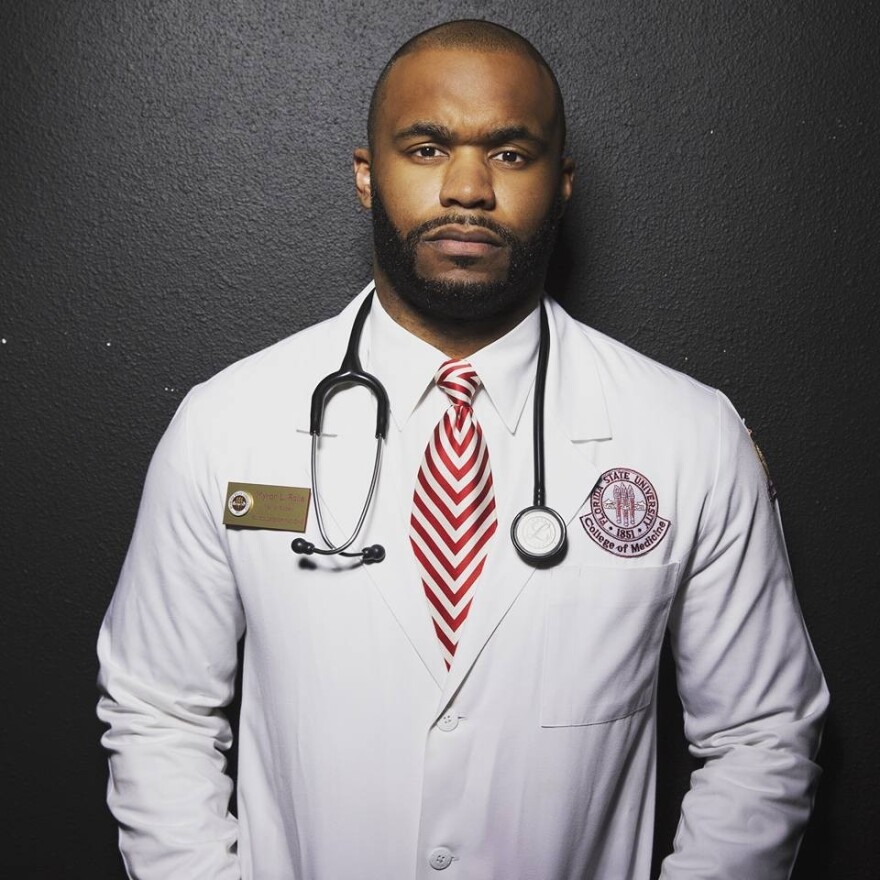
Myron Rolle is a Bahamian-American neurosurgeon and former football safety. He played college football at Florida State, and was drafted by the Tennessee Titans in the sixth round of the 2010 NFL Draft. He attended the Florida State University College of Medicine and is a neurosurgery resident at Harvard Medical School/Massachusetts General Hospital.
He was awarded a Rhodes Scholarship and studied at St. Edmund Hall Oxford University for the 2009–10 academic year in order to earn an MSc in Medical Anthropology.
2. John Urschel
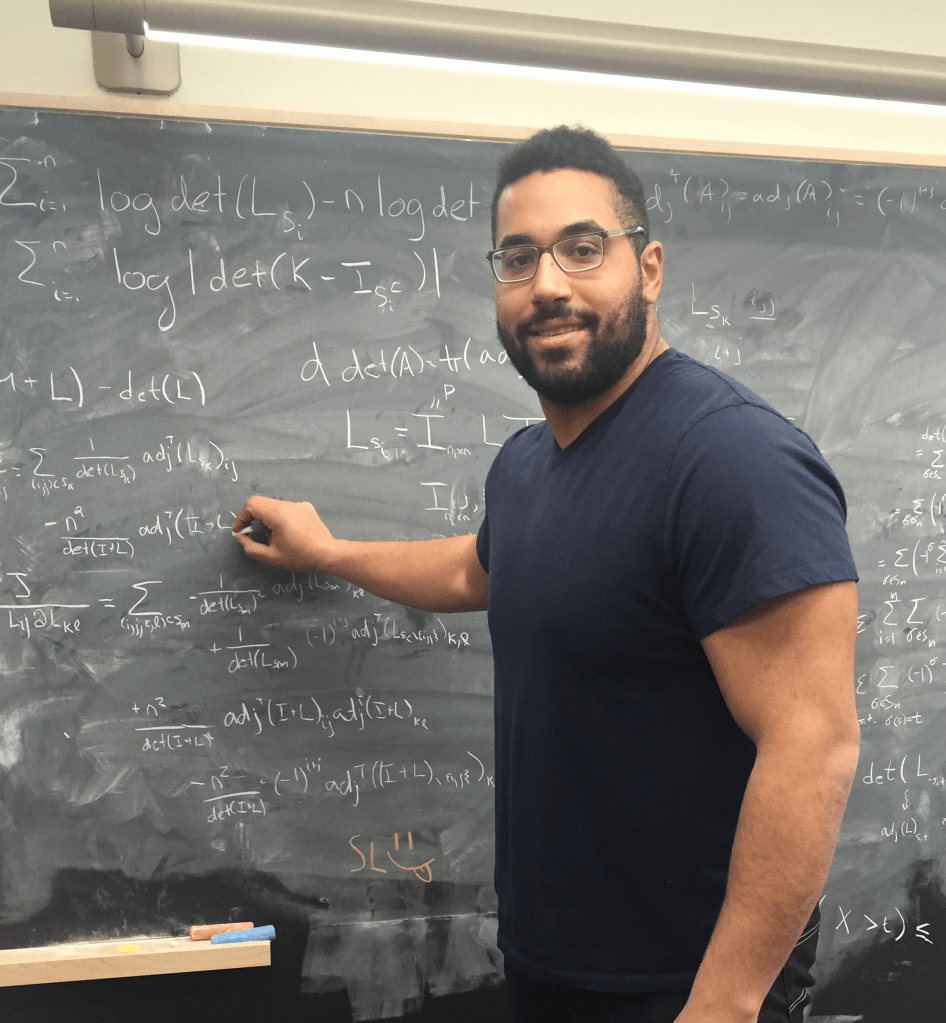
John Urschel is a mathematician and a former NFL player. Urschel has bachelor’s and master’s degrees (both from Penn State) and a doctorate (from the Massachusetts Institute of Technology), all in mathematics. He has published peer-reviewed articles in mathematics. Urschel is also an advanced stats columnist for The Players’ Tribune. He is currently serving a three-year term on the College Football Playoff selection committee which began in the spring of 2020.
3. Jessica Watkins

Jessica Watkins is a NASA Astronaut. Watkins earned a Ph.D. in geology at the University of California, Los Angeles. Her graduate research, under the supervision of professor An Yin, focused on emplacement mechanisms for landslides on Mars and Earth, including the effect of water activity. Prior to her selection as an astronaut candidate, Watkins was a postdoctoral fellow at the California Institute of Technology, where she was also an assistant coach to the women’s basketball team.
4. Anna Kiesenhofer

Anna Kiesenhofer is an Austrian cyclist and mathematician. Kiesenhofer gained fame when she won the gold medal in the women’s individual road race at the 2020 Summer Olympics. She is currently a postdoctoral fellow in mathematics at the Swiss Federal Institute of Technology and has authored several scholarly journal articles.
5. Victor Glover

Victor Glover is a NASA astronaut of the class of 2013 and Pilot on the first operational flight of the SpaceX Crew Dragon to the International Space Station. Glover grew up in Pomona, California, and graduated from Ontario High School in 1994, where he was a quarterback and running back for the Jaguars, and was a recipient of the 1994 Athlete of the Year Award.
6. Reid Wiseman

Reid Wiseman is an American astronaut, engineer, and naval aviator. He served as Chief of the Astronaut Office until November 14, 2022. Wiseman was selected as commander of the crew for the Artemis 2 flight, which intends to circle the moon in 2024.
7. Fabiola Mann

Fabiola Mann is a Doctor who scored a high 162 points on Mensa, which is about 2 points higher than Albert Einstein. She also wouldn’t have any problem fighting hostile extraterrestrials as she also is adept in the martial arts (karate).

 Bitcoin Versus
Leave a comment