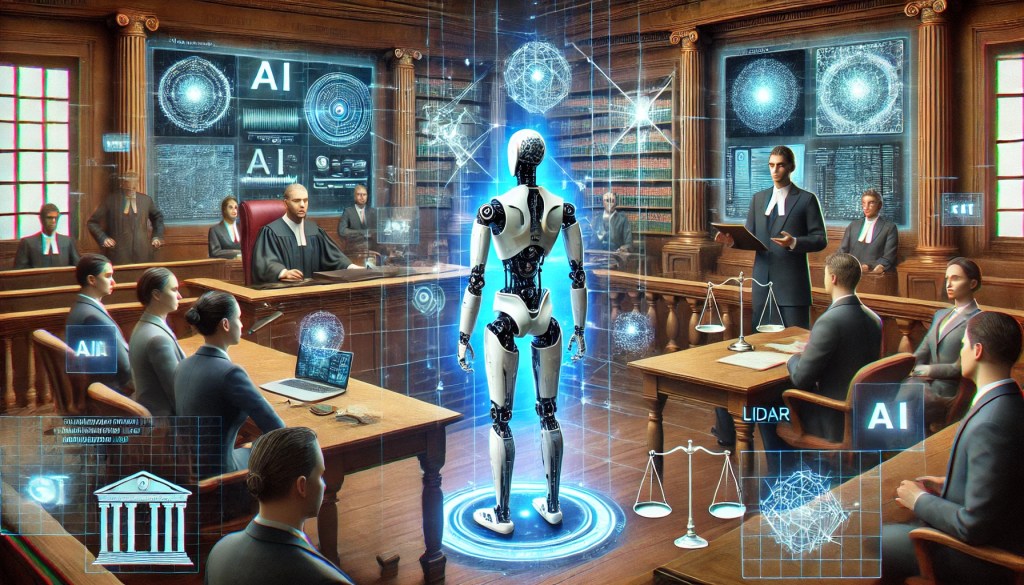
The rapid advancement of autonomous machines, from self-driving cars to robotic drones, has created a complex legal landscape. As these machines gain more capabilities, the question of who should be held accountable for their actions becomes increasingly pertinent. The key issue revolves around whether to prosecute the owner, the manufacturer, the robot itself, or some combination of these parties.
“We now have this real explosion of AI,” says David Gunning, DARPA program manager. “The reason for that is mainly machine learning, and deep learning in particular.”
Robots in Question
A more futuristic and controversial approach is to consider the autonomous machines themselves as liable entities. In Egypt, the world’s first ultra-realistic robot artist, Ai-Da, was detained by Egyptian security forces at customs, claiming that the robot was a spy.
In June 2024, a Waymo autonomous vehicle in Phoenix, Arizona, was pulled over by the police after it drove into oncoming traffic due to encountering inconsistent construction signage. The incident, which lasted about a minute, resulted in the vehicle navigating incorrectly and prompting a police stop. The situation was resolved without a citation being issued, as the vehicle’s system was unable to be cited like a human driver.
This idea involves treating advanced robots as legal persons, capable of bearing responsibility for their actions. While this concept is still largely theoretical, it raises profound questions about the nature of agency and responsibility in machines. It also poses significant challenges in enforcement and punishment, as machines lack the capacity for traditional legal consequences.
Owner Liability
One approach is to hold the owners of autonomous machines accountable for their actions. This perspective aligns with existing laws where vehicle owners are responsible for their vehicles, regardless of who is driving. The owner ensures the machine is properly maintained and operates within legal parameters. However, this approach raises concerns about the owner’s ability to control or even understand the machine’s decisions and actions, especially when complex algorithms are involved.
Manufacturer Responsibility
Another perspective is to hold manufacturers accountable, as they design and program these autonomous systems. If a machine malfunctions or makes a harmful decision due to a programming error, the manufacturer could be seen as responsible. This approach emphasizes the importance of stringent testing and safety measures during the development phase. However, attributing liability to manufacturers could stifle innovation and lead to excessive caution in developing new technologies.
Legal Precedents and Challenges
Current legal systems are not equipped to handle the nuances of autonomous machine liability. Existing frameworks primarily address human actions, and adapting these to autonomous systems involves significant rethinking of legal principles. The military and various research institutions are actively exploring ways to ensure that autonomous systems can explain their actions and decisions to aid in accountability.
Future Considerations
As technology advances, the development of autonomous systems will likely involve new regulations and standards. Ensuring these machines can interact safely and predictably with their environment is crucial. Ongoing research and discussions at conferences, such as the Autonomous Vehicles and Machines (AVM) conference, focus on enhancing the safety and reliability of these systems through advanced sensing, computing, and algorithm development.
Bitcoin Versus is not a legal advisor. The information provided is for general informational purposes only and should not be construed as legal advice. For specific legal concerns, please consult a qualified legal professional.
 Bitcoin Versus
Leave a comment