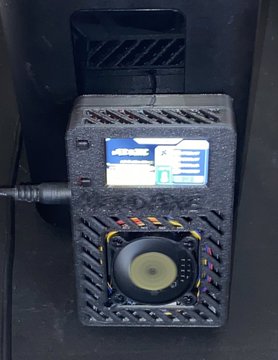
Troubleshooting a bricked NerdAxe device can be challenging, especially when a firmware update is interrupted, potentially leading to hardware issues.
The NerdAxe, an open-source Bitcoin ASIC miner, utilizes the ESP32-S3 chip as its controller.

Firmware updates for the NerdAxe are typically performed remotely via online platforms like Bitronics’ DIY Flasher. Interruptions during this process can corrupt the device’s software, rendering it unresponsive.

In cases where the device shows signs of life, such as indicator lights or response to reset commands, the issue may be isolated to the ESP32-S3 chip.
The ESP32-S3 chip is a highly integrated microcontroller developed by Espressif Systems, designed for IoT and AI applications. It features a dual-core Xtensa LX7 processor with a clock speed of up to 240 MHz, offering high performance for computationally intensive tasks.

The chip includes 512 KB of SRAM and supports external flash memory, providing flexibility for various application requirements. It is equipped with Wi-Fi 802.11 b/g/n and Bluetooth Low Energy (BLE) 5.0, enabling seamless wireless connectivity for IoT devices.
The ESP32-S3 supports hardware-accelerated AI operations, such as neural network inference and signal processing, making it suitable for edge computing applications.
It features multiple GPIO pins, ADCs, DACs, and communication interfaces like UART, SPI, I2C, and I2S for versatile hardware integration. Advanced security features, including secure boot and hardware encryption, ensure data integrity and device protection.
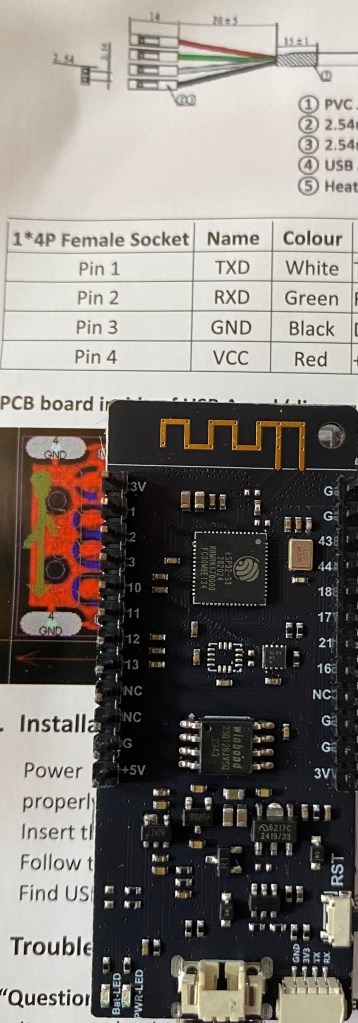
The chip’s ultra-low power consumption mode allows it to operate efficiently in battery-powered devices.
Its development environment supports ESP-IDF and Arduino frameworks, making it developer-friendly and widely adopted. The ESP32-S3 is a robust solution for smart homes, wearables, industrial automation, and AIoT devices, combining high performance, low power consumption, and strong connectivity features.

Although it has some really cool features and can be useful for several different projects, replacing the chip because of the corrupted firmware could potentially restore functionality.
It’s important to note that the NerdAxe lacks a microSD port, limiting firmware recovery options to online flashing tools. Therefore, ensuring a stable power supply during firmware updates is crucial to prevent such issues.
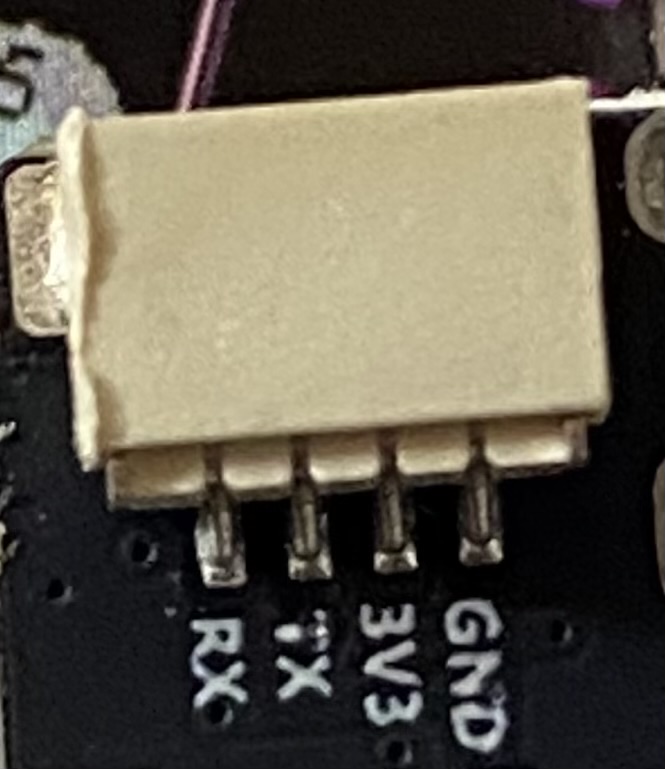
For those attempting repairs, detailed hardware design guidelines for the ESP32-S3 are available, offering insights into proper handling and replacement procedures.
I will point out that Replacing the chip is not the first solution and should be treated as a last resort.
Issues like firmware corruption or failed flashes are often recoverable using software tools or by resetting the hardware. Proper debugging and recovery attempts are critical before considering hardware replacement.
If all else fails and the chip is confirmed to be the root of the issue, replacement may restore functionality but requires technical expertise.
In summary, while a bricked NerdAxe due to an interrupted firmware update presents significant challenges, understanding the device’s architecture and utilizing available resources can aid in troubleshooting and potential recovery.
BitcoinVersus.Tech Editor’s Note:
We volunteer daily to ensure the credibility of the information on this platform is Verifiably True. If you would like to support to help further secure the integrity of our research initiatives, please donate here
BitcoinVersus.tech is not a financial advisor. This media platform reports on financial subjects purely for informational purposes.
 Bitcoin Versus
Leave a comment