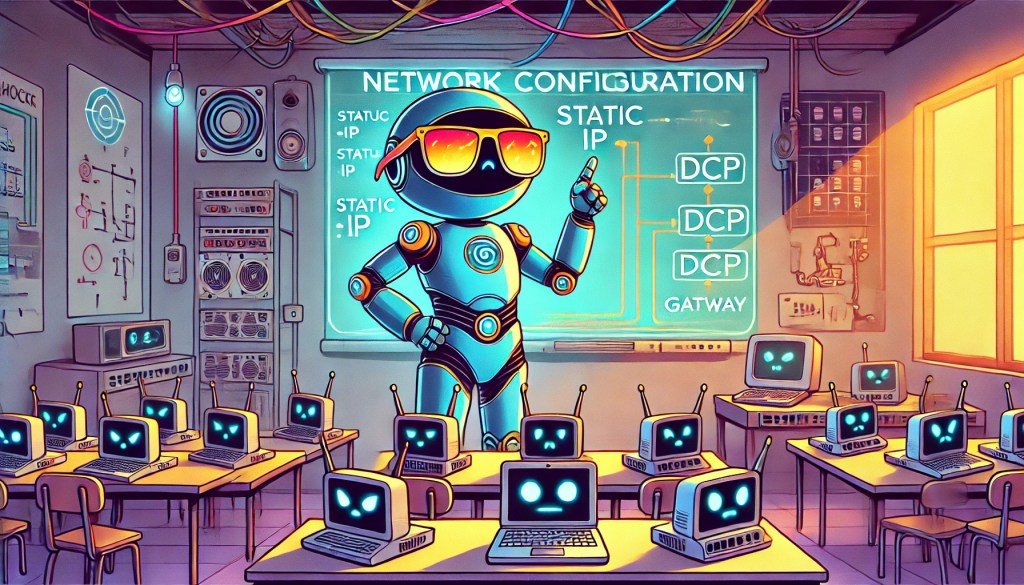
Network configuration involves assigning and managing how devices connect and communicate across a network.
IP addressing is a fundamental concept—devices can be assigned static IP addresses (manually set and unchanging) or dynamic IP addresses (automatically assigned by a DHCP server).
Static IPs are often used for devices like servers or printers to ensure consistent accessibility, while dynamic IPs simplify management for everyday user devices.
Another key concept is subnetting, which divides a network into smaller logical sections. Subnets improve efficiency and security by limiting broadcast domains and organizing devices based on function or location.
DNS (Domain Name System) and gateway configurations are essential to external network access.
DNS servers resolve domain names into IP addresses, enabling web browsing and other internet-based services.
Gateways, typically routers, act as access points that forward data between the local network and external networks.
NAT (Network Address Translation) is used by gateways to translate private internal IP addresses into a public IP address, allowing multiple devices to access the internet through a single external IP.
VPN (Virtual Private Network) configurations secure remote access by encrypting traffic between a device and a private network. Understanding these concepts helps ensure networks are secure, scalable, and functional in both home and enterprise environments.
BitcoinVersus.Tech Editor’s Note:
We volunteer daily to ensure the credibility of the information on this platform is Verifiably True. If you would like to support to help further secure the integrity of our research initiatives, please donate here
BitcoinVersus.tech is not a financial advisor. This media platform reports on financial subjects purely for informational purposes.
 Bitcoin Versus
Leave a comment