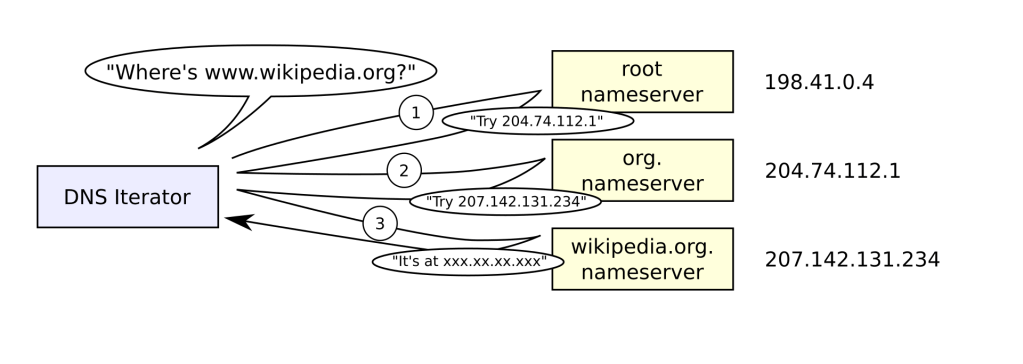
The Domain Name System (DNS) is like the phonebook of the internet. It translates human-friendly domain names such as www.google.com into IP addresses like 142.250.190.78, which computers use to locate and communicate with each other across networks.
Without DNS, users would need to memorize long strings of numbers to access websites, making the internet much less user-friendly.
DNS works by using a distributed network of servers, including root servers, top-level domain (TLD) servers, and authoritative name servers, to resolve names into IP addresses.
When you type a website into your browser, your computer queries a DNS resolver to find the IP address associated with that domain.
If the resolver has the answer cached, it returns the result instantly.
If not, the resolver walks through the DNS hierarchy, starting from the root servers, asking the right questions until it gets the correct IP address.
Once the IP address is found, your computer can establish a connection with the destination server. This entire process typically happens within milliseconds, making DNS a fundamental yet invisible part of everyday internet usage.
BitcoinVersus.Tech Editor’s Note:
We volunteer daily to ensure the credibility of the information on this platform is Verifiably True. If you would like to support to help further secure the integrity of our research initiatives, please donate here
BitcoinVersus.tech is not a financial advisor. This media platform reports on financial subjects purely for informational purposes.
 Bitcoin Versus
Leave a comment