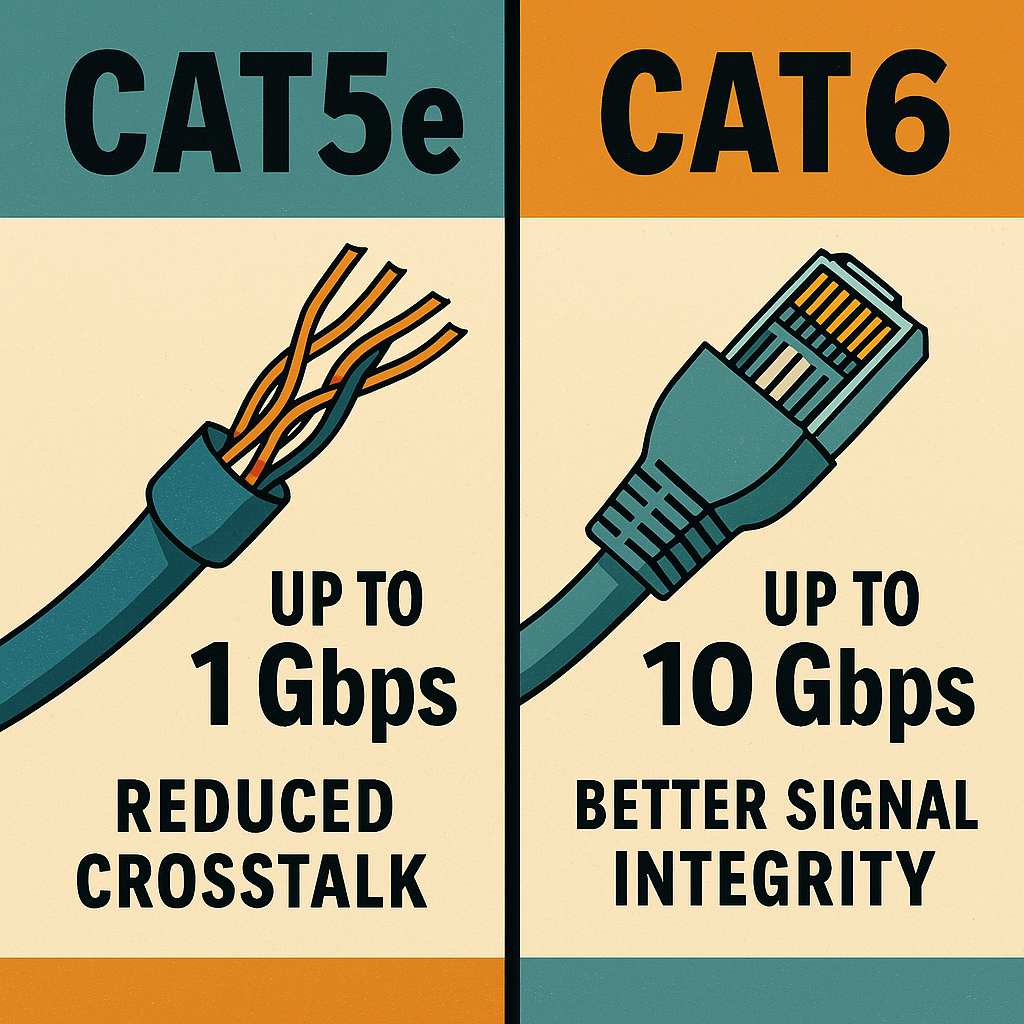
Cat5e (Category 5 Enhanced) and Cat6 (Category 6) Ethernet cables are both unshielded twisted pair (UTP) standards used for wired networking, but they differ in terms of performance, shielding, and signal integrity.
Cat5e supports speeds up to 1 Gbps over distances of up to 100 meters and is commonly used in residential networks and small offices. It reduces crosstalk better than its predecessor, Cat5, by meeting stricter IEEE standards.
Cat6, however, is designed for 10 Gbps speeds at distances up to 55 meters, and it includes tighter twists and thicker insulation to further reduce crosstalk and electromagnetic interference (EMI).
Technicians preparing for the CompTIA A+ exam should understand that while Cat5e remains cost-effective for most gigabit applications, Cat6 is preferable in high-performance networks, particularly where data-intensive tasks, media streaming, or VoIP are involved.
Cat6 cables are also backward compatible with Cat5e hardware, but when used in environments with high bandwidth demand, the benefits of Cat6’s structural improvements are more noticeable.
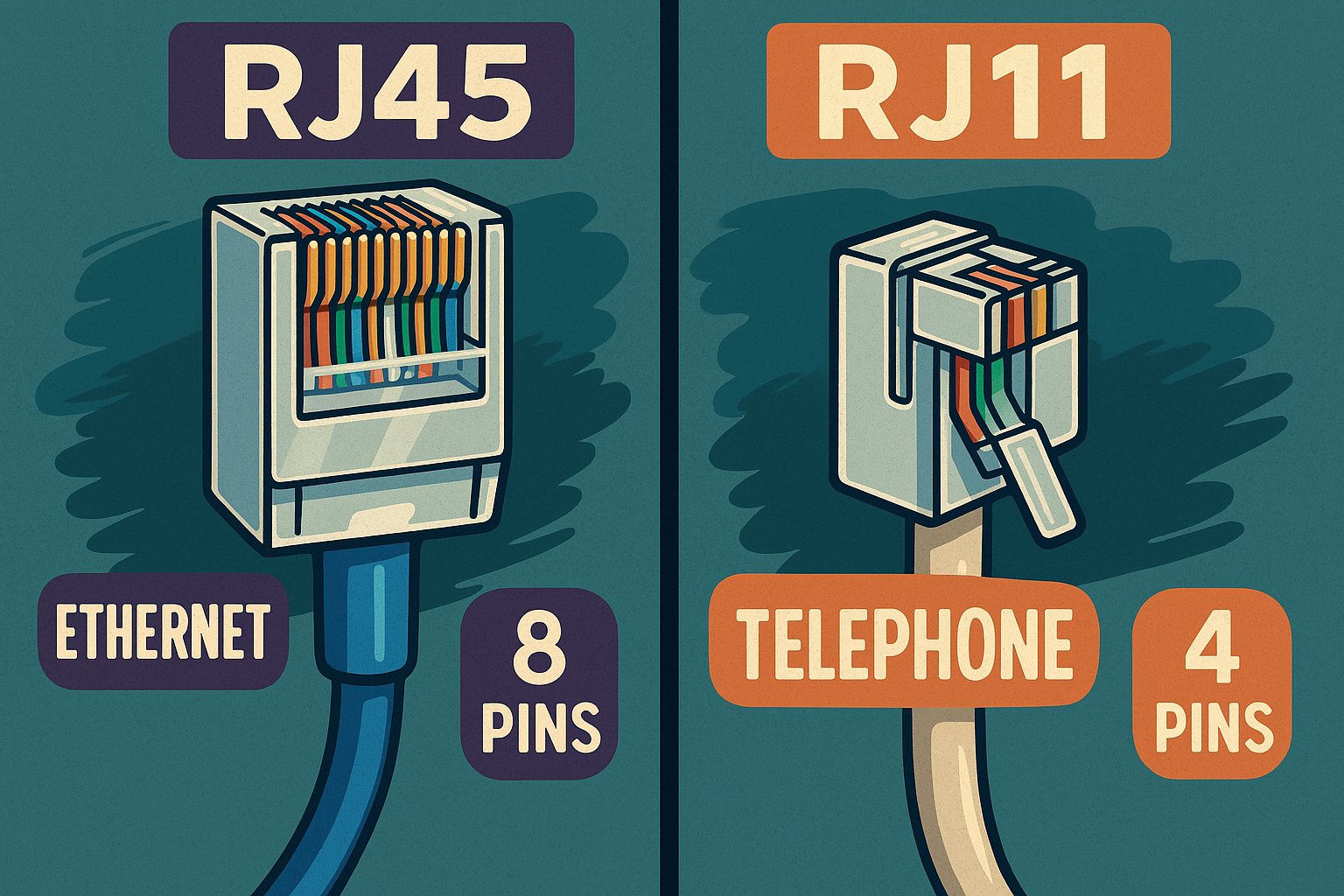
Both cables use RJ45 connectors, but proper installation requires adherence to TIA/EIA 568A or 568B wiring standards to ensure network stability.
BitcoinVersus.Tech Editor’s Note:
We volunteer daily to ensure the credibility of the information on this platform is Verifiably True. If you would like to support to help further secure the integrity of our research initiatives, please donate here
BitcoinVersus.tech is not a financial advisor. This media platform reports on financial subjects purely for informational purposes.
 Bitcoin Versus
Leave a comment