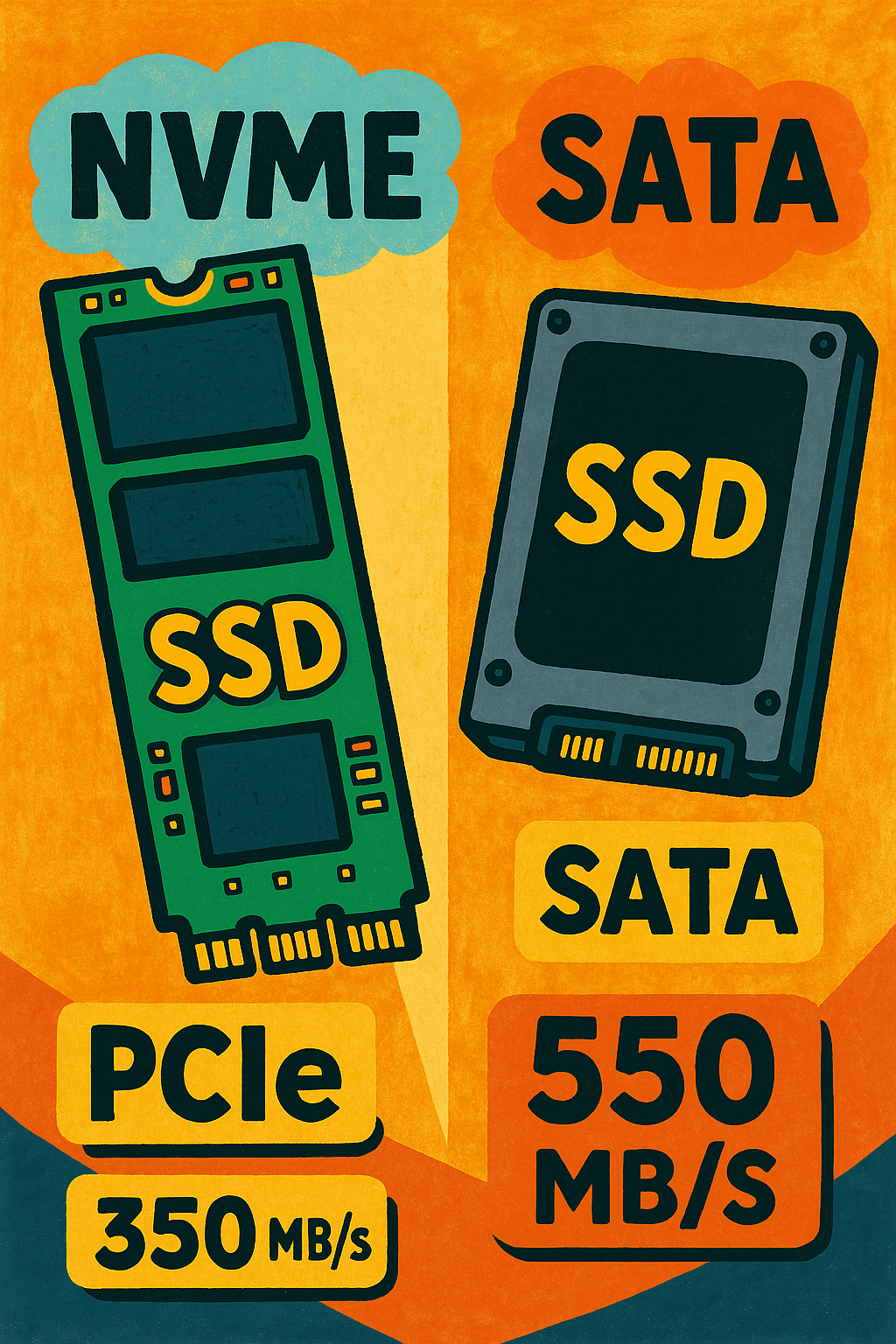
NVMe (Non-Volatile Memory Express) and SATA (Serial ATA) are two types of interfaces used to connect SSDs to a system, and while both offer significant advantages over traditional HDDs, their performance differences are critical.
SATA SSDs, which use the older AHCI protocol and connect via the SATA III interface, typically max out at 550 MB/s read/write speeds due to interface limitations. These drives are common in older laptops and desktops and remain cost-effective for general use.
NVMe SSDs, on the other hand, use the PCIe (Peripheral Component Interconnect Express) bus and are designed specifically for SSDs, allowing direct CPU access with minimal latency.
A PCIe Gen 3 x4 NVMe SSD can deliver up to 3,500 MB/s read speeds, and newer PCIe Gen 4 NVMe drives can reach up to 7,000 MB/s.
This drastic improvement in speed makes NVMe ideal for high-performance tasks such as gaming, video editing, virtualization, and boot drive acceleration.
NVMe drives also benefit from a smaller M.2 form factor, which reduces cable clutter and power usage.
Technicians preparing for the CompTIA A+ exam should understand these measurable performance differences, connector types (SATA cables vs. M.2 or U.2 slots), and compatibility considerations.
Systems that don’t support NVMe will revert to SATA speeds or may not detect the drive at all, making BIOS settings and motherboard specs a critical part of the installation process.
BitcoinVersus.Tech Editor’s Note:
We volunteer daily to ensure the credibility of the information on this platform is Verifiably True. If you would like to support to help further secure the integrity of our research initiatives, please donate here
BitcoinVersus.tech is not a financial advisor. This media platform reports on financial subjects purely for informational purposes.
 Bitcoin Versus
Leave a comment