Universal Serial Bus (USB) is a standardized interface used to connect peripheral devices to computers, supporting both data transfer and power delivery.
Since its introduction in the 1990s, USB has evolved through several versions, each offering significant improvements in bandwidth, power output, and connector type.
The most common USB standards include USB 1.1, USB 2.0, USB 3.0, USB 3.1, USB 3.2, and USB4. Each version is backward compatible with previous versions, but performance will default to the lowest common standard.
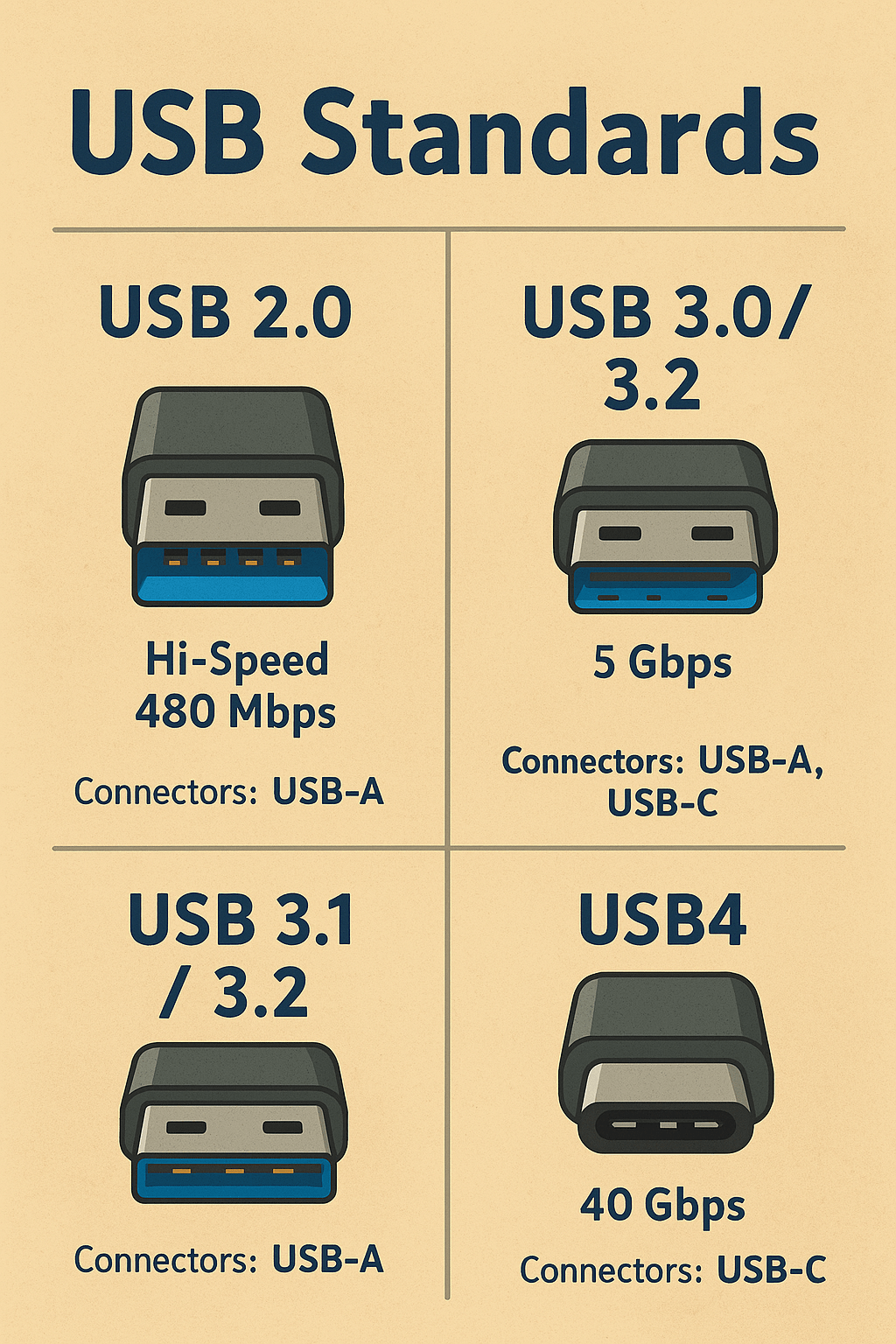
USB 2.0, often called Hi-Speed USB, supports up to 480 Mbps, while USB 3.0 (also referred to as SuperSpeed) introduced 5 Gbps transfer rates and blue-colored ports. USB 3.1 Gen 2 and USB 3.2 increased speeds to 10 Gbps and beyond, using both Type-A and Type-C connectors. The latest, USB4, reaches up to 40 Gbps, supports Thunderbolt 3 compatibility, and relies primarily on the reversible USB-C connector.
In addition to faster speeds, modern USB versions support enhanced power delivery (PD), allowing devices like laptops, monitors, and external drives to be powered entirely through a USB cable.
For CompTIA A+ candidates, it’s important to identify USB versions by port color, symbol, and physical connector type, while also understanding their roles in data transfer, charging, and peripheral connectivity.
BitcoinVersus.Tech Editor’s Note:
We volunteer daily to ensure the credibility of the information on this platform is Verifiably True. If you would like to support to help further secure the integrity of our research initiatives, please donate here
BitcoinVersus.tech is not a financial advisor. This media platform reports on financial subjects purely for informational purposes.
 Bitcoin Versus
Leave a comment