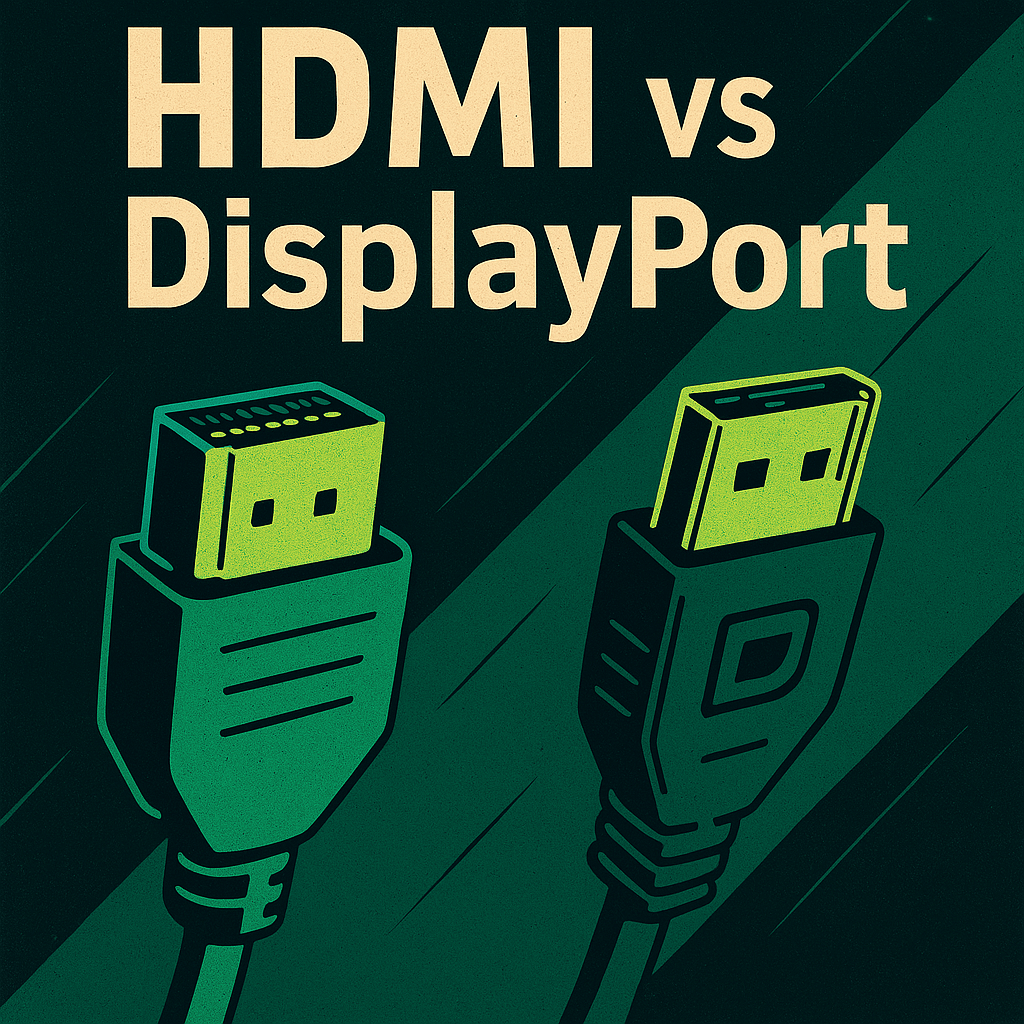
HDMI (High-Definition Multimedia Interface) and DisplayPort are two widely adopted digital display interfaces, but they are optimized for different environments.
HDMI is the standard for consumer electronics, including TVs, projectors, game consoles, and media players. It supports both audio and video in a single cable and includes features like CEC (Consumer Electronics Control) and ARC (Audio Return Channel).
HDMI is backward compatible and supports multiple versions, with HDMI 2.1 allowing resolutions up to 8K at 60Hz and dynamic HDR support.
DisplayPort, developed by VESA, is geared toward computer and professional environments.
It supports higher bandwidths than HDMI at comparable versions, and includes Multi-Stream Transport (MST), which allows daisy-chaining multiple monitors from a single port.
DisplayPort 1.4 supports up to 8K at 60Hz with Display Stream Compression (DSC), while DisplayPort 2.0 increases bandwidth for even higher refresh rates and color depths.
Unlike HDMI, DisplayPort doesn’t carry licensing fees, making it more common in enterprise and OEM hardware. For technicians, understanding which to recommend depends on device compatibility, refresh rate needs, and feature support, particularly in multi-monitor workstations or home theater builds.
BitcoinVersus.Tech Editor’s Note:
We volunteer daily to ensure the credibility of the information on this platform is Verifiably True. If you would like to support to help further secure the integrity of our research initiatives, please donate here
BitcoinVersus.tech is not a financial advisor. This media platform reports on financial subjects purely for informational purposes.
 Bitcoin Versus
Leave a comment