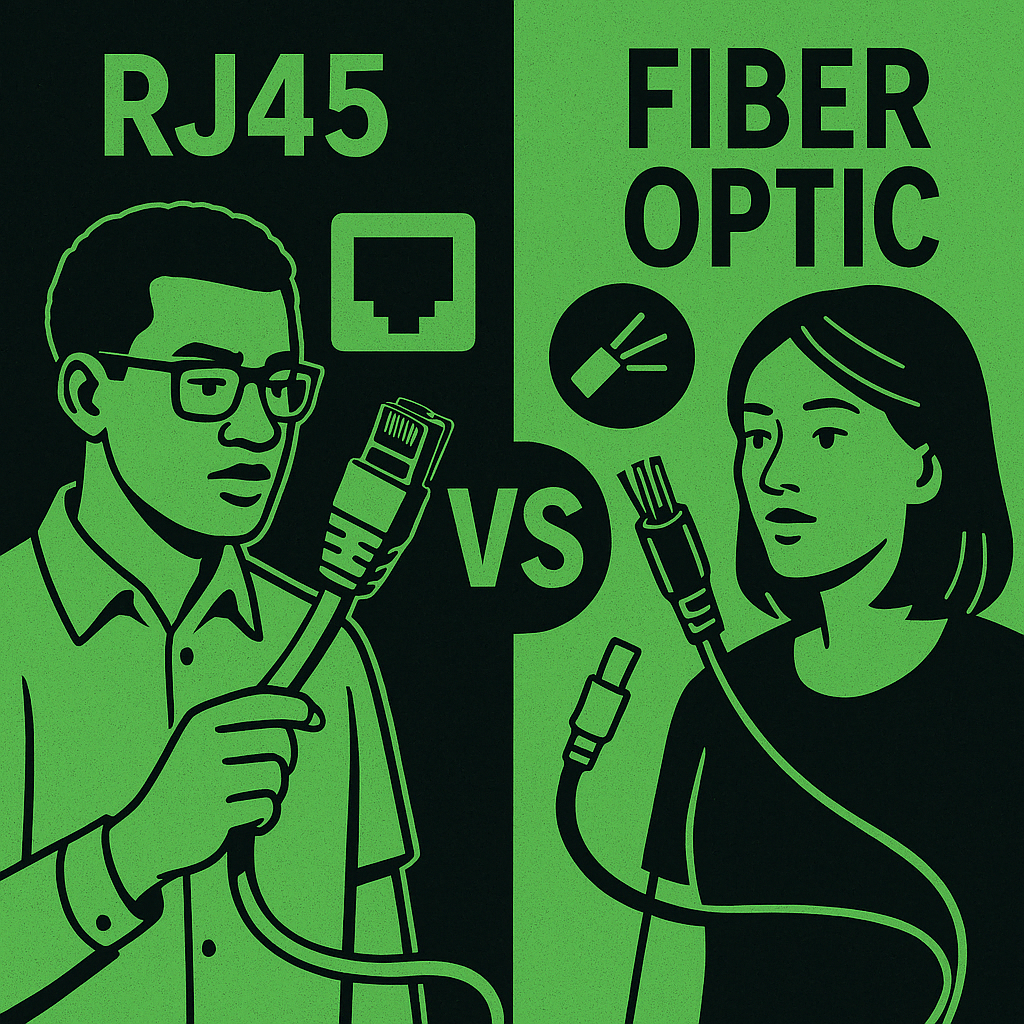
RJ45 Ethernet cabling and fiber optic cabling are two dominant physical media used in networking, each with unique characteristics suited for different scenarios.
RJ45 uses twisted-pair copper wires terminated with an 8P8C modular connector (commonly referred to as RJ45) and is typically deployed in LAN environments. Ethernet standards like Cat5e, Cat6, and Cat6a support speeds from 1 Gbps to 10 Gbps at distances up to 100 meters, and RJ45 is favored for its cost-effectiveness, simplicity, and compatibility with PoE (Power over Ethernet).
However, copper cables are susceptible to EMI (electromagnetic interference) and signal loss over longer distances.
Fiber optic cables, by contrast, transmit data using light pulses through glass or plastic strands, offering much higher bandwidth, lower latency, and longer-distance transmission—up to 40 km or more with single-mode fiber.
Fiber is immune to EMI, making it ideal for data centers, ISP backbones, and long-range point-to-point links. It also supports higher speeds like 40 Gbps or 100 Gbps when used with technologies like QSFP or SFP+ modules.
The trade-offs are higher cost, fragile connectors, and specialized tools required for termination and testing. For CompTIA A+ candidates, understanding when to use RJ45 vs fiber is essential for balancing performance, distance, and budget.
BitcoinVersus.Tech Editor’s Note:
We volunteer daily to ensure the credibility of the information on this platform is Verifiably True. If you would like to support to help further secure the integrity of our research initiatives, please donate here
BitcoinVersus.tech is not a financial advisor. This media platform reports on financial subjects purely for informational purposes.
 Bitcoin Versus
Leave a comment