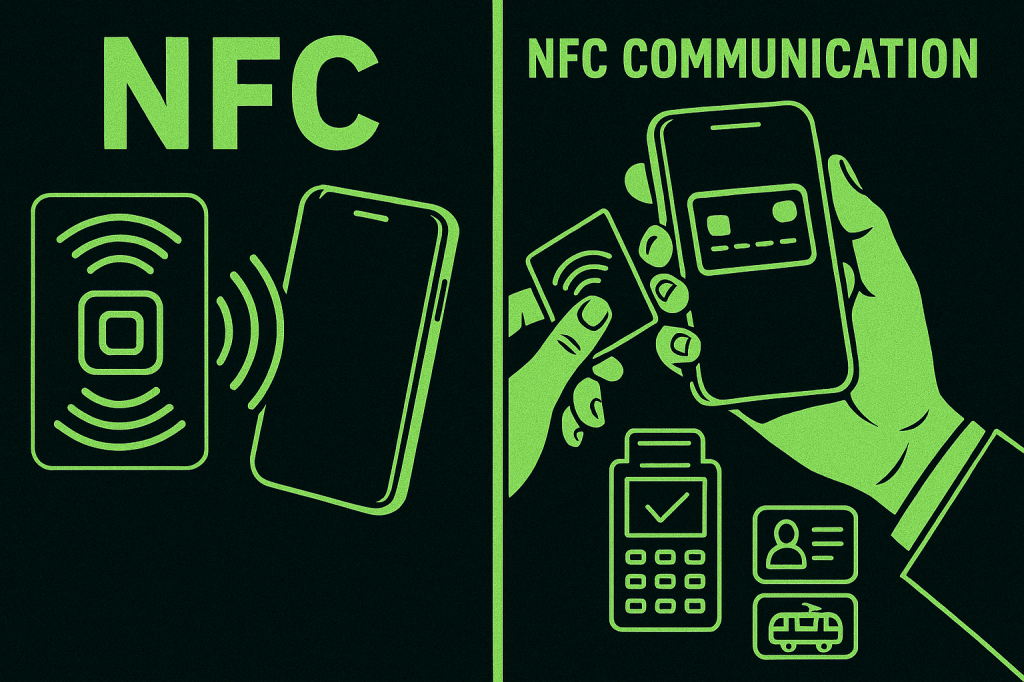
NFC (Near Field Communication) is a short-range wireless communication protocol that enables two electronic devices to exchange data when they are within approximately 4 centimeters of each other. Operating at 13.56 MHz, NFC is used primarily in mobile payments, identification badges, smart cards, and secure authentication systems.
Unlike Bluetooth, which requires device pairing, NFC connections are instantaneous and rely on inductive coupling to transfer information. It supports three modes: peer-to-peer, reader/writer, and card emulation, allowing a smartphone, for example, to act as a payment card, a digital ID, or even a transit pass.
NFC is essential in troubleshooting mobile device connectivity, configuring tap-to-pay services, and deploying device-based authentication methods.
Because it consumes little power and functions passively in some modes, NFC can be embedded in low-power devices like hotel keycards or wristbands.
It is commonly found integrated into Android and iOS smartphones, and often works in conjunction with secure elements or trusted execution environments (TEE). Technicians must also understand NFC’s limitations, such as its short range, susceptibility to interference from metal objects, and the importance of ensuring firmware and OS-level security to avoid unauthorized data exchanges.
BitcoinVersus.Tech Editor’s Note:
We volunteer daily to ensure the credibility of the information on this platform is Verifiably True. If you would like to support to help further secure the integrity of our research initiatives, please donate here
BitcoinVersus.tech is not a financial advisor. This media platform reports on financial subjects purely for informational purposes.
 Bitcoin Versus
Leave a comment