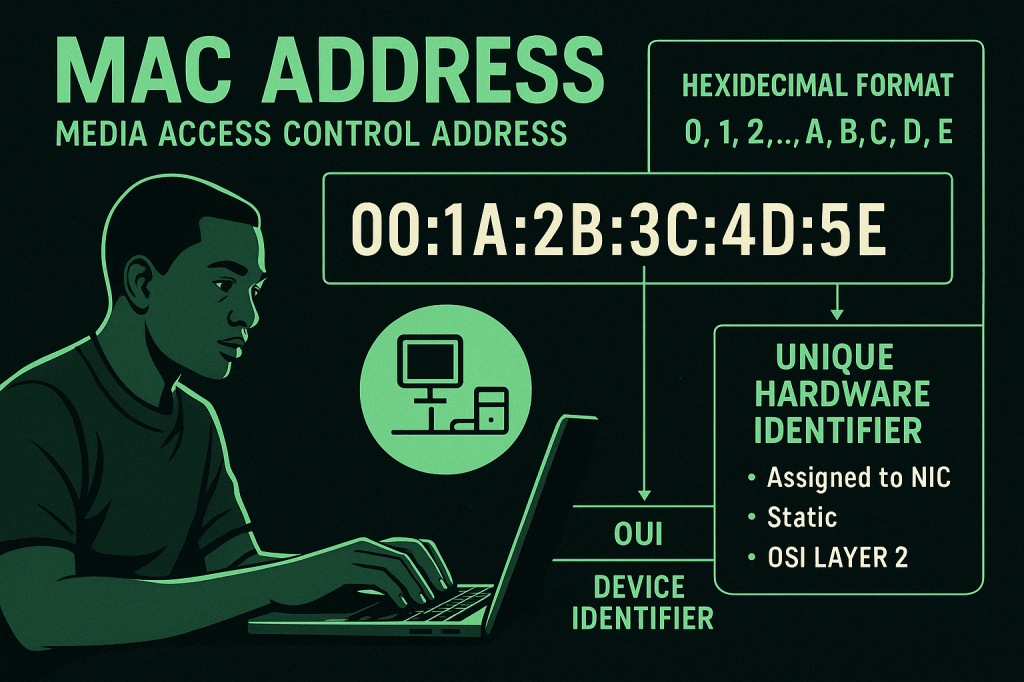
A MAC address (Media Access Control address) is a globally unique identifier assigned to a network interface controller (NIC) by the manufacturer. It operates at OSI Layer 2 (Data Link Layer) and is typically written in hexadecimal format, such as 00:1A:2B:3C:4D:5E.
The MAC address consists of two parts: the Organizationally Unique Identifier (OUI), which identifies the vendor, and the device identifier, which is specific to the NIC. MAC addresses are essential in local area network (LAN) communication, as they are used by switches to direct traffic and build MAC address tables for efficient data forwarding.
MAC addresses are static, but they can be spoofed for privacy or testing purposes. Devices rely on ARP (Address Resolution Protocol) to map IP addresses to MAC addresses for proper delivery on IPv4 networks.
In modern networking, MAC filtering can be used for access control, while technologies like Wake-on-LAN depend on the MAC address to send “magic packets” to specific devices. Understanding how MAC addresses influence packet delivery, network security, and device tracking is vital for configuring secure and efficient networking environments.
BitcoinVersus.Tech Editor’s Note:
We volunteer daily to ensure the credibility of the information on this platform is Verifiably True. If you would like to support to help further secure the integrity of our research initiatives, please donate here
BitcoinVersus.tech is not a financial advisor. This media platform reports on financial subjects purely for informational purposes.
 Bitcoin Versus
Leave a comment