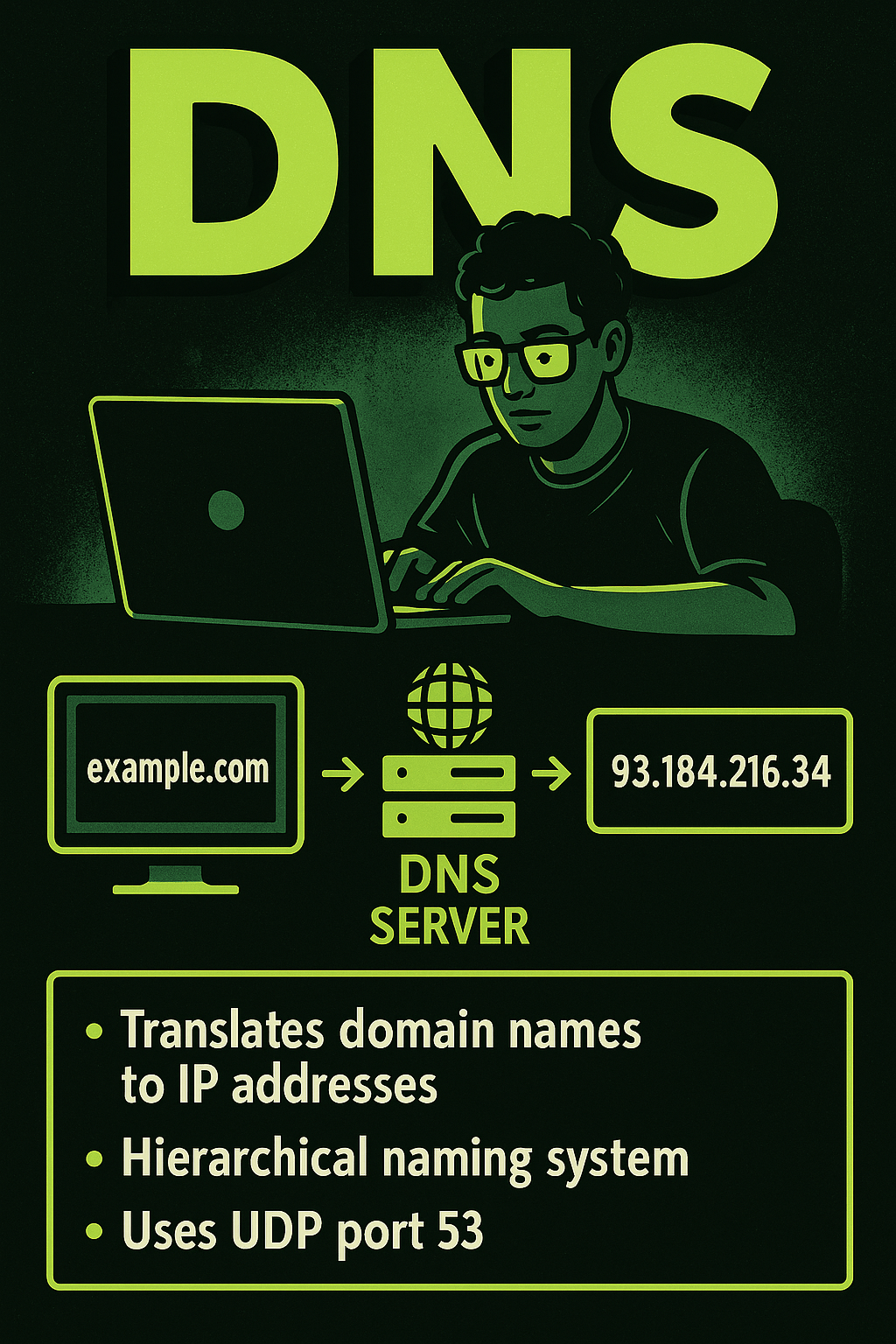
DNS (Domain Name System) is a foundational internet service that translates human-friendly domain names like example.com into IP addresses that computers use to communicate, such as 93.184.216.34.
This system works in a hierarchical manner, involving root servers, top-level domains (TLDs), and authoritative name servers. When a user enters a URL into a browser, a DNS query is made to resolve the domain into its corresponding IP address. This process may involve recursive resolution, where a DNS resolver queries multiple servers on behalf of the client until a match is found. Once resolved, the result is often cached to speed up future lookups.
DNS can also provide additional functions such as mail exchange (MX) records, CNAME (canonical name) redirection, and TXT records used for security and verification protocols. DNS operates over UDP port 53 (and TCP 53 for larger transfers), making it a common target for spoofing or DoS attacks, especially in poorly secured environments.
Many networks use internal DNS servers for local name resolution, while forwarding requests to public services like Google DNS (8.8.8.8) or Cloudflare DNS (1.1.1.1). Understanding DNS is essential for troubleshooting internet connectivity, managing domain records, and configuring custom name resolution in enterprise networks.
BitcoinVersus.Tech Editor’s Note:
We volunteer daily to ensure the credibility of the information on this platform is Verifiably True. If you would like to support to help further secure the integrity of our research initiatives, please donate here
BitcoinVersus.tech is not a financial advisor. This media platform reports on financial subjects purely for informational purposes.
 Bitcoin Versus
Leave a comment