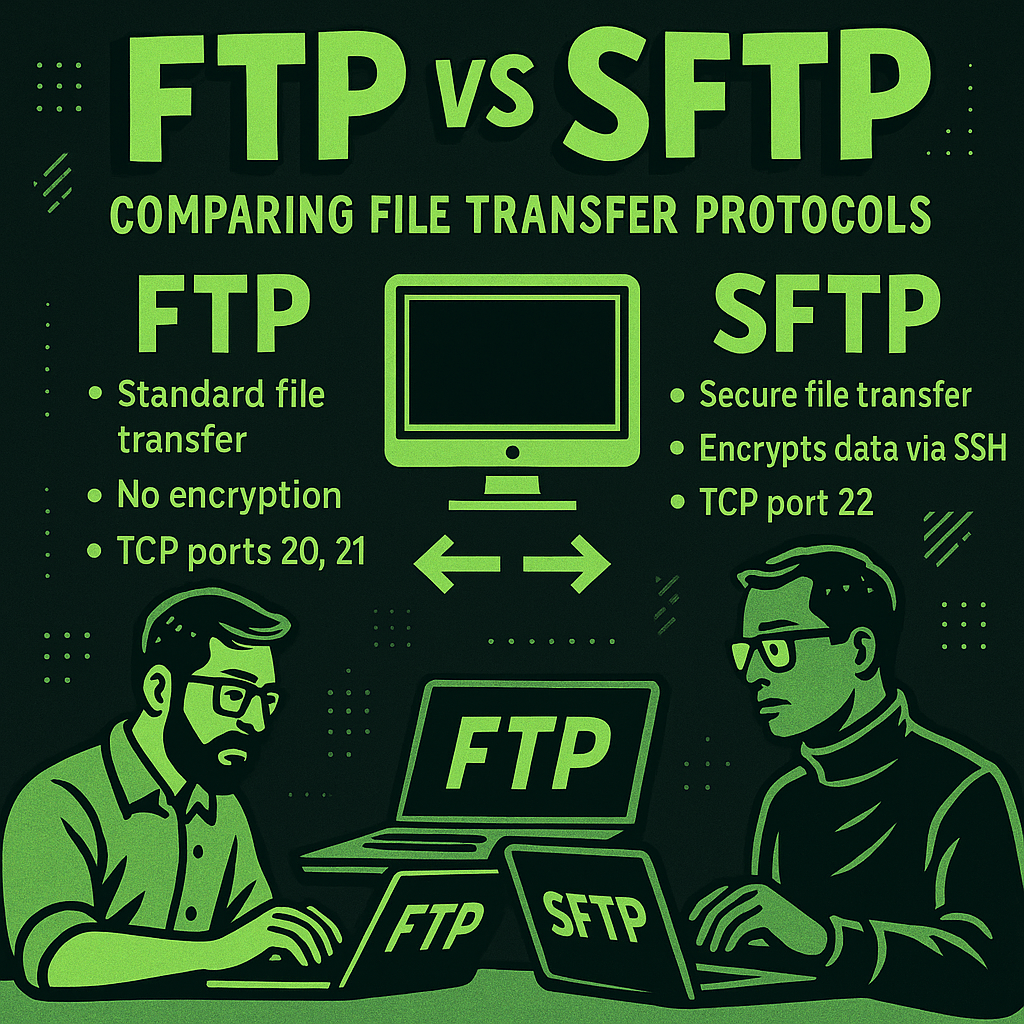
FTP (File Transfer Protocol) is one of the oldest network protocols designed for transferring files between a client and a server. It operates over TCP ports 20 and 21 and typically requires authentication with a username and password.
FTP sends data in plaintext, meaning both file contents and login credentials are vulnerable to interception, making it unsuitable for transferring sensitive information over untrusted networks. FTP is still found in internal networks or older systems where encryption is not a priority but high-speed bulk transfer is essential.
SFTP (SSH File Transfer Protocol), despite its similar name, is a completely different protocol that operates over TCP port 22 as part of the SSH (Secure Shell) protocol suite. It encrypts the entire session, including authentication and file contents, providing confidentiality and security during file transfers.
SFTP is widely used in modern environments where data protection and compliance are critical, such as in healthcare, finance, or corporate file-sharing. Understanding the differences between FTP and SFTP helps technicians choose appropriate methods for secure file operations depending on the network environment and sensitivity of the data involved.
BitcoinVersus.Tech Editor’s Note:
We volunteer daily to ensure the credibility of the information on this platform is Verifiably True. If you would like to support to help further secure the integrity of our research initiatives, please donate here
BitcoinVersus.tech is not a financial advisor. This media platform reports on financial subjects purely for informational purposes.
 Bitcoin Versus
Leave a comment