The Master Oscillator Power Amplifier architecture is a pivotal innovation in laser technology, enhancing performance across various applications.
The Master Oscillator–Power Amplifier (MOPA) is a system that separates signal generation and amplification into two stages.
The master oscillator generates a low-power, stable signal with desired characteristics such as frequency and phase.
This signal is then fed into the power amplifier, which boosts the output power while maintaining the original signal quality.
MOPA systems are widely used in laser technology, RF transmitters, and precision applications due to their reliability, efficiency, and ability to handle varying load conditions.
According to Coherent Inc., MOPA systems consist of two main components: the Master Oscillator (MO), which generates a low-power seed signal with specific characteristics, and the Power Amplifier (PA), which significantly boosts this seed signal’s output power while preserving its original qualities.
NASA’s Goddard Space Flight Center (GSFC) is developing a MOPA laser transmitter for the Laser Interferometer Space Antenna (LISA) mission.
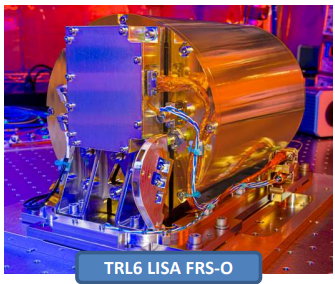
Per NASA Technical Reports, this effort includes designing, evaluating, and testing components such as the master oscillator, power amplifier, frequency reference system, power monitor detector, and laser electronics module to meet space flight requirements.
In the realm of fiber lasers, researchers have achieved significant advancements using MOPA configurations.
A study published in High Power Laser Science and Engineering reports the development of a high-power mid-infrared femtosecond MOPA Er:ZBLAN fiber laser system, delivering 8.12 W, 148 fs pulses at 2.8 μm. This represents the highest average power achieved from a femtosecond mid-infrared laser source to date.
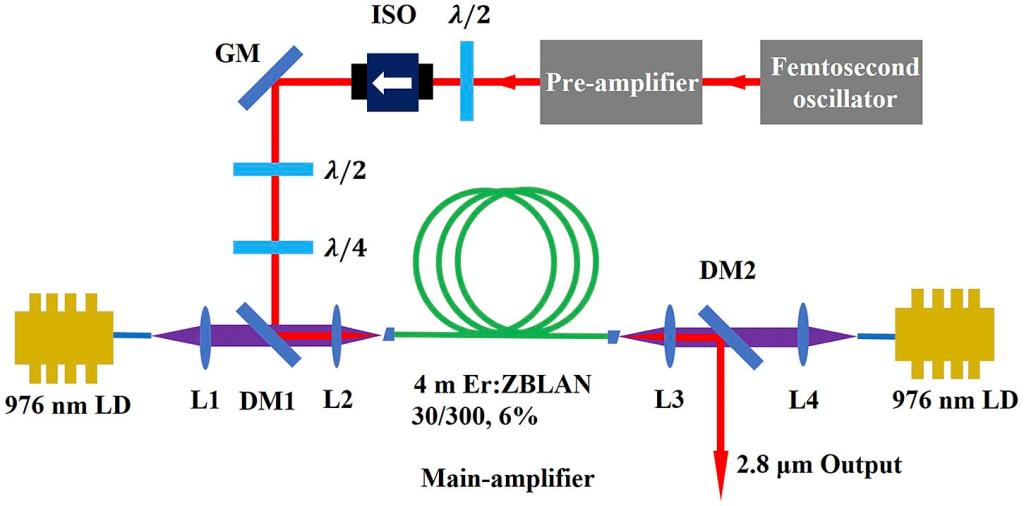
Additionally, a high-power nanosecond-pulsed thulium-doped fiber amplifier at 1.971 μm has been demonstrated using a MOPA configuration.
Applied Optics reports that this system achieved an average power of 238 W, peak power of 7.06 kW, and pulse energy of 0.477 mJ at a repetition rate of 500 kHz, showcasing the potential of MOPA architectures in high-power fiber laser applications.
The versatility of MOPA systems extends to semiconductor lasers as well.
Luminar Technologies, a leading player in LiDAR (Light Detection and Ranging) technology, utilizes semiconductor lasers as a core component of its LiDAR systems.
These systems are designed for autonomous vehicles, enabling precise object detection, mapping, and navigation.
BitcoinVersus.Tech Editor’s Note:
We volunteer daily to ensure the credibility of the information on this platform is Verifiably True. If you would like to support to help further secure the integrity of our research initiatives, please donate here
BitcoinVersus.tech is not a financial advisor. This media platform reports on financial subjects purely for informational purposes
 Bitcoin Versus
Leave a comment