What Is a Docking Station?
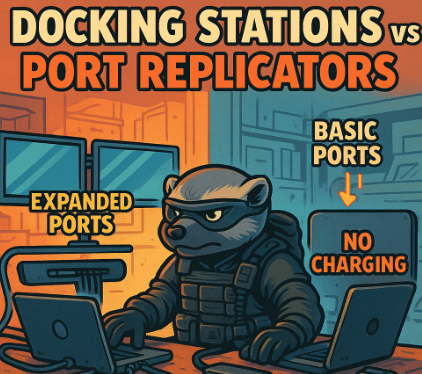
A docking station is a physical expansion unit that connects to a laptop and transforms it into a full desktop workstation. It adds additional ports such as USB, Ethernet, HDMI, DisplayPort, audio jacks, and charging capabilities, often through a single USB-C or proprietary connector.
Docking stations typically:
- Support multiple monitors
- Provide power passthrough (charging)
- Include internal circuitry for display output and device control
- Are larger and more expensive than replicators
Used in corporate or hybrid work environments, docking stations reduce wear on laptop ports and offer plug-and-play productivity.
What Is a Port Replicator?
A port replicator mimics the laptop’s existing ports—USB, audio, network—but doesn’t offer advanced features like display output or GPU handling. It’s more like a simple hub or breakout box, and may lack power delivery.
Port replicators:
- Are more affordable
- Often require external power for full use
- Don’t include video expansion or embedded controllers
They’re useful when basic expansion is needed but don’t replace docking stations for full workstation setups.
BitcoinVersus.Tech Editor’s Note:
We volunteer daily to ensure the credibility of the information on this platform is Verifiably True. If you would like to support to help further secure the integrity of our research initiatives, please donate here
BitcoinVersus.tech is not a financial advisor. This media platform reports on financial subjects purely for informational purposes.
 Bitcoin Versus
Leave a comment