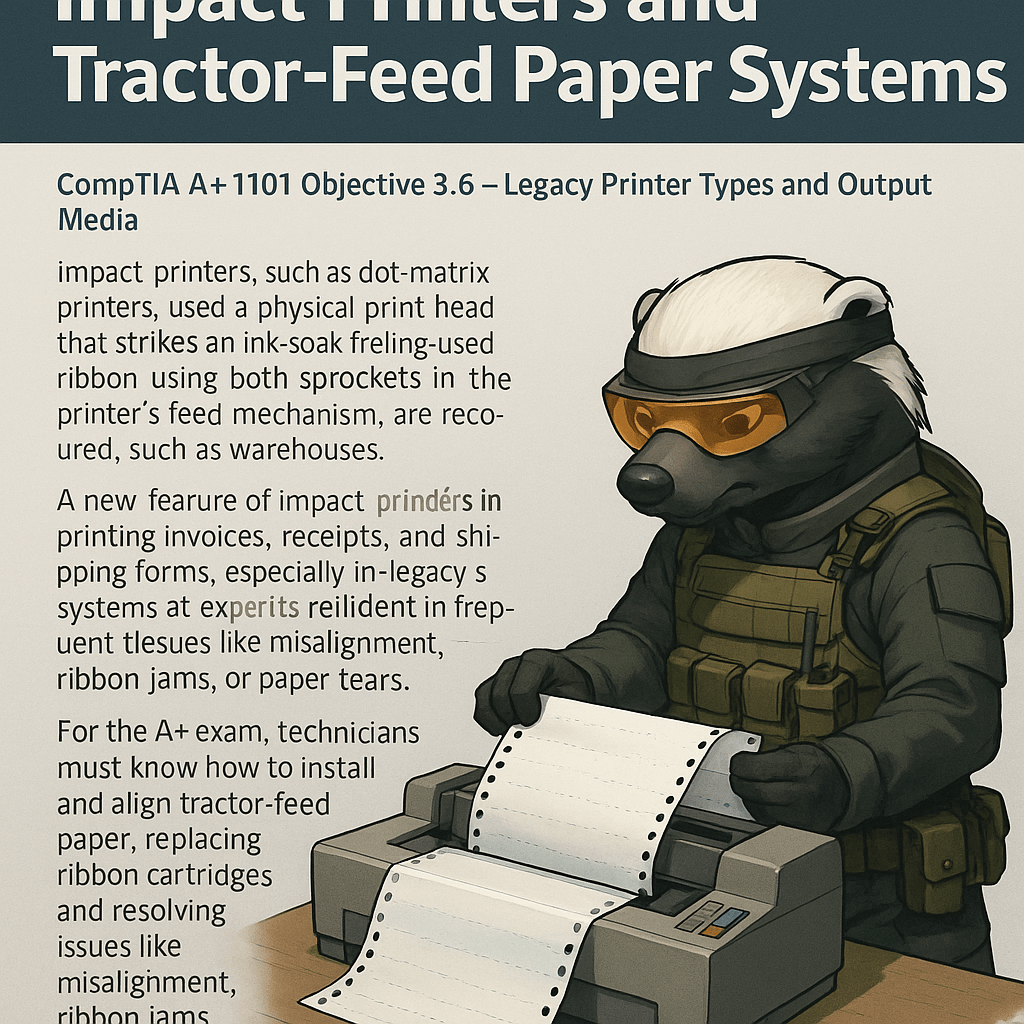
Impact printers, such as dot matrix printers, use a physical print head that strikes an ink-soaked ribbon against the paper—similar to a typewriter. These devices are primarily used in environments where multi-part forms, carbon copies, or durability in dusty conditions are required, such as warehouses, industrial settings, and point-of-sale systems.
A key feature of impact printers is their use of tractor-feed paper. This paper includes perforated holes on both sides that align with sprockets in the printer’s feed mechanism, allowing for precise, continuous feeding of long sheets or multipart forms.
The printer pulls the paper forward after each line is printed, maintaining alignment for both single and multi-copy outputs.
Although loud and slower than modern printers, impact printers remain relevant for printing invoices, receipts, and shipping forms, especially in legacy systems that require hard-copy duplicates. The output may be low-resolution, but it is permanent, smudge-resistant, and ideal for archival use.
For the A+ exam, technicians must know how to install and align tractor-feed paper, replace the ribbon cartridge, and resolve common issues like misalignment, ribbon jams, or paper tears.
They should also understand how to configure character sets, line spacing, and print density in the printer driver or control panel. Because these devices are typically used in niche business environments, the ability to maintain them can be a valuable skill when supporting legacy hardware.
BitcoinVersus.Tech Editor’s Note:
We volunteer daily to ensure the credibility of the information on this platform is Verifiably True. If you would like to support to help further secure the integrity of our research initiatives, please donate here
BitcoinVersus.tech is not a financial advisor. This media platform reports on financial subjects purely for informational purposes.
 Bitcoin Versus
Leave a comment