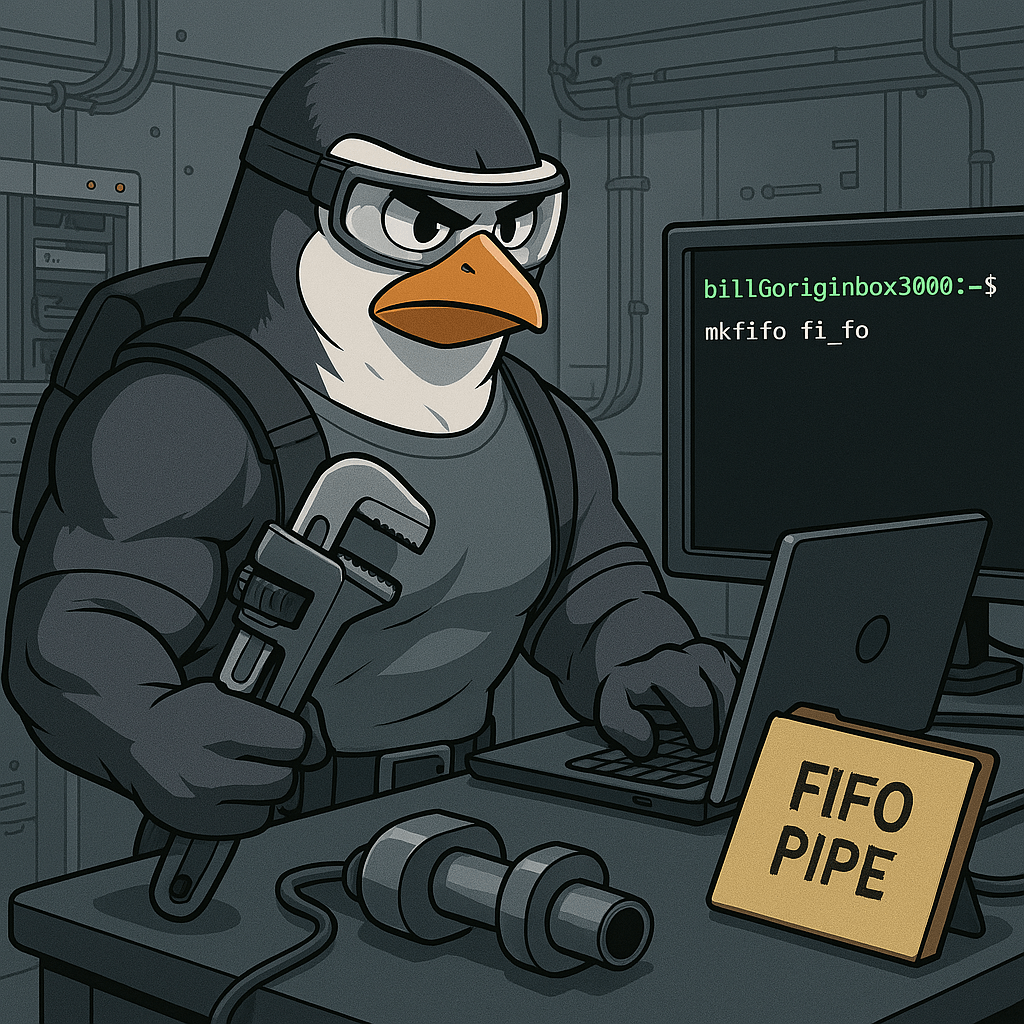
The mkfifo command in Linux is used to create named pipes, also known as FIFOs (First In, First Out). Unlike regular files, a FIFO behaves like a pipe that allows data to flow between processes.
You can think of it as a communication tunnel where one process writes data and another reads it.
For example, running mkfifo fi_fo creates a named pipe called fi_fo. If one terminal sends data into it with echo "Bitcoinversus.tech" > fi_fo, another terminal can read that data using cat fi_fo.

The read operation will wait until something is written, and the write will pause until a reader is present, allowing synchronized data transfer. This is useful for scripting, logging, and building custom workflows between processes.
For Linux+ candidates, understanding how mkfifo works provides insight into how Linux handles low-level process communication cleanly and efficiently.
BitcoinVersus.Tech Editor’s Note:
We volunteer daily to ensure the credibility of the information on this platform is Verifiably True. If you would like to support to help further secure the integrity of our research initiatives, please donate here
BitcoinVersus.tech is not a financial advisor. This media platform reports on financial subjects purely for informational purposes.
 Bitcoin Versus
Leave a comment