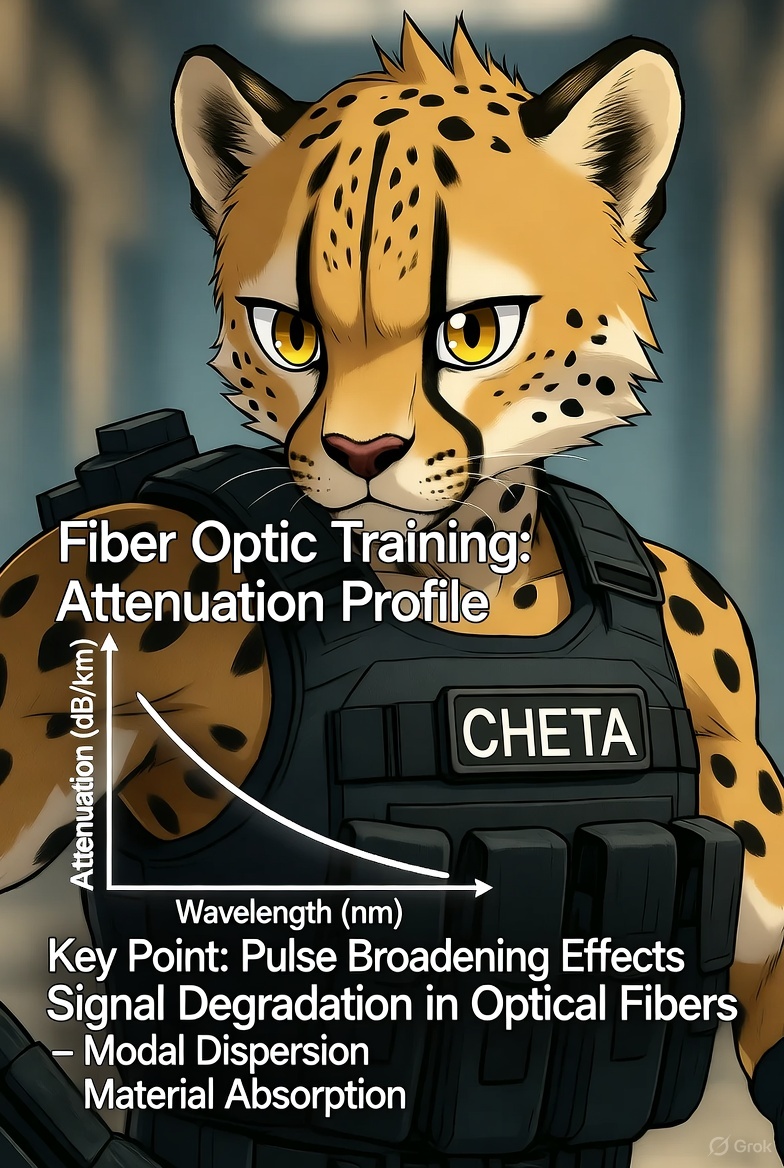
The Attenuation Profile is a continuous measurement of how much optical signal is lost as it travels through a fiber. It’s derived from OTDR traces and plotted as a slope that represents signal strength versus distance.
A uniform slope indicates consistent fiber quality, while sudden drops or spikes reveal localized issues such as poor splices, dirty connectors, or microbends.
The profile helps technicians assess the health of the fiber by identifying where losses occur, how severe they are, and whether they fall within acceptable thresholds.
It also reveals gradual degradation over time, such as aging, thermal stress, or water ingress. The backscatter level forms the baseline of the trace, and variations in this level can indicate changes in fiber type or mode field diameter.
Dead zones near the launch point or after strong reflections must be accounted for, as they can obscure nearby events.
By interpreting the attenuation profile, technicians can verify splice quality, connector integrity, and overall installation performance without needing physical access to every segment of the fiber. This makes it an essential tool for certifying new installations, diagnosing faults, and maintaining long-haul or high-capacity networks.
BitcoinVersus.Tech Editor’s Note:
We volunteer daily to ensure the credibility of the information on this platform is Verifiably True. If you would like to support to help further secure the integrity of our research initiatives, please donate here
BitcoinVersus.tech is not a financial advisor. This media platform reports on financial subjects purely for informational purposes.
 Bitcoin Versus
Leave a comment