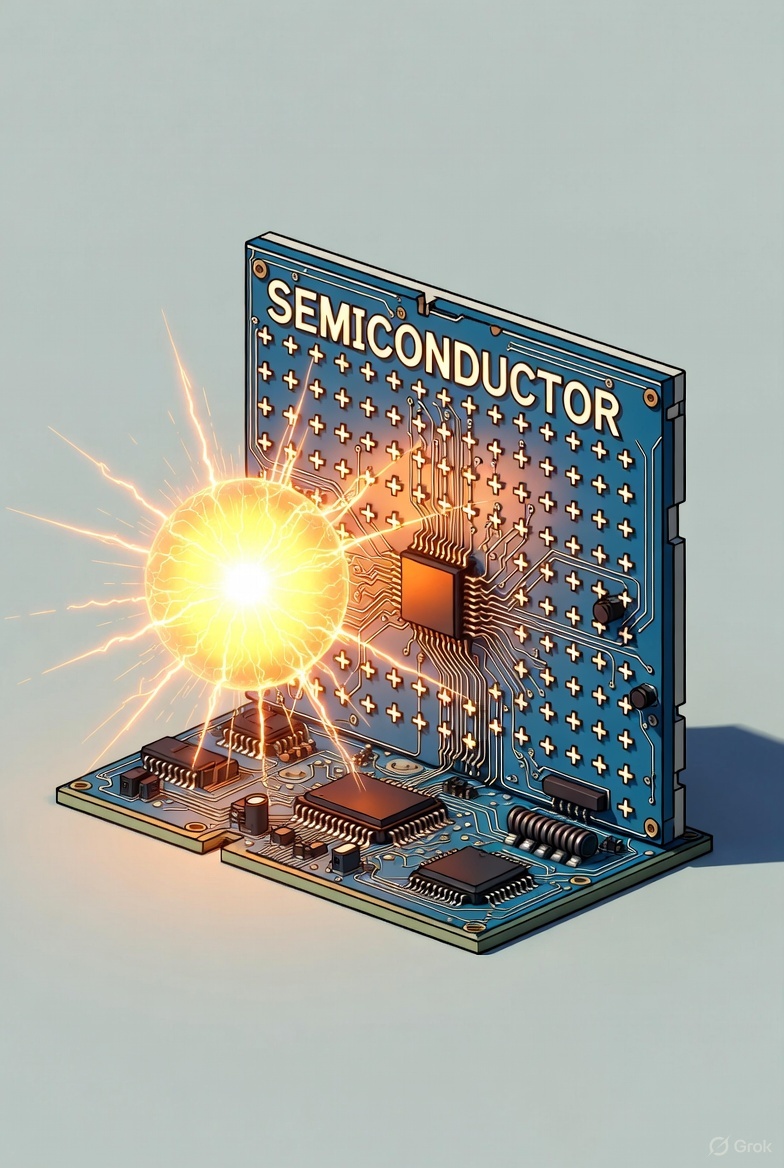
Basic electrical properties describe how different materials respond to electric current and electric fields.
The most fundamental of these is electrical conductivity, which measures how easily a material allows electric current to flow through it.
Materials with high conductivity (like copper or silver) are called conductors; those with very low conductivity (like glass or rubber) are insulators; and materials in between (like silicon or germanium) are semiconductors. The opposite of conductivity is resistivity, which shows how much a material resists the flow of current.
Another key property is permittivity, which determines how well a material can store electric charge when placed in an electric field, affecting things like capacitors. Conductivity depends on the presence and movement of charge carriers—mainly free electrons in metals, both electrons and holes in semiconductors, and ions in liquids like electrolytes.
These properties change with temperature (usually increasing resistance in metals when heated, but improving conduction in semiconductors), and they include concepts like dielectric strength (how much voltage an insulator can withstand before breaking down) and the energy bandgap in semiconductors, which decides whether a material acts more like a conductor or an insulator.
Together, these basic electrical properties are essential for understanding and designing all electronic devices, from wires and resistors to transistors and integrated circuits.
BitcoinVersus.Tech Editor’s Note:
We volunteer daily to ensure the credibility of the information on this platform is Verifiably True.
If you would like to support to help further secure the integrity of our research initiatives, please donate here: bc1qrved9tfquym6u3age7xhmnkjs2lq8j9aulperagkuhtuk5w5c35ssfpge8
BitcoinVersus.tech is not a financial advisor. This media platform reports on financial subjects purely for informational purposes.
 Bitcoin Versus
Leave a comment