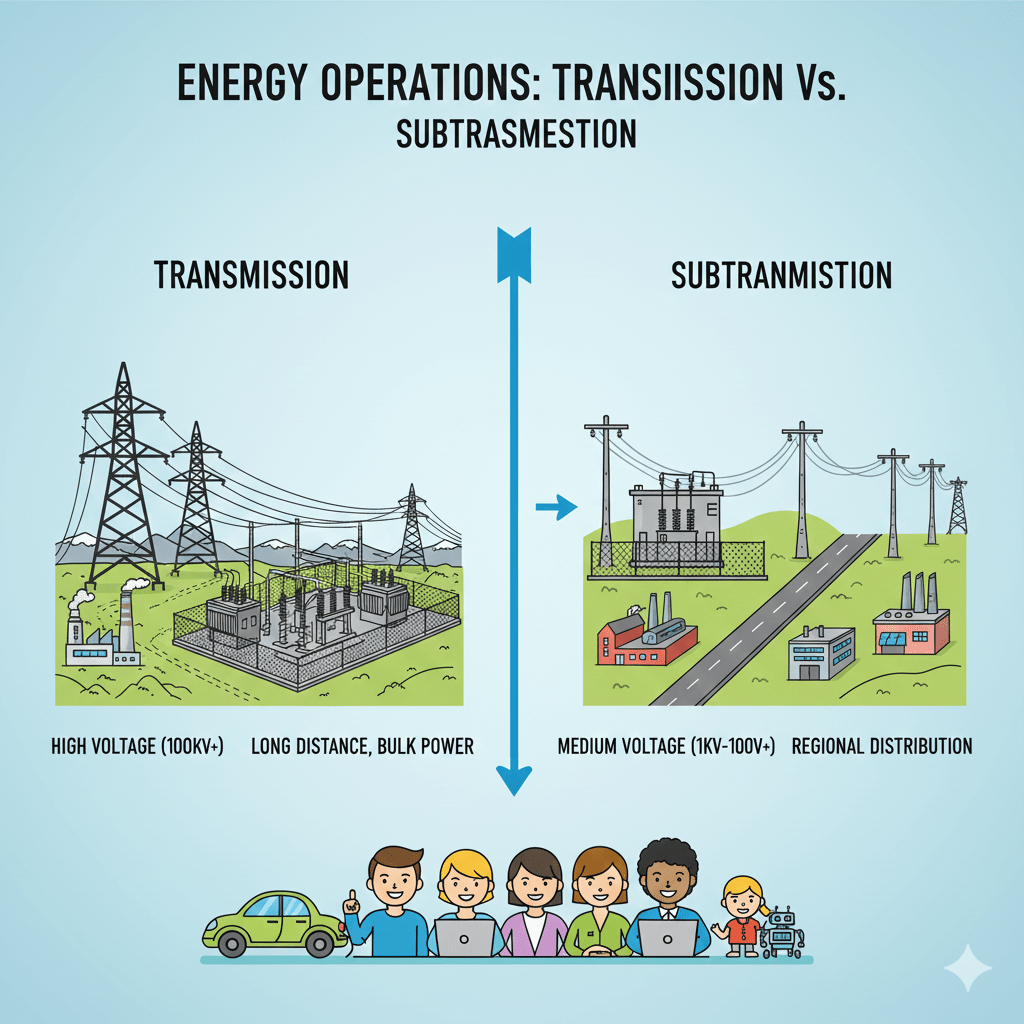
Transmission in electric power systems refers to the bulk transfer of electrical energy at very high voltages (typically 115 kV to 765 kV or higher) from generating stations to major substations, using interconnected networks of overhead or underground lines designed to move large amounts of power efficiently over long distances with minimal losses.
Subtransmission, by contrast, operates at intermediate voltage levels (generally 33 kV to 138 kV) and serves as the bridge between the high‑voltage transmission grid and the lower‑voltage distribution system, moving electricity from transmission substations to distribution substations or large industrial customers.
Transmission
Transmission is the backbone of the electric grid, responsible for carrying electricity from power plants to load centers across regions and states.
Because power must travel long distances, transmission lines use high voltages to reduce current and minimize resistive losses.
These lines are often supported by large steel lattice towers or underground cables, forming a networked system that ensures reliability and redundancy. Transmission substations step up voltage immediately after generation (via step‑up transformers) and later step it down at receiving substations for further distribution.
The transmission system is part of the Bulk Electric System (BES), regulated by standards such as those from NERC, and is critical for maintaining grid stability and interconnection across wide geographic areas.
Subtransmission
Subtransmission occupies the intermediate layer of the grid. It operates at voltages lower than transmission but higher than distribution, typically in the 33–138 kV range. Its role is to deliver electricity from transmission substations to distribution substations or directly to large industrial facilities that require substantial power.
Subtransmission lines may be overhead or underground and are often radial or looped, depending on reliability needs. Unlike transmission, which is designed for long‑distance bulk transfer, subtransmission focuses on regional delivery, balancing efficiency with flexibility. It reduces voltage to levels that distribution systems can handle, ensuring safe and reliable delivery to end users.
Key Distinction
- Transmission: Long‑distance, high‑voltage, bulk movement of electricity (115–765 kV+).
- Subtransmission: Intermediate voltage, regional delivery from transmission substations to distribution substations (33–138 kV).
- Distribution: Final step, low‑voltage delivery (4–35 kV) to homes, businesses, and small industries.
Together, these layers form the hierarchical structure of the grid, ensuring that electricity generated at power plants can be efficiently transported, stepped down, and safely delivered to consumers.
BitcoinVersus.Tech Editor’s Note:
We volunteer daily to ensure the credibility of the information on this platform is Verifiably True.
If you would like to support to help further secure the integrity of our research initiatives, please donate here: bc1qrved9tfquym6u3age7xhmnkjs2lq8j9aulperagkuhtuk5w5c35ssfpge8
BitcoinVersus.tech is not a financial advisor. This media platform reports on financial subjects purely for informational purposes.
 Bitcoin Versus
Leave a comment