
A coaxial cable is a specialized electrical cable designed to carry high-frequency signals with minimal interference.
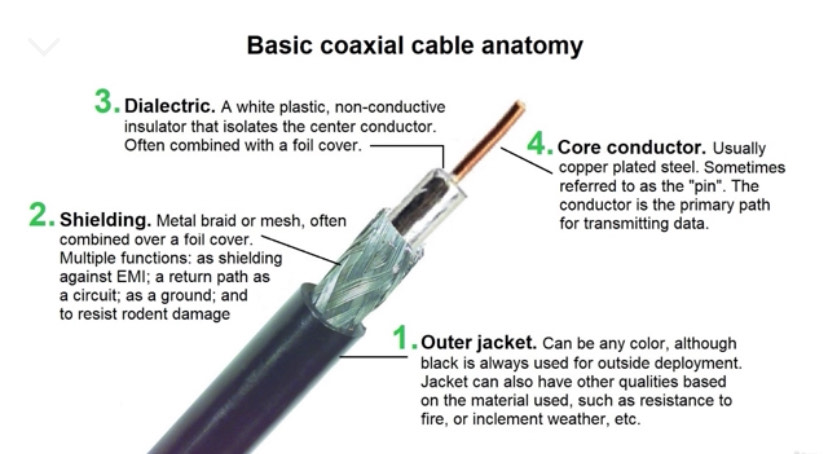
Its name comes from its concentric structure—each layer shares the same axis, which helps preserve signal integrity.
Coaxial cables are widely used in applications like cable television, internet service, radio transmission, and closed-circuit video systems.
At the center of the cable is the conductor, usually made of solid copper or copper-clad steel, which carries the signal.
Surrounding this is a dielectric insulator, typically made of polyethylene foam, that keeps the conductor properly spaced from the shielding layer. This spacing is critical for maintaining consistent impedance and reducing signal loss.
The shielding layer wraps around the dielectric and serves two purposes: it blocks external electromagnetic interference (EMI) and provides a grounding path.
Shields can be made of braided copper, aluminum foil, or a combination of both, with higher-grade cables using multiple layers for added protection. This shielding is what makes coaxial cable superior to unshielded twisted pair in noisy environments.
Finally, the outer jacket protects the cable from physical damage, moisture, and UV exposure. It’s usually made of PVC for indoor use or polyethylene for outdoor applications.
Some variants include gel-filled jackets for direct burial or messenger wires for aerial installations. Together, these components make coaxial cable a durable and reliable medium for signal transmission across a range of environments.
BitcoinVersus.Tech Editor’s Note:
We volunteer daily to ensure the credibility of the information on this platform is Verifiably True. If you would like to support to help further secure the integrity of our research initiatives, please donate here
BitcoinVersus.tech is not a financial advisor. This media platform reports on financial subjects purely for informational purposes.
 Bitcoin Versus
Leave a comment