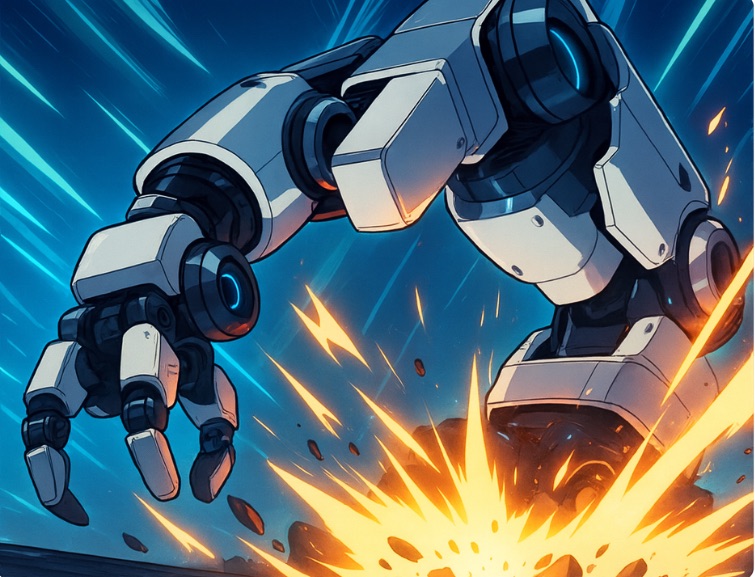
Robot kinematics refers to the mathematical and geometric study of how robots move.
It focuses on the relationships between joint angles, link lengths, and the position and orientation of the robot’s end effector (such as a gripper or tool).
In industrial robots, kinematics helps engineers determine how to move a robotic arm from one point to another with precision.
This includes both forward kinematics (calculating the end position from joint parameters) and inverse kinematics (determining joint parameters needed to reach a desired position). Understanding kinematics is essential for programming robots to perform tasks like welding, assembly, or painting with accuracy and efficiency.
Kinematics also plays a critical role in ensuring safe and efficient robot operation in dynamic environments.
By modeling how each joint and link behaves during motion, engineers can predict potential collisions, optimize motion paths, and minimize unnecessary movements that waste energy or increase wear on mechanical parts.
This mathematical foundation allows robots to operate smoothly alongside humans, adapt to complex workflows, and maintain consistent performance in high-precision industrial applications.
BitcoinVersus.Tech Editor’s Note:
We volunteer daily to ensure the credibility of the information on this platform is Verifiably True. If you would like to support to help further secure the integrity of our research initiatives, please donate here
BitcoinVersus.tech is not a financial advisor. This media platform reports on financial subjects purely for informational purposes.
 Bitcoin Versus
Leave a comment