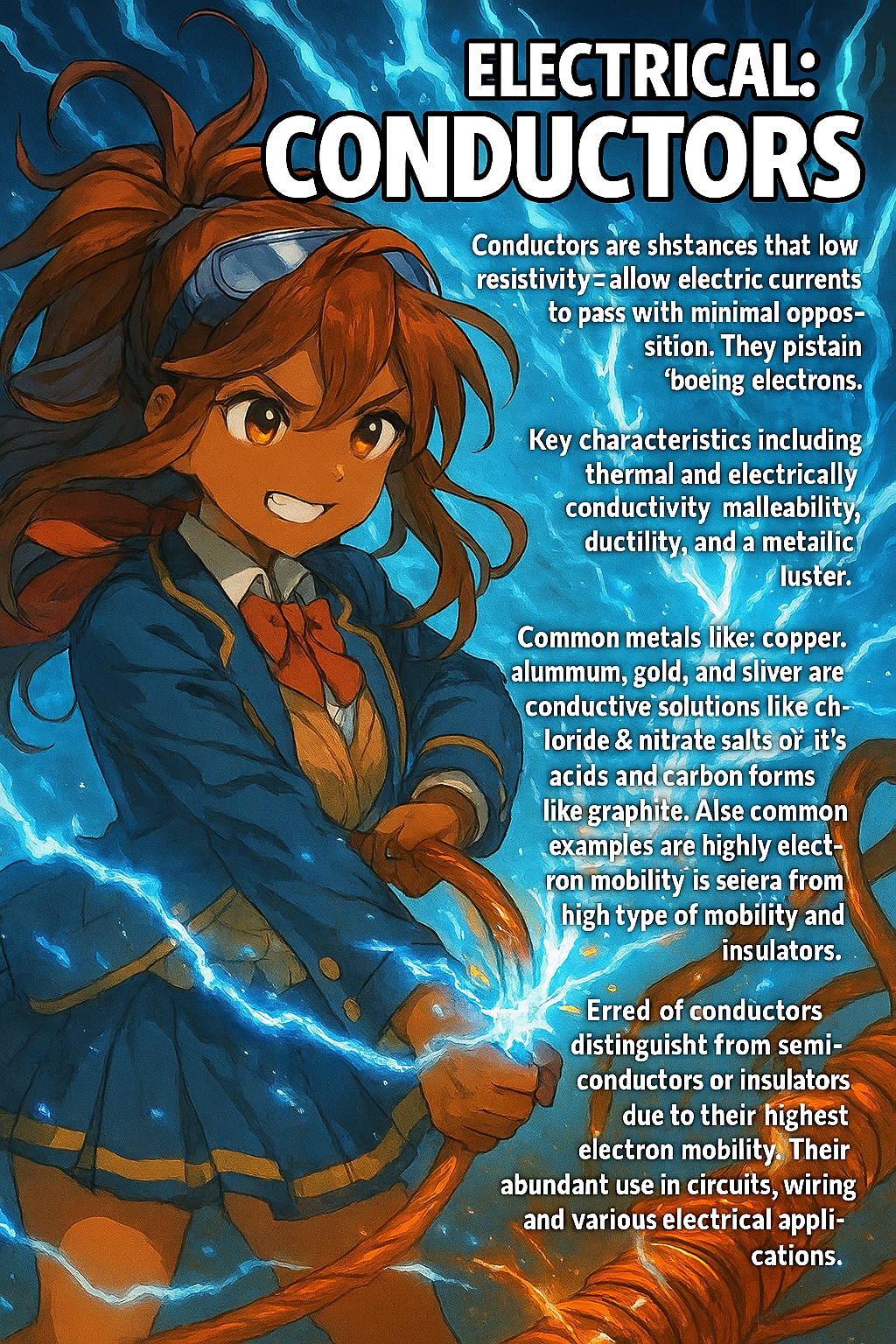
Conductors are materials that permit the easy flow of electric current due to the presence of free or loosely bound electrons in their atomic structure.
In metals such as copper, silver, and aluminum, the outermost electrons are not tightly attached to their atoms, allowing them to move freely when a voltage is applied.
This mobility of electrons results in low resistivity and high conductivity, making conductors essential in wiring, power transmission, and electronic devices.
Conductors are also valued for their mechanical properties, such as ductility and malleability, which allow them to be drawn into wires or shaped into components without breaking. Graphite, a non-metal, is another example of a conductor because of its layered structure that permits electron movement.
Conductors are not limited to solids; liquids such as saltwater or acidic solutions also conduct electricity due to the movement of ions.
The widespread use of conductors in everyday life, from household wiring to massive power grids, highlights their importance in modern technology and infrastructure.
 Bitcoin Versus
Leave a comment