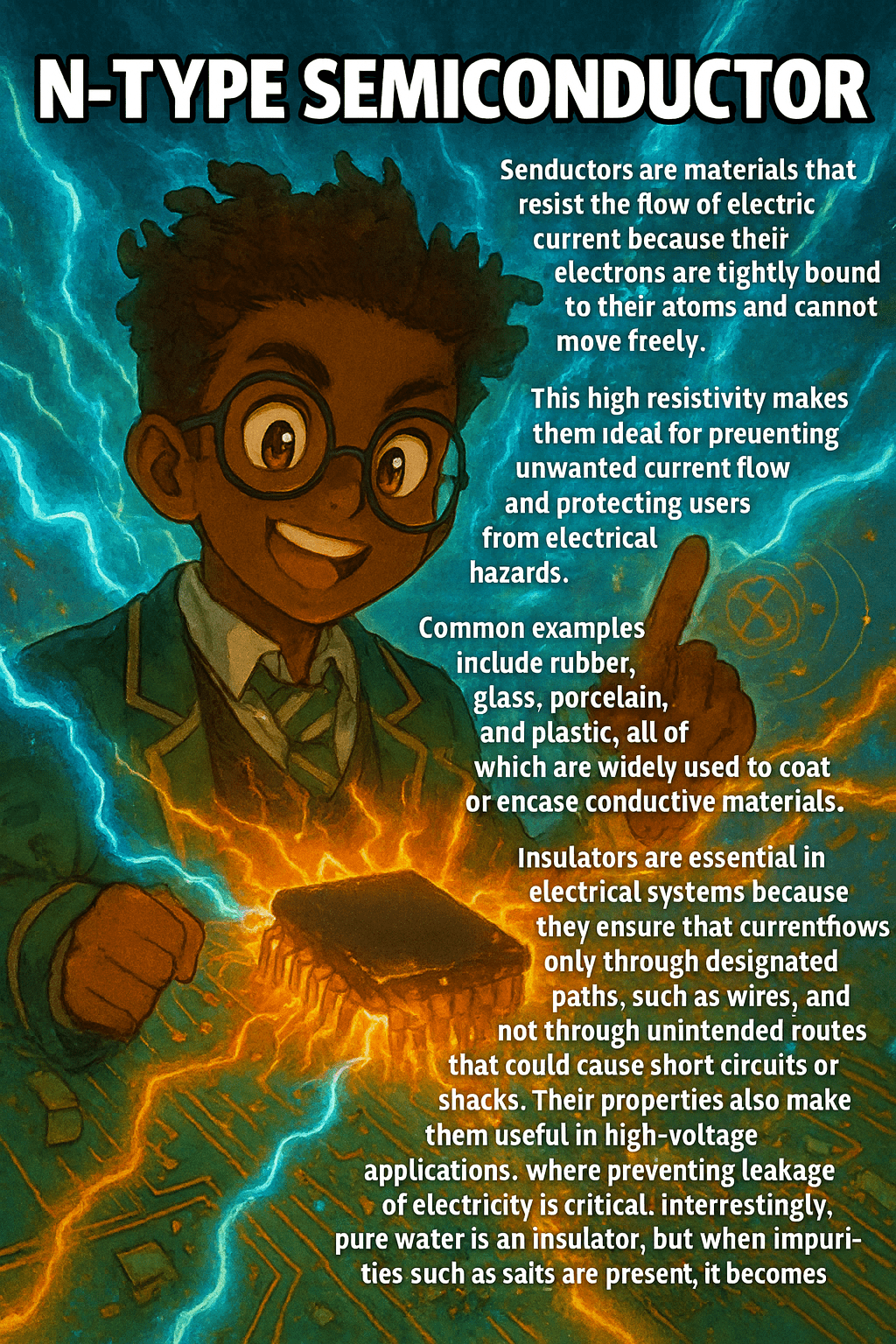
An n-type semiconductor is created by doping a pure semiconductor, such as silicon, with pentavalent elements like phosphorus, arsenic, or antimony.
These dopants have five valence electrons, one more than silicon, and the extra electron becomes loosely bound and available for conduction.
As a result, electrons become the majority charge carriers in n-type materials, while holes are the minority carriers.
The presence of these free electrons significantly increases the conductivity of the semiconductor compared to its pure form. N-type semiconductors are widely used in electronic devices, particularly in forming p–n junctions that are essential for diodes and transistors.
Their behavior under applied voltage allows them to control current flow and amplify signals. By carefully selecting dopants and concentrations, engineers can tailor the properties of n-type semiconductors to meet specific technological needs, making them indispensable in modern electronics.
BitcoinVersus.Tech Editor’s Note:
We volunteer daily to ensure the credibility of the information on this platform is Verifiably True.
If you would like to support to help further secure the integrity of our research initiatives, please donate here: bc1qrved9tfquym6u3age7xhmnkjs2lq8j9aulperagkuhtuk5w5c35ssfpge8
BitcoinVersus.tech is not a financial advisor. This media platform reports on financial subjects purely for informational purposes
 Bitcoin Versus
Leave a comment