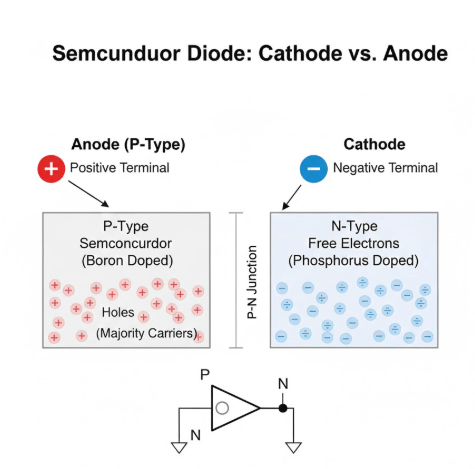
The cathode is the terminal of an electrical device through which current flows out of the device in conventional current terms (positive to negative). In a diode, the cathode is typically marked with a stripe and is the side connected to the negative voltage during forward bias.
It is the terminal where electrons enter the device in electron flow notation, and where they exit in conventional current flow.
In forward-biased diodes, the cathode allows current to pass once the threshold voltage is exceeded. In reverse bias, the cathode blocks current unless breakdown conditions are met.
In electrochemical cells, the cathode is the site of reduction — where electrons are gained — and its polarity depends on the device type (positive in galvanic cells, negative in electrolytic cells).
The anode is the terminal of an electrical device through which current flows into the device in conventional current terms.
In a diode, the anode is the side connected to the positive voltage during forward bias, allowing current to flow toward the cathode once the junction is activated.
It is the terminal where electrons exit the device in electron flow notation, and where they enter in conventional current flow. In electrochemical cells, the anode is the site of oxidation — where electrons are lost — and its polarity also depends on the device type (negative in galvanic cells, positive in electrolytic cells). In semiconductor devices, the anode plays a critical role in initiating conduction when forward-biased.
BitcoinVersus.Tech Editor’s Note:
We volunteer daily to ensure the credibility of the information on this platform is Verifiably True.
If you would like to support to help further secure the integrity of our research initiatives, please donate here: bc1qrved9tfquym6u3age7xhmnkjs2lq8j9aulperagkuhtuk5w5c35ssfpge8
BitcoinVersus.tech is not a financial advisor. This media platform reports on financial subjects purely for informational purposes.
 Bitcoin Versus
Leave a comment