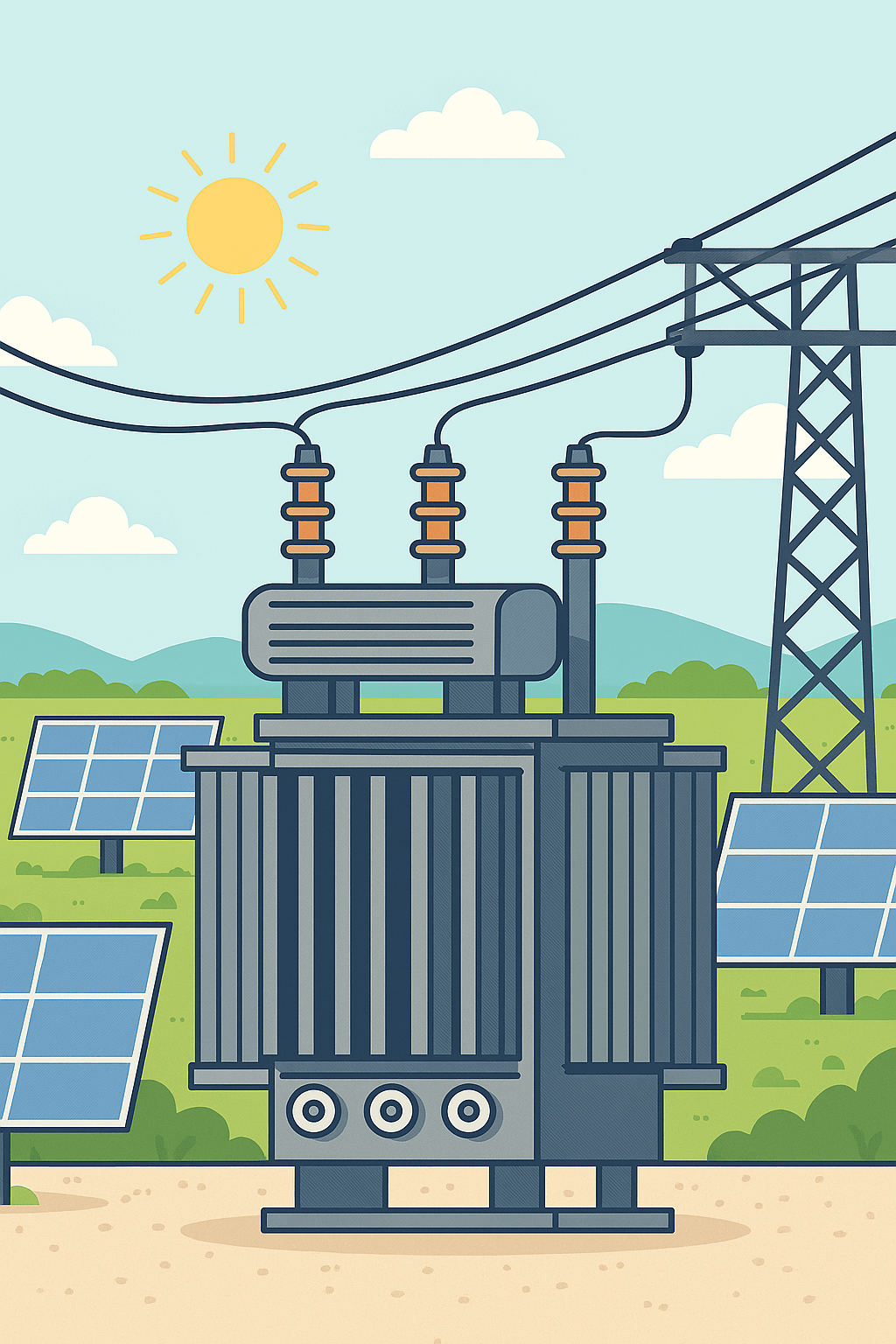
A transformer is a passive electrical device that transfers alternating current (AC) electrical energy from one circuit to one or more other circuits.
Its core function, based on the principle of electromagnetic induction, is to change the voltage level; either stepping it up (increasing voltage for efficient long-distance transmission) or stepping it down (reducing voltage for safe distribution and consumer use)—while maintaining the same frequency.
They are single, indispensable components found throughout the power grid, from power plants to utility poles and small household electronics.
A substation, in contrast, is an entire complex facility and a critical node within the electric power generation, transmission, and distribution system.
It is an assembly of various electrical equipment used to transform voltage, switch circuits in and out of the grid, regulate power flow, and provide system protection. At its heart, a substation contains one or more transformers, but it also includes switchgear (circuit breakers and disconnect switches), busbars, protective relays, and control systems.
The relationship between a transformer and a substation is fundamentally one of part-to-whole, with distinct differences in complexity, function, and scope.
Comparison: Both are essential to the power grid and share the primary goal of processing and managing electrical energy. Crucially, the voltage transformation function is central to both, as the transformer is the key component within the substation that physically performs the act of stepping the AC voltage up or down. Both also handle high-power AC electricity, ensuring its movement through the grid.
Contrast: The key difference lies in scope and function. A transformer is a single, fundamental device dedicated almost exclusively to voltage conversion via electromagnetic induction.
Its structure is relatively simple, consisting mainly of windings, a core, and a cooling system. A substation is a vast, complex installation or facility that houses many different types of equipment.
While it performs voltage conversion using transformers, its overall function is much broader: it acts as a central hub for switching, controlling, metering, regulating, and protecting multiple power circuits. Simply put, a transformer is a machine, while a substation is a fully operational site that requires transformers to fulfill its mission.
BitcoinVersus.Tech Editor’s Note:
We volunteer daily to ensure the credibility of the information on this platform is Verifiably True.
BitcoinVersus.tech is not a financial advisor. This media platform reports on financial subjects purely for informational purposes.
 Bitcoin Versus
Leave a comment