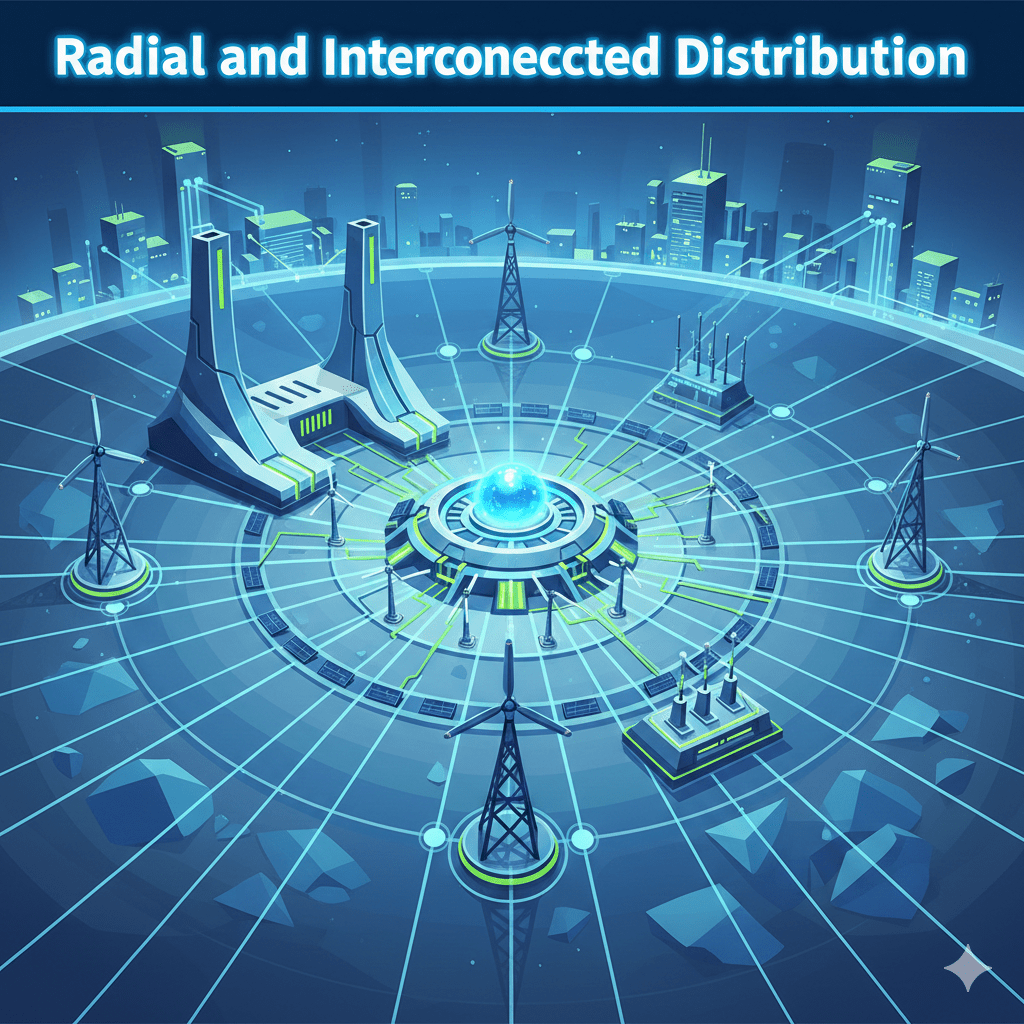
Radial and interconnected distribution networks represent two distinct approaches to the design and operation of electrical distribution systems.
A radial distribution network is characterized by a tree-like structure where power flows from a single source through a series of branches to reach various consumers.
This configuration is straightforward and easy to manage, but it can lead to vulnerabilities; if a fault occurs along the line, it can disrupt service to all downstream users. In contrast, interconnected distribution networks feature multiple pathways for electricity to flow, allowing for greater flexibility and reliability.
This design connects various substations and distribution points, enabling power to be rerouted in the event of a failure.
As a result, interconnected systems can maintain service continuity even when one part of the network is compromised, making them more resilient to outages.
The choice between radial and interconnected distribution networks often depends on factors such as the size of the area being served, the density of the population, and the reliability requirements of the electrical supply.
While radial networks may be more cost-effective for smaller or less critical applications, interconnected networks are generally preferred in urban settings where reliability and service continuity are paramount.
BitcoinVersus.Tech Editor’s Note:
We volunteer daily to ensure the credibility of the information on this platform is Verifiably True.
BitcoinVersus.tech is not a financial advisor. This media platform reports on financial subjects purely for informational purposes.
 Bitcoin Versus
Leave a comment