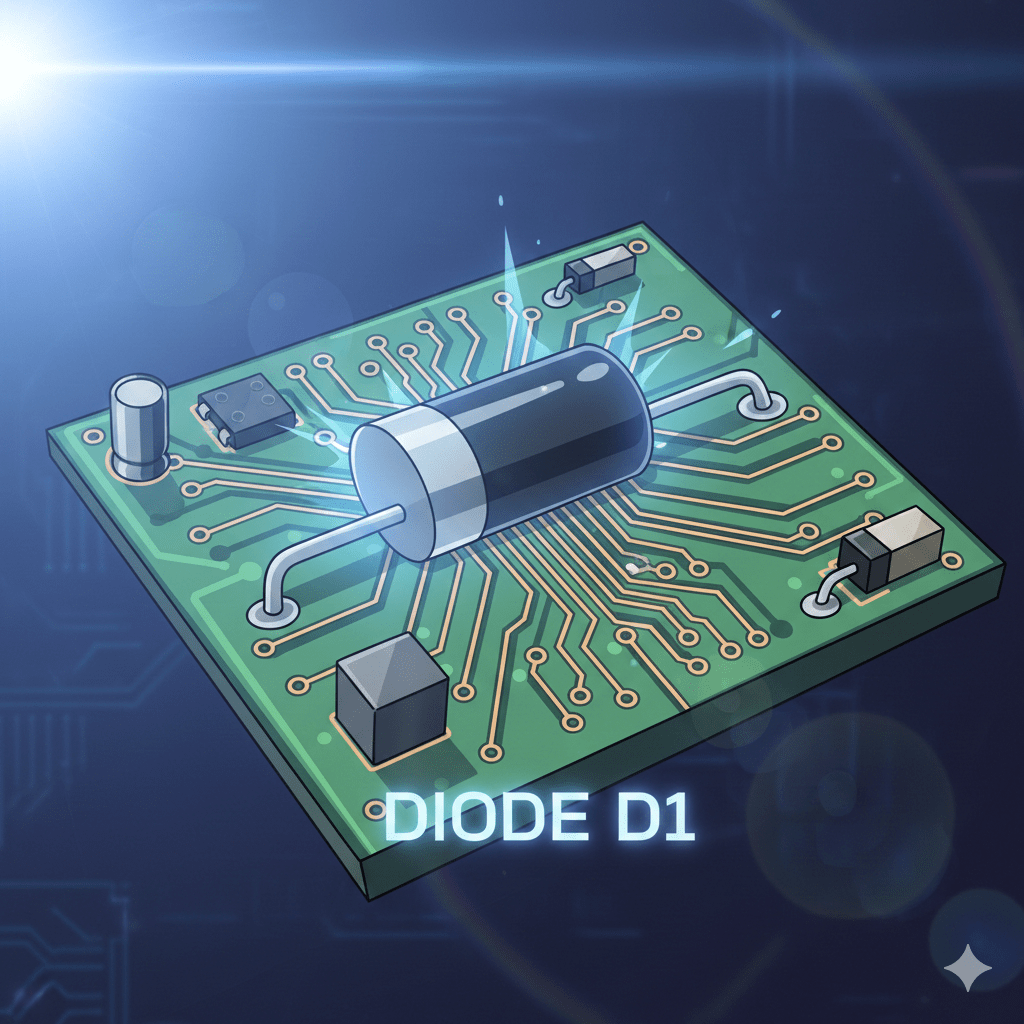
The ideality factor in diodes is a crucial concept that helps us understand how well a diode performs compared to an ideal diode.
An ideal diode is a perfect device that allows current to flow in one direction without any resistance or loss of energy.
However, real diodes are not perfect; they have some limitations and inefficiencies.
The ideality factor, often represented by the symbol “n,” quantifies how closely a real diode behaves like this ideal version. It typically ranges from 1 to 2, with a value of 1 indicating that the diode is operating very close to its ideal behavior.
When the ideality factor is equal to 1, it suggests that the diode’s current-voltage characteristics closely match those of an ideal diode. This means that the diode has minimal leakage current and operates efficiently, making it suitable for applications where precision is essential.
On the other hand, if the ideality factor is greater than 1, it indicates that the diode has more significant losses, such as increased leakage current or other non-ideal behaviors.
This can affect the diode’s performance in circuits, especially in applications like rectifiers or amplifiers, where efficiency is key. Understanding the ideality factor is important for engineers and scientists who design electronic devices.
By knowing the ideality factor, one can predict how a diode will behave in different conditions and choose the right type of diode for their specific needs.
This knowledge helps in creating better electronic components that are more efficient and reliable, ultimately leading to improved technology in our everyday lives.
BitcoinVersus.Tech Editor’s Note:
We volunteer daily to ensure the credibility of the information on this platform is Verifiably True. I
If you would like to support to help further secure the integrity of our research initiatives, please donate here: 3C9o19EH5HSiwEPyCTmEKzxhNCbo2X6TTb
 Bitcoin Versus
Leave a comment