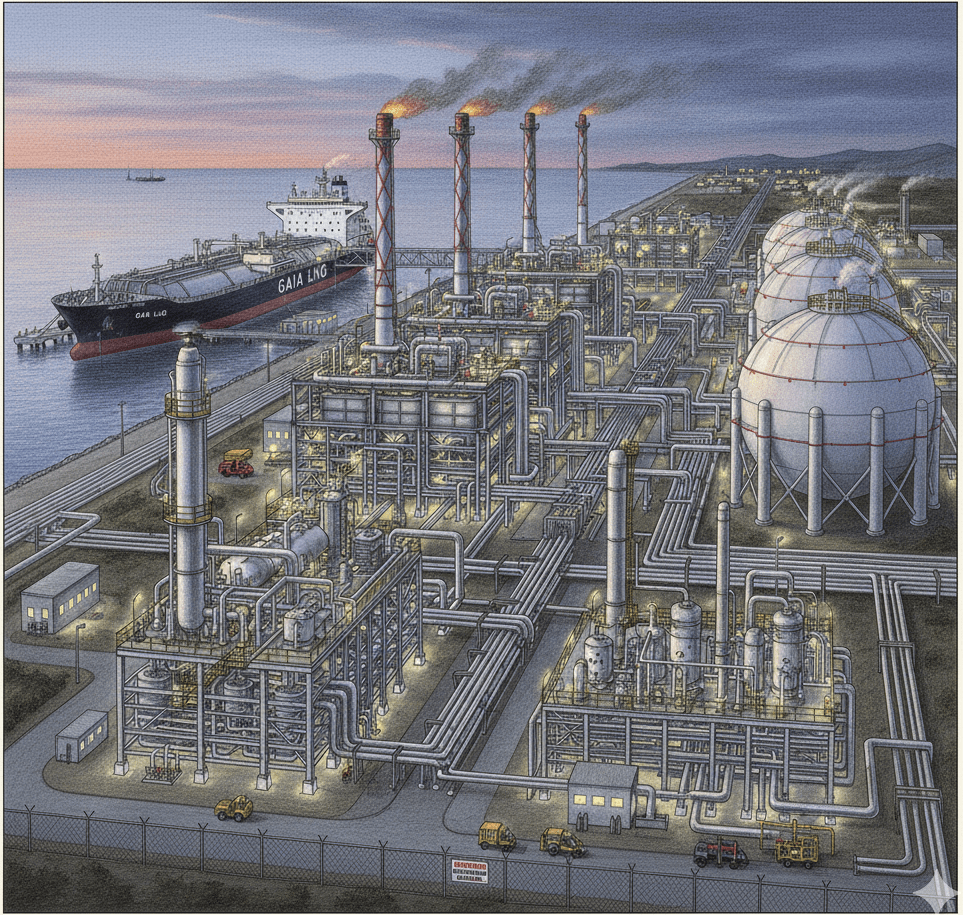
Liquefied Natural Gas (LNG) is natural gas, primarily methane, that has been converted into a liquid state by cooling it to approximately
260 degrees Fahrenheit (162 Degrees Celcius) a cryogenic process that dramatically reduces its volume to about 1/600th of its gaseous state.
This enormous volume reduction makes it economically feasible and safe to transport natural gas across oceans to distant markets that are not accessible by pipeline, establishing a global commodity trade.
The LNG supply chain involves extracting natural gas from a field, transporting it via pipeline to a liquefaction plant where impurities are removed and the gas is chilled into a liquid, then loading it onto specialized, double-hulled LNG tankers for shipment.
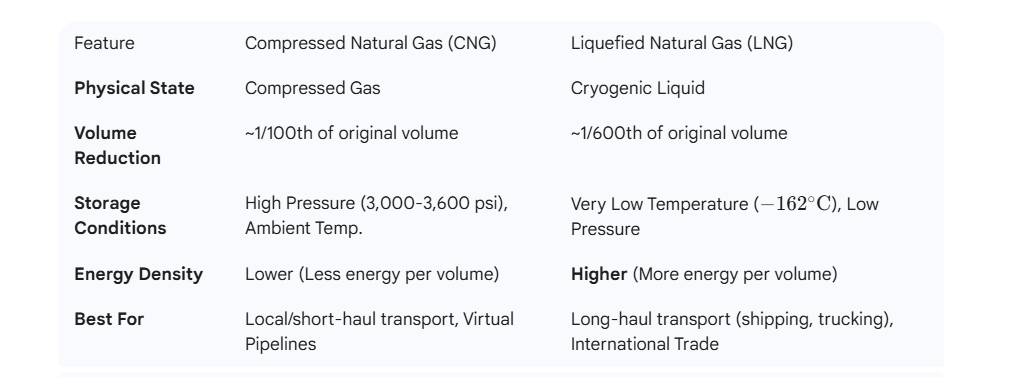
Upon arrival at its destination, the LNG is stored in insulated tanks before being processed at a regasification terminal, where it is warmed to return it to its original gaseous form, after which it is injected into local pipeline distribution networks to be used by power plants, industrial customers, and residential consumers for heating and cooking.
As the cleanest-burning fossil fuel, LNG plays a crucial role in the global energy mix, acting as a bridge fuel in the energy transition by displacing higher-emitting coal and oil and providing essential stability to power grids that increasingly rely on intermittent renewable sources.
BitcoinVersus.Tech Editor’s Note:
We volunteer daily to ensure the credibility of the information on this platform is Verifiably True.
If you would like to support to help further secure the integrity of our research initiatives, please donate here: bc1qrved9tfquym6u3age7xhmnkjs2lq8j9aulperagkuhtuk5w5c35ssfpge8
BitcoinVersus.tech is not a financial advisor. This media platform reports on financial subjects purely for informational purposes.
 Bitcoin Versus
Leave a comment