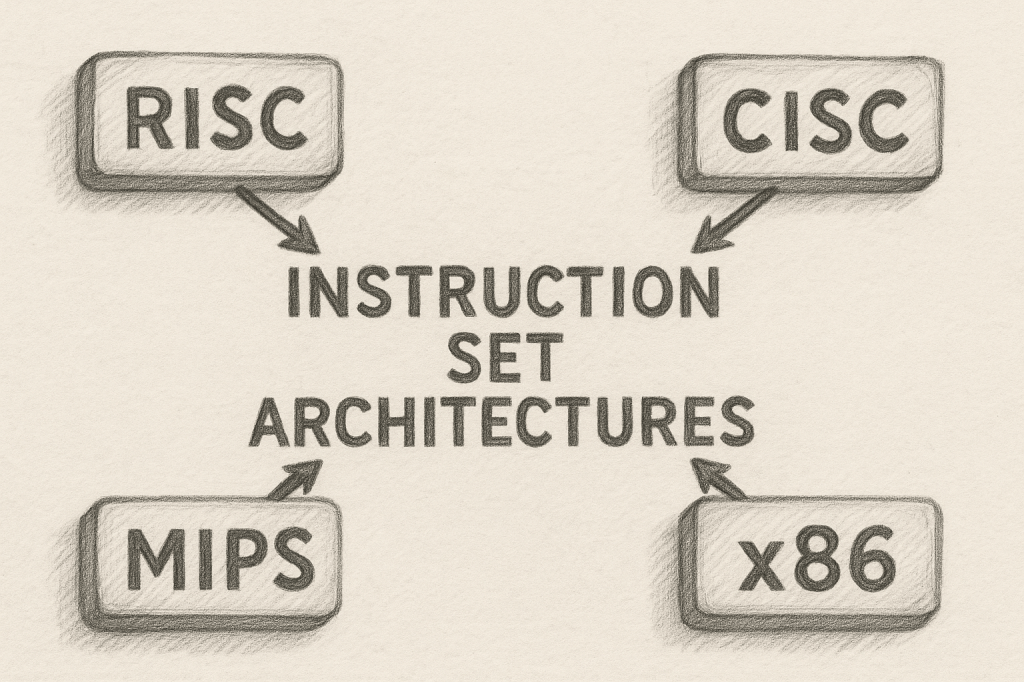
Instruction set architectures (ISAs) are crucial components of computer systems that define how software communicates with hardware. They specify the set of instructions that a processor can execute, including operations like arithmetic, data movement, and control flow.
By establishing a standard interface, ISAs allow programmers to write software that can run on different hardware platforms without needing to change the code significantly. Different types of ISAs exist, such as CISC (Complex Instruction Set Computing) and RISC (Reduced Instruction Set Computing).
CISC architectures, like x86, are designed to execute multi-step operations with single instructions, making them powerful for certain applications. This can lead to more efficient use of memory and potentially faster execution for complex tasks.
However, the complexity of CISC can also result in longer development times and more challenging debugging processes.
On the other hand, RISC architectures, such as ARM, emphasize efficiency and speed by using a streamlined set of instructions that can be executed in a single clock cycle, which often leads to better performance in modern computing environments.
Understanding ISAs is essential for anyone interested in computer science or engineering.
They play a vital role in determining the performance and capabilities of a computer system. By learning about ISAs, students can gain insights into how software and hardware interact, paving the way for more advanced studies in computing and technology.
BitcoinVersus.Tech Editor’s Note:
We volunteer daily to ensure the credibility of the information on this platform is Verifiably True.
If you would like to support to help further secure the integrity of our research initiatives, please donate here: bc1qrved9tfquym6u3age7xhmnkjs2lq8j9aulperagkuhtuk5w5c35ssfpge8
BitcoinVersus.tech is not a financial advisor. This media platform reports on financial subjects purely for informational purposes.
 Bitcoin Versus
Leave a comment