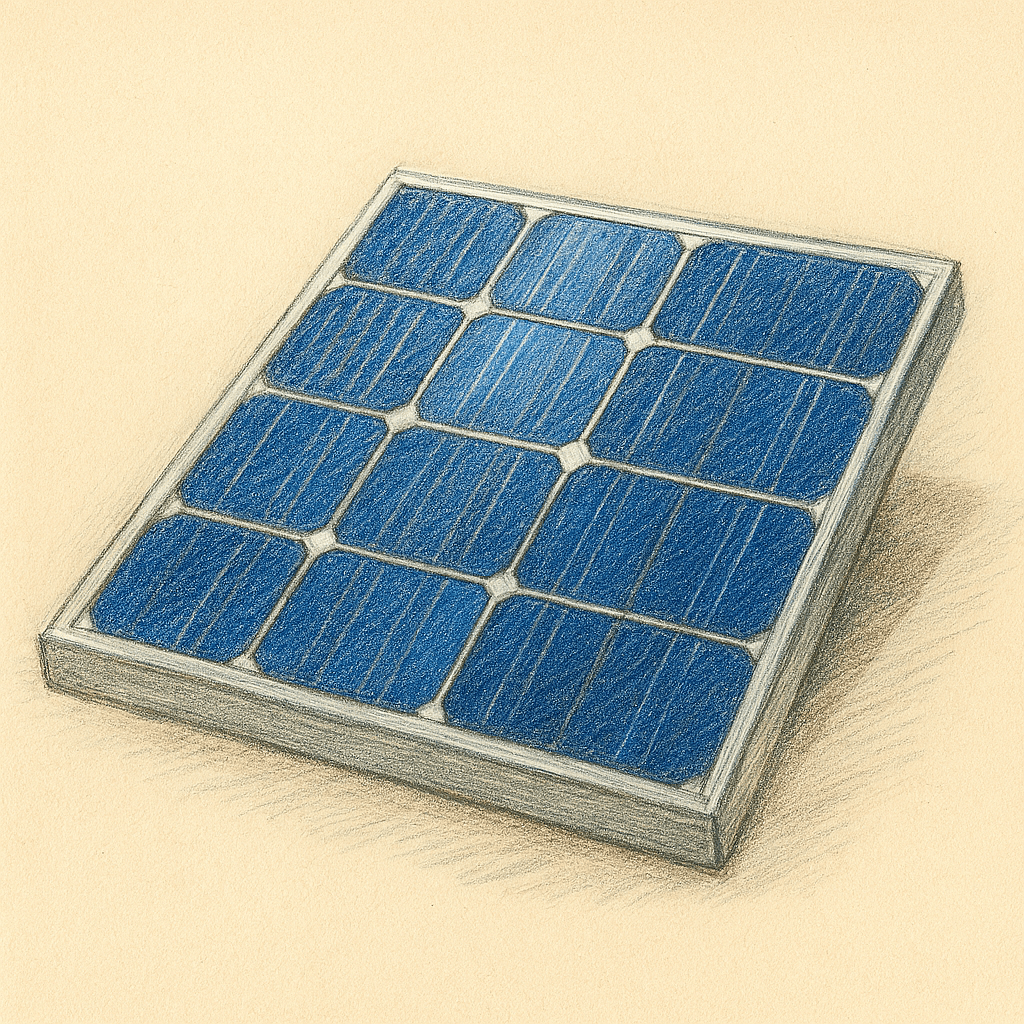
Solar cell roughness characterization is the process of analyzing and quantifying the surface texture of photovoltaic materials to understand how microscopic topographical features influence optical and electrical performance.
The surface of a solar cell—whether crystalline silicon, thin-film, or emerging materials like perovskites—plays a critical role in determining how light interacts with the device.
Controlled roughness can enhance light trapping by scattering incoming photons, reducing reflectance, and increasing absorption, especially in cells with thin active layers. Conversely, excessive or uncontrolled roughness may introduce defects, increase surface recombination, or hinder the uniform deposition of subsequent layers such as anti-reflective coatings or passivation films.
Therefore, precise characterization of surface roughness is essential for optimizing both fabrication processes and device efficiency.
To perform roughness characterization, researchers and engineers employ a range of metrology techniques tailored to different scales and material types. Atomic force microscopy (AFM) is commonly used for nanoscale mapping, providing high-resolution data on parameters like average roughness (Ra), root mean square roughness (Rq), and peak-to-valley height (Rz).
Stylus profilometry offers macro-scale measurements suitable for textured silicon wafers, while optical interferometry enables non-contact, high-speed scanning of transparent or coated surfaces. Scanning electron microscopy (SEM) may also be used for visual inspection of surface morphology and layer interfaces.
These tools help correlate surface features with performance metrics such as quantum efficiency, fill factor, and overall power conversion efficiency, guiding iterative improvements in cell design and manufacturing.
In advanced solar cell architectures, roughness characterization becomes even more critical. For example, passivated emitter rear contact (PERC) cells require smooth rear surfaces to minimize recombination losses, while front-side textures are deliberately engineered to maximize light capture.
In tandem and multi-junction cells, roughness at each interface must be carefully managed to ensure optimal layer adhesion and minimal optical losses. As the industry pushes toward higher efficiencies and thinner, more flexible substrates, the ability to precisely characterize and control surface roughness will remain a cornerstone of photovoltaic innovation.
BitcoinVersus.Tech Editor’s Note:
We volunteer daily to ensure the credibility of the information on this platform is Verifiably True.
If you would like to support to help further secure the integrity of our research initiatives, please donate here: bc1q5qgtq8szqa6yy38tqpsyuk3hynq8zy3xvqhsvzecj8lnryrnzhmqsfmwhh
 Bitcoin Versus
Leave a comment