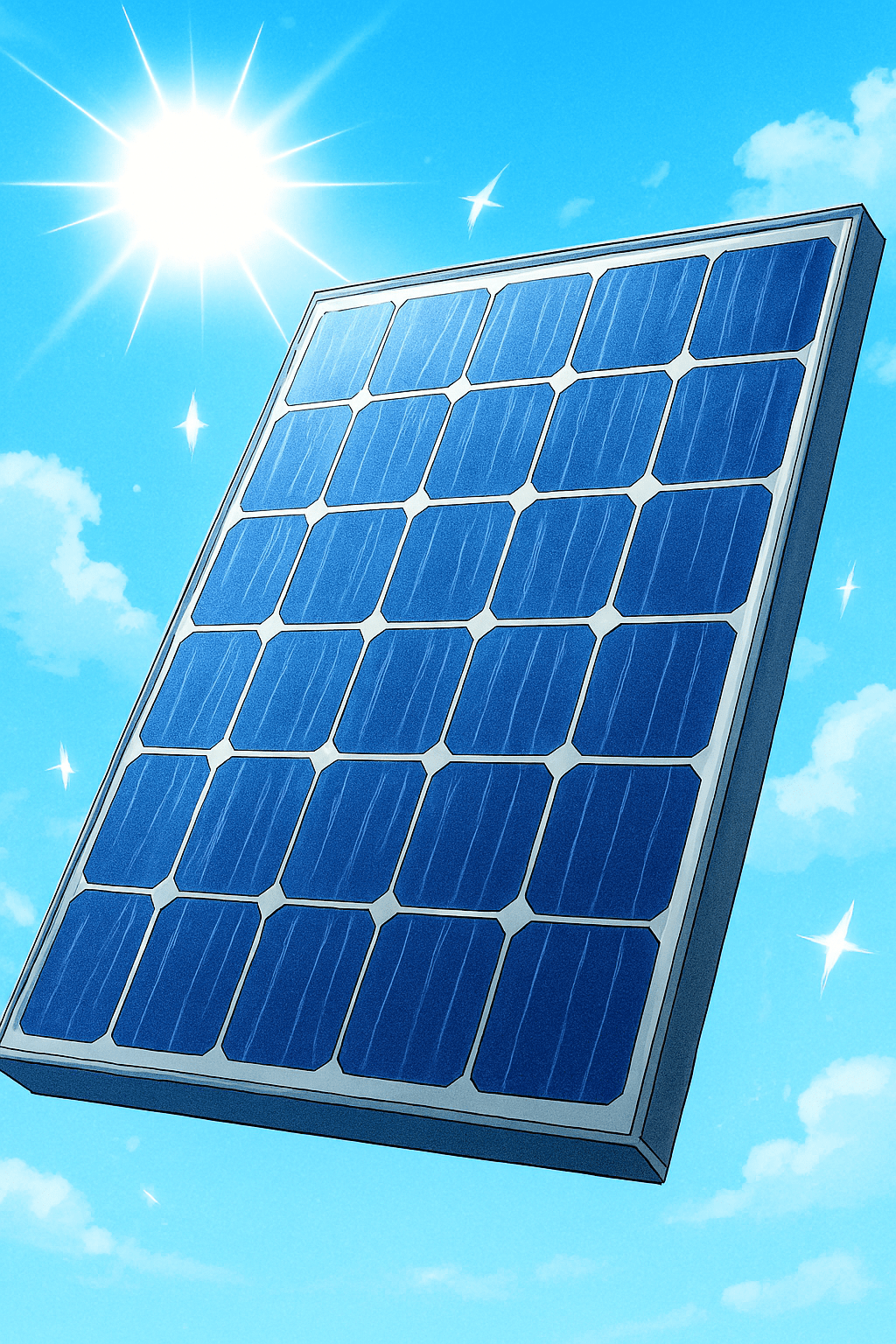
PV modules, commonly known as solar panels, are the foundational units of solar energy systems.
Each module contains numerous photovoltaic cells—usually made from monocrystalline or polycrystalline silicon—that work together to generate electricity through the photovoltaic effect.
These cells are embedded between layers of protective materials: a front layer of tempered glass for durability and light transmission, encapsulant films (often ethylene-vinyl acetate) to seal and protect the cells, and a backsheet made of polymer to insulate and shield against moisture and environmental damage.
The module also includes a metal frame, typically aluminum, for structural support and mounting, and junction boxes with wiring to connect the module to the electrical system.
The combination of these materials ensures the module’s efficiency, longevity, and resilience in outdoor conditions, making it a critical component in harnessing solar energy for residential, commercial, and industrial use.
BitcoinVersus.Tech Editor’s Note:
We volunteer daily to ensure the credibility of the information on this platform is Verifiably True.
If you would like to support to help further secure the integrity of our research initiatives, please donate here: bc1q5qgtq8szqa6yy38tqpsyuk3hynq8zy3xvqhsvzecj8lnryrnzhmqsfmwhh
 Bitcoin Versus
Leave a comment