
Common number bases in computing are essentially the languages computers speak. Here’s a quick rundown:
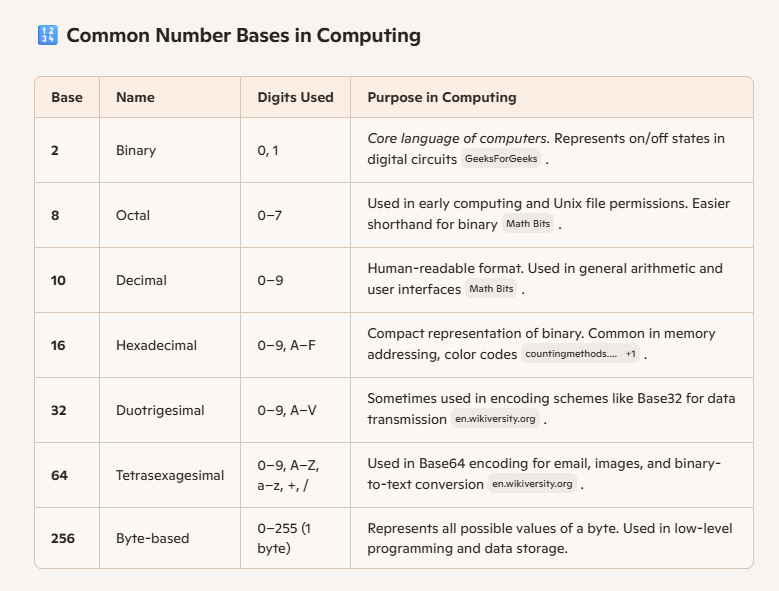
Binary (Base 2): Uses 2 digits (0, 1) and is the native language of computers, representing data as electronic signals (on/off). It’s the foundation of all computing and is used to write machine code.
Decimal (Base 10): Uses 10 digits (0-9) and is the number system humans use daily. Computers often convert binary to decimal for human-friendly output, like displaying numbers on a screen.
Hexadecimal (Base 16): Uses 16 digits (0-9, A-F) and is a shorthand for binary, making it easier to read and write binary data. It’s commonly used for coding, debugging, and representing colors, memory addresses, and more.
Octal (Base 8): Uses 8 digits (0-7) and is an older system, less common now, but still used in some contexts, like file permissions in Unix-like systems
BitcoinVersus.Tech Editor’s Note:
We volunteer daily to ensure the credibility of the information on this platform is Verifiably True.
If you would like to support to help further secure the integrity of our research initiatives, please donate here: bc1q5qgtq8szqa6yy38tqpsyuk3hynq8zy3xvqhsvzecj8lnryrnzhmqsfmwhh
 Bitcoin Versus
Leave a comment