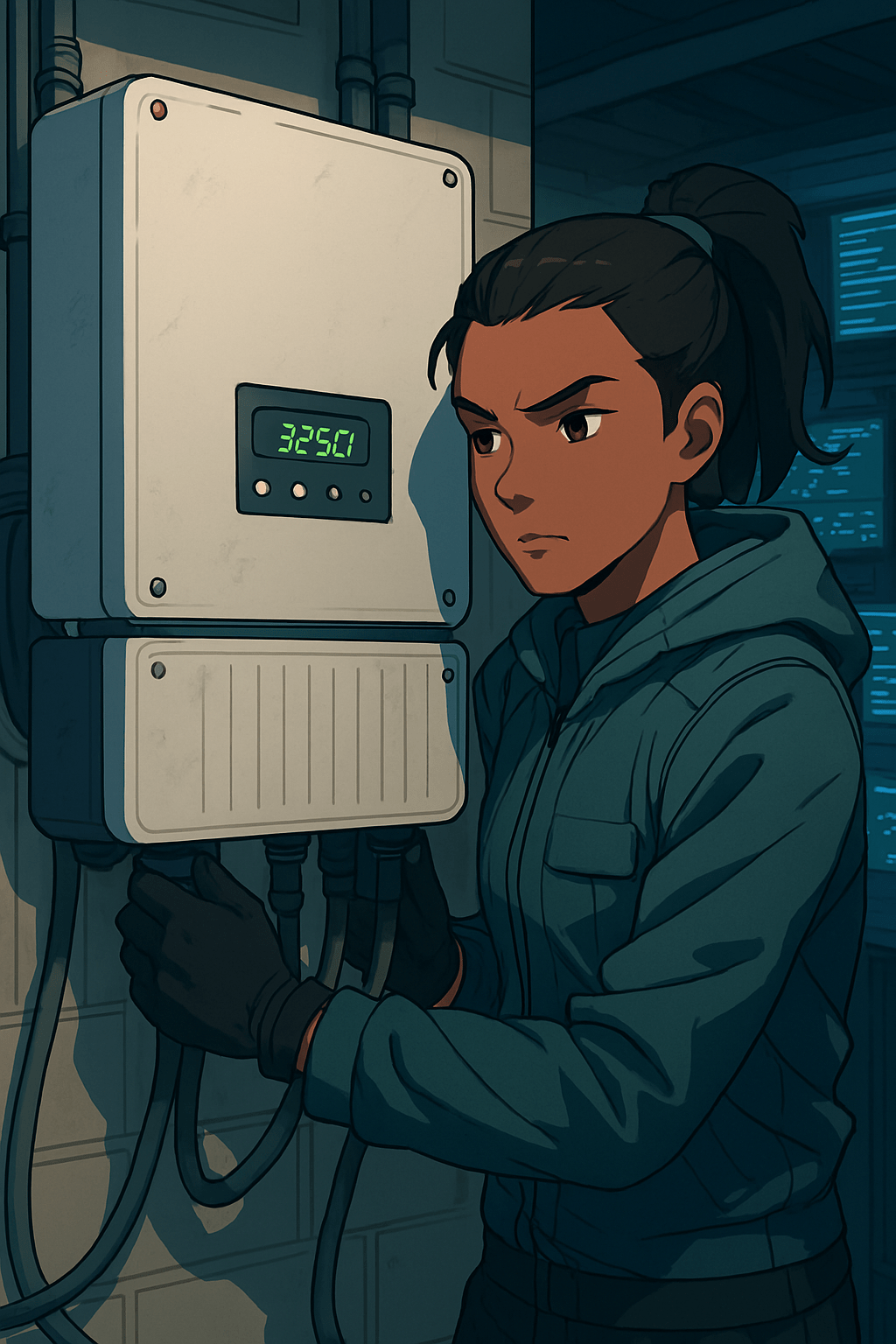
A string inverter is a centralized power conversion device used in solar energy systems to transform direct current (DC) electricity generated by multiple photovoltaic (PV) panels into alternating current (AC) electricity suitable for use in homes, businesses, or the electrical grid.
In this configuration, solar panels are electrically connected in series to form a “string,” and the combined DC output of that string is routed to a single inverter unit.
The string inverter processes the entire input from the array, converting it into synchronized AC power while performing essential functions such as maximum power point tracking (MPPT), grid synchronization, and safety shutdowns.
Because all panels in a string share the same electrical path, the performance of the entire string can be affected by shading, dirt, or malfunction on any individual panel.
However, string inverters are valued for their cost-effectiveness, ease of maintenance, and scalability, especially in large residential or commercial installations with uniform sunlight exposure. Modern string inverters often include integrated monitoring systems, advanced fault detection, and compliance with rapid shutdown requirements, making them a reliable and widely adopted solution in rooftop and ground-mounted solar applications.
BitcoinVersus.Tech Editor’s Note:
We volunteer daily to ensure the credibility of the information on this platform is Verifiably True.
If you would like to support to help further secure the integrity of our research initiatives, please donate here: bc1q5qgtq8szqa6yy38tqpsyuk3hynq8zy3xvqhsvzecj8lnryrnzhmqsfmwhh
 Bitcoin Versus
Leave a comment