energy
-

BitCluster, a Russian Bitcoin mining solutions provider, is set to launch a significant project in Ethiopia, which will revolutionize the cryptocurrency mining landscape. Scheduled to commence operations in January 2024, this venture involves the construction of a 120-megawatt (MW) data center in Addis Ababa, Ethiopia’s capital. The facility, spanning an impressive 30,000 square meters and…
-

We know that Force is equal to mass times acceleration. A home has physical mass, structural strength, and load-bearing capacity. These properties give it force capacity in the physical sense. However, a home does not move and does not perform continuous work, so its velocity is effectively zero. As a result, its power output, in…
-

A string inverter is a centralized power conversion device used in solar energy systems to transform direct current (DC) electricity generated by multiple photovoltaic (PV) panels into alternating current (AC) electricity suitable for use in homes, businesses, or the electrical grid. In this configuration, solar panels are electrically connected in series to form a “string,”…
-

Solar inverters are essential devices in photovoltaic (PV) systems that convert the direct current (DC) electricity generated by solar panels into alternating current (AC) electricity, which is compatible with household appliances and the utility grid. They serve as the “brain” of a solar energy system, not only enabling energy conversion but also managing system performance,…
-

PV modules, commonly known as solar panels, are the foundational units of solar energy systems. Each module contains numerous photovoltaic cells—usually made from monocrystalline or polycrystalline silicon—that work together to generate electricity through the photovoltaic effect. These cells are embedded between layers of protective materials: a front layer of tempered glass for durability and light…
-
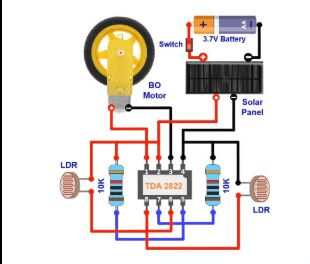
This DIY electronic solar tracker is a clever and simple project that helps a small solar panel automatically follow the sun to capture the maximum amount of sunlight throughout the day. The schematic illustrates a simple automatic solar tracker that uses two light-dependent resistors (LDRs) to sense the direction of the brightest sunlight and drive…
-
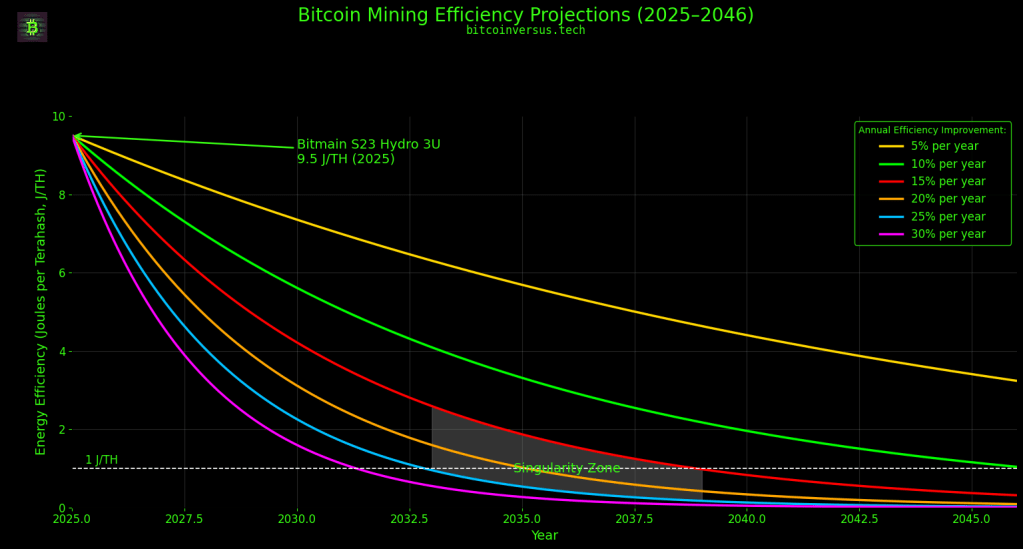
It will take some time to figure out if tracking the energy efficiency and computational power progression of the bitcoin ASIC Mining Machine has anything to do with the anticipated value of bitcoin. Under the current parameters of the model, Power Efficiency Theory suggests that Bitcoin could approach roughly $2-$3 million per coin by 2045,…
-
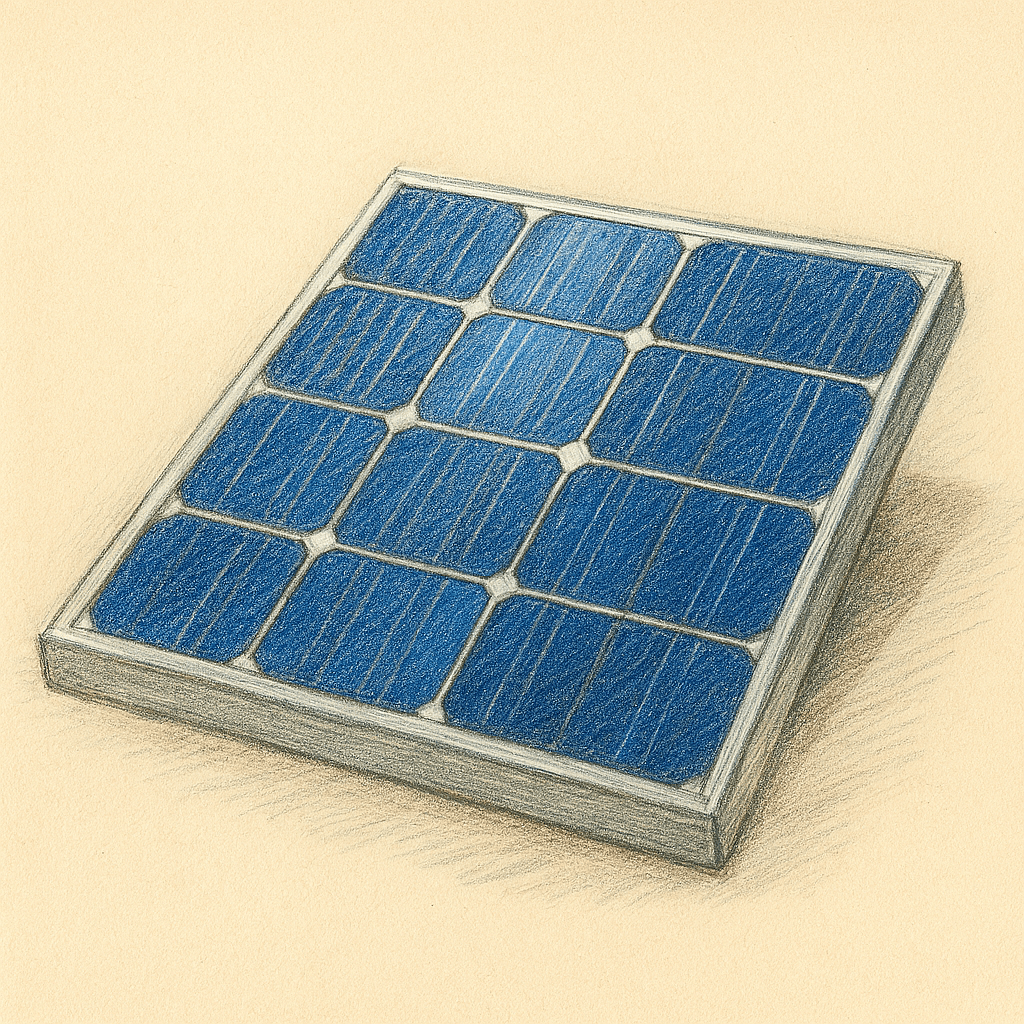
Solar cell roughness characterization is the process of analyzing and quantifying the surface texture of photovoltaic materials to understand how microscopic topographical features influence optical and electrical performance. The surface of a solar cell—whether crystalline silicon, thin-film, or emerging materials like perovskites—plays a critical role in determining how light interacts with the device. Controlled roughness…
-

Polycrystalline silicon, often called poly-si, is a special material used to build the tiny pathways inside computer chips. Its main job is to control the flow of electricity, and a key property it has is called resistance. Resistance is how much a material slows down or fights against the electric current. Think of it like trying…
-
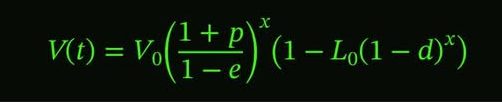
Let me be very clear. Power Efficiency Theory seeks to measure verifiable energy metrics directly related to the bitcoin protocol. I contend that the individual system (the ASIC machine) is the most reliable way to measure the anticipated value of bitcoin. You can collect metrics using the Individual systems or the entire system, but there…
-

The solar energy industry traces its roots to nineteenth century scientific discoveries, beginning with the photovoltaic effect identified by Edmond Becquerel in 1839 and early selenium based cells in the late 1800s. It did not become a modern commercial sector until Bell Labs created the first practical silicon solar cell in 1954, which initially found…
-
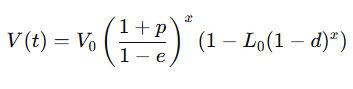
Power Efficiency Theory (P Theory) models the long-term valuation trajectory of a technological system by measuring the combined progression of computational power and energy efficiency. In Bitcoin mining hardware, these two variables are represented by hashrate output and energy efficiency measured in joules per terahash (J/TH). As computational power increases and energy required per unit…

