Tech Docs
-

In Linux, path shortcuts help users move through the file system quickly and efficiently. These symbols are used in the terminal to reference common directory locations without typing the full path. ~ (Tilde): Refers to the current user’s home directory. For example, cd ~ will take you to /home/username. .. (Double Dot): Moves up one…
-

The /opt directory is used in Linux for installing optional or third-party software that is not part of the default package management system. Many commercial applications or special-purpose tools are installed into /opt to keep them separate from system-managed software. If you install proprietary software like VMware or a custom application, it may place its…
-

The /mnt directory in Linux serves as a traditional location for temporarily mounting filesystems. Unlike /media, which is mostly used for automatic mounting of USBs and other external devices, /mnt is primarily used by system administrators for manual mounts during maintenance, recovery, or troubleshooting. When you need to access another drive or partition for testing…
-

The /media directory is used in Linux to automatically mount removable storage devices such as USB drives, DVDs, and external hard drives. When you insert a USB or plug in a storage device, most Linux distributions will automatically create a subdirectory inside /media and mount the device there. This helps users access external drives easily…
-

The /lib directory in Linux holds critical system libraries and kernel modules required for the core functionality of the operating system. Think of these libraries as building blocks that essential programs and commands rely on to work properly. For example, when you run commands from /bin or /sbin, those commands often need shared libraries stored…
-

The /home directory is where Linux stores all the personal files and settings for regular users. Each user gets their own subdirectory under /home, such as /home/alex or /home/jordan, where they keep documents, downloads, pictures, and personal configuration files. This structure helps separate user data from system data, making the system more organized and secure.…
-

OLED stands for Organic Light-Emitting Diode. Unlike traditional LCDs, OLEDs emit light directly from each pixel without requiring a separate backlight. This allows for ultra-thin screens, true blacks, and higher contrast ratios. Each pixel in an OLED screen is made from organic compounds that emit light when current passes through them. This direct emission is…
-

ATA, or Serial Advanced Technology Attachment, is a computer bus interface used to connect hard drives (HDDs), solid-state drives (SSDs), and optical drives to the motherboard. It replaced older parallel ATA (PATA) standards by using a 7-pin data cable and a 15-pin power connector, simplifying cabling and improving airflow. SATA supports hot-swapping (with the correct…
-

Impact printers, such as dot matrix printers, use a physical print head that strikes an ink-soaked ribbon against the paper—similar to a typewriter. These devices are primarily used in environments where multi-part forms, carbon copies, or durability in dusty conditions are required, such as warehouses, industrial settings, and point-of-sale systems. A key feature of impact…
-
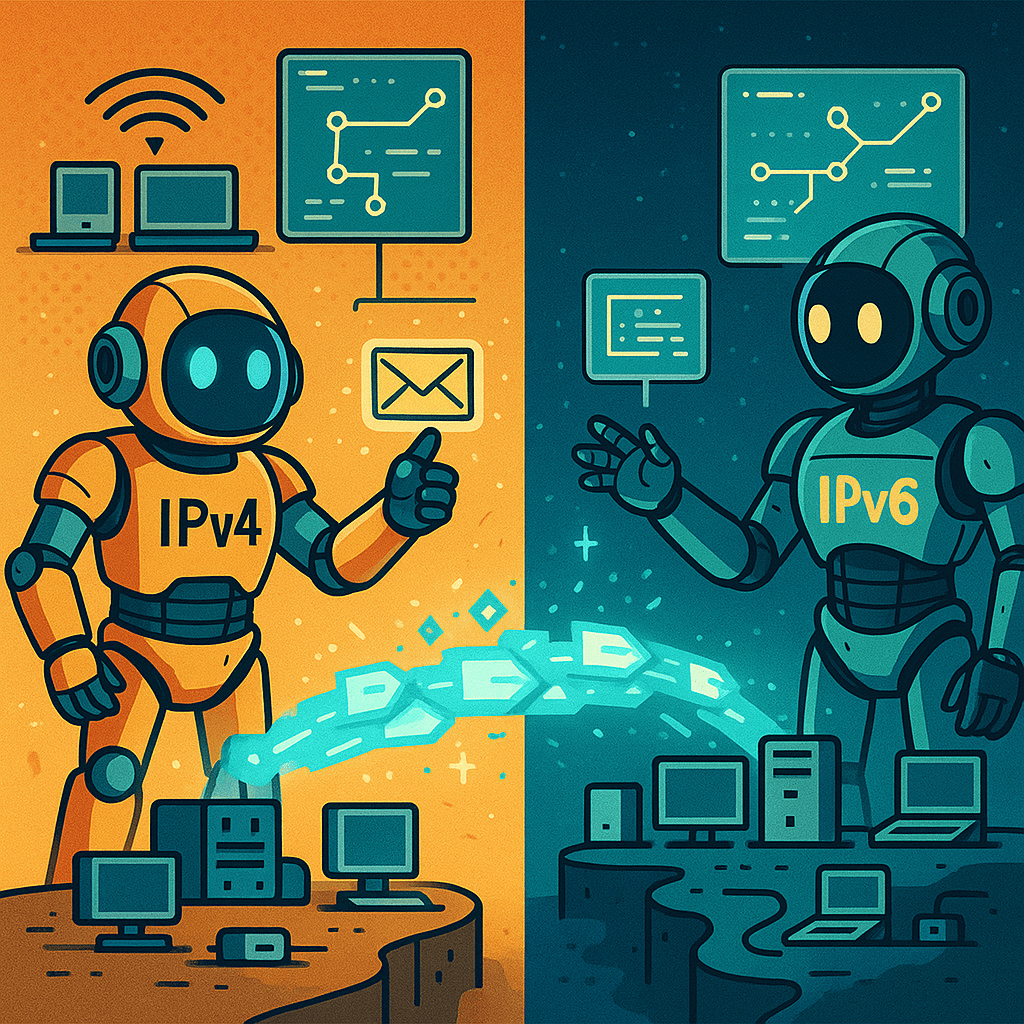
An IP address is a unique identifier assigned to devices on a network to enable communication. There are two main versions: IPv4, a 32-bit address format (e.g., 192.168.1.1), and IPv6, a 128-bit format (e.g., 2001:0db8:85a3::8a2e:0370:7334), created to handle the growing number of connected devices. IPv4 supports around 4.3 billion addresses and uses dot-decimal notation. It’s…
-

BIOS stands for Basic Input/Output System. It is firmware stored on a chip on the motherboard that initializes hardware components and loads the operating system. BIOS interfaces are text-based, and users access them by pressing keys like DEL, F2, or ESC during system startup. BIOS uses Legacy Boot, has limited drive support (up to 2.2…
-
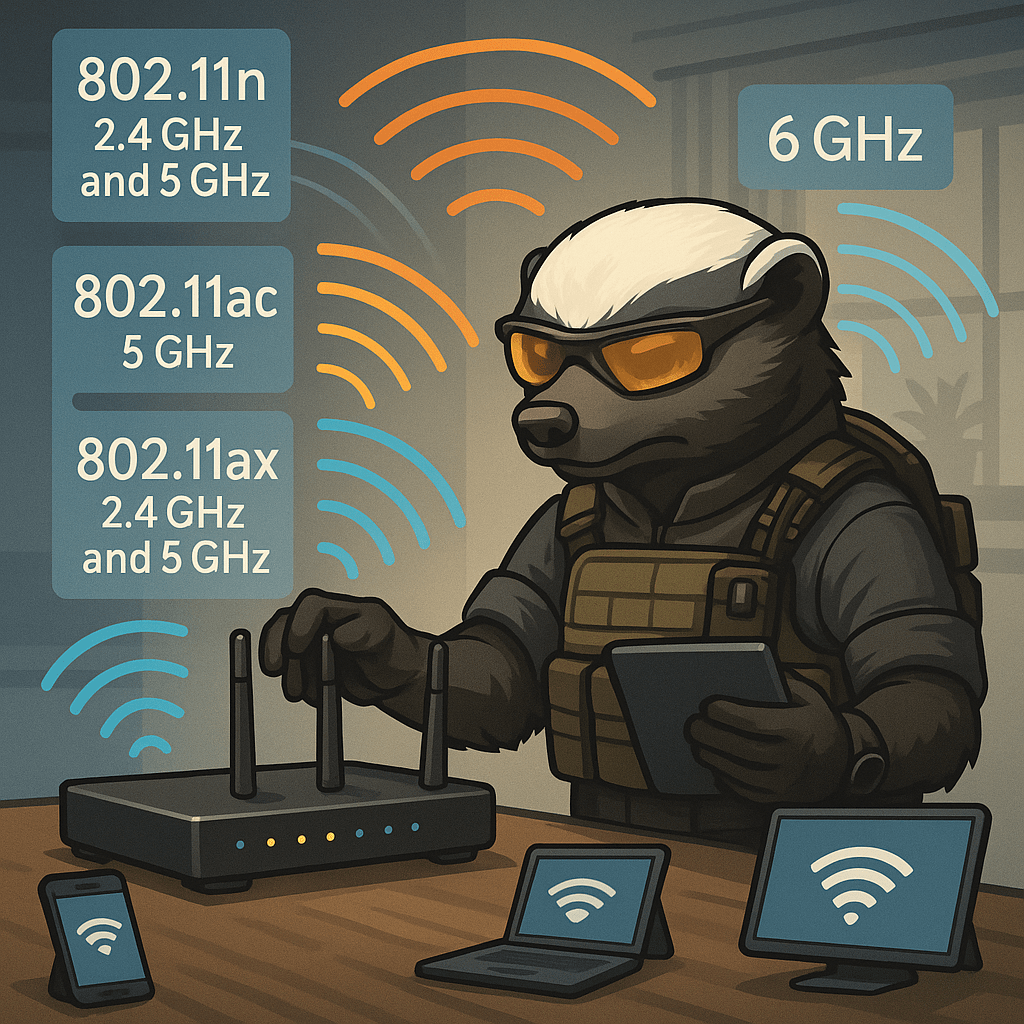
Modern wireless networks operate using evolving Wi-Fi standards, each offering different speed, range, and frequency capabilities. These standards, managed by the IEEE under the 802.11 umbrella, are critical to understand for any technician tasked with configuring or troubleshooting wireless networks. 802.11n, released in 2009, was the first to support dual-band operation—using both 2.4 GHz and…

