Tech Docs
-

Overclocking involves increasing a computer component’s clock rate beyond the manufacturer’s specifications to boost performance. This practice is commonly applied to processors and graphics cards, allowing them to execute more operations per second. While overclocking can lead to significant performance gains, it also raises power consumption and heat output, necessitating improved cooling solutions to maintain…
-
Network ports serve as essential communication endpoints, allowing devices to exchange data over the internet and private networks. These numerical identifiers, assigned to specific services and applications, ensure proper data routing between devices. The IT industry relies on well-defined port numbers to facilitate secure and efficient networking operations across various protocols and services. Commonly Used…
-
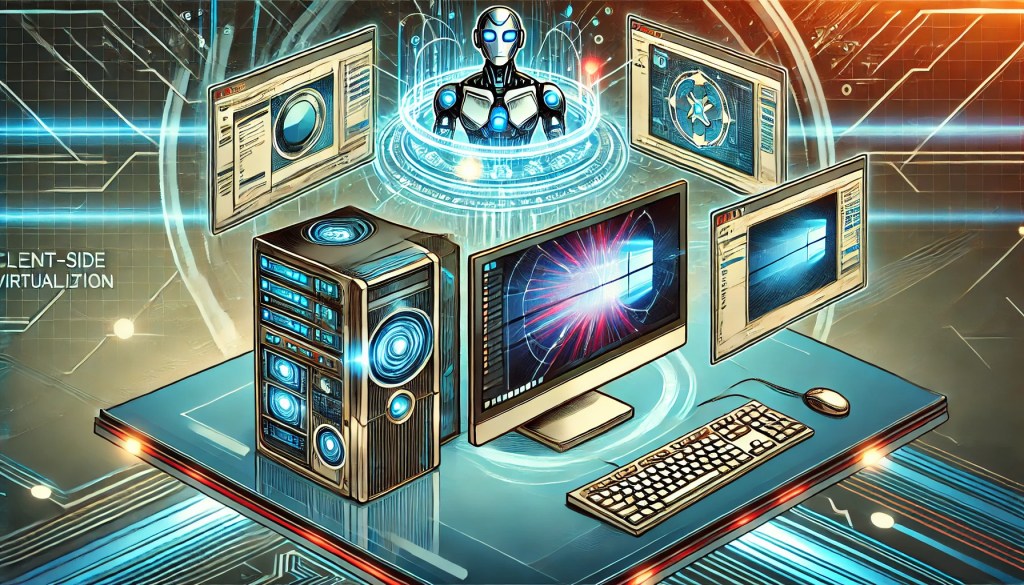
Client-side virtualization enables users to run multiple operating systems simultaneously on a single physical machine, enhancing flexibility and resource utilization. This technology allows each virtual machine (VM) to operate independently, with its own CPU, memory, and storage resources. A key component in client-side virtualization is the hypervisor, also known as the Virtual Machine Manager (VMM).…
-

The central processing unit (CPU) serves as the brain of a computer, executing instructions and processing data essential for system operations. A CPU’s architecture encompasses various components and functionalities that determine its performance and capabilities. Instruction Set Architecture (ISA) The ISA defines the set of instructions a CPU can execute, including operations like arithmetic, data…
-
Before you can use python in the Linux terminal, you need to download the python version that you wish to utilize on your operating system. For example your python version might be 3.12 so make the call “python3 –version” After you confirm python is downloaded run the application by calling the version for example, “python3”…
-

Laser printers have become essential in both office and home environments, offering high-speed and high-quality printing solutions. Understanding their components and features is crucial for effective operation and troubleshooting. Key Components of a Laser Printer Laser Assembly: The laser assembly emits a laser beam that is directed onto the photosensitive drum. The laser beam selectively…
-

RAID (Redundant Array of Independent Disks) is a data storage technology that combines multiple physical drives into a single logical unit to enhance performance, reliability, or both. Various RAID levels offer different balances between these factors. RAID 0 utilizes data striping, distributing data across multiple disks without redundancy. This configuration enhances read and write speeds…
-
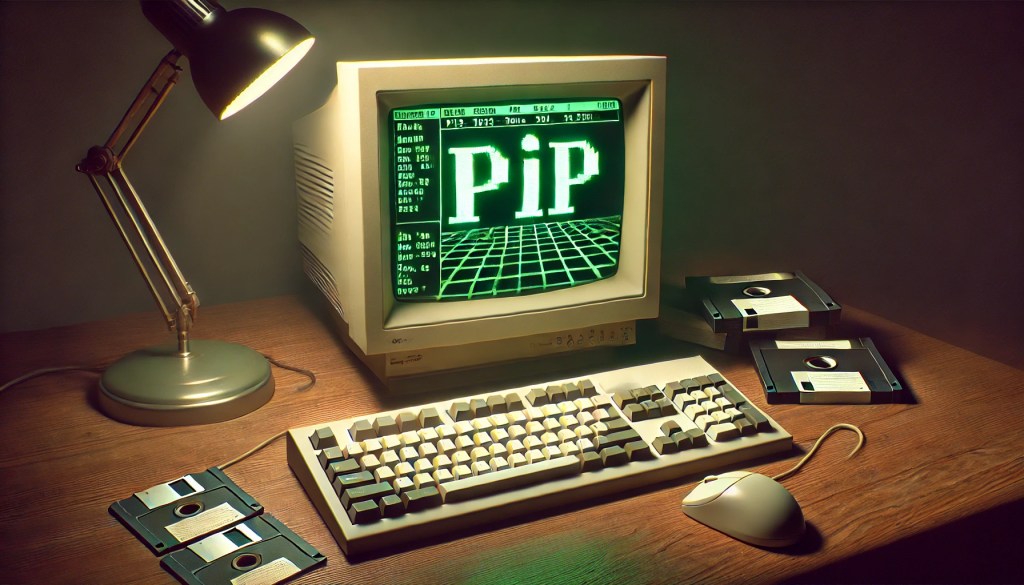
Python’s package management landscape has been significantly shaped by pip, the default package installer for the language. Introduced in 2008 by developer Ian Bicking, pip—an acronym for “Pip Installs Packages”—was created to enhance the process of installing and managing Python software packages. It serves as a direct interface to the Python Package Index (PyPI), a…
-

Error Correcting Code (ECC) RAM improves data reliability in workstations and servers by detecting and correcting single-bit errors, preventing data corruption. ECC memory adds 8 extra bits for every 64-bit word, resulting in a 72-bit data bus, enabling error detection and correction mechanisms. Registered DIMMs (RDIMMs) incorporate a register between the memory module and memory…
-

M.2 is a compact, high-speed interface standard designed for internal expansion cards and solid-state drives (SSDs) in modern computers, including laptops, desktops, and embedded systems. It serves as a replacement for older standards like mSATA and mini PCIe, offering improved performance, efficiency, and space savings. M.2 devices utilize multiple bus interfaces, including PCI Express (PCIe)…
-
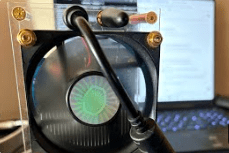
The SupraHex is a compact, ESP32-S3-based mining device designed for small-scale, efficient Bitcoin mining. Developed by TinyChipHub and other vendors recognized by OSMU, it operates on AxeOS firmware and supports both solo and pool mining. Unlike traditional ASICs, it is optimized for low-power, cost-effective mining while allowing users to tinker with firmware and system configurations.…
-

Accessing the web interface of the Cisco Catalyst 1200-8T switch is a straightforward process that allows IT professionals to configure and monitor network settings efficiently. The switch’s web-based graphical user interface (GUI) provides an intuitive platform for managing various network functions. Prerequisites: Network Connection: Ensure the switch is properly connected to your local network and…

