technology
-
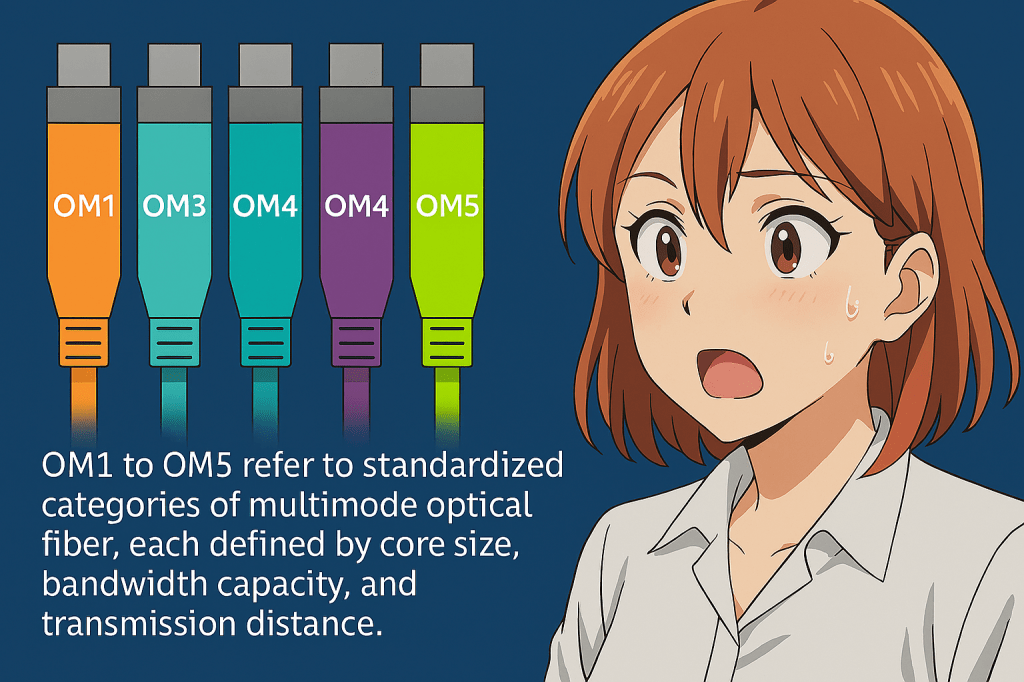
OM1 to OM5 refer to standardized categories of multimode optical fiber, each defined by core size, bandwidth capacity, and transmission distance. OM1 uses a 62.5 µm core and supports up to 1 Gbps over short distances, while OM2 through OM5 use a 50 µm core and are optimized for higher-speed VCSEL-based transmissions. OM3 and OM4…
-
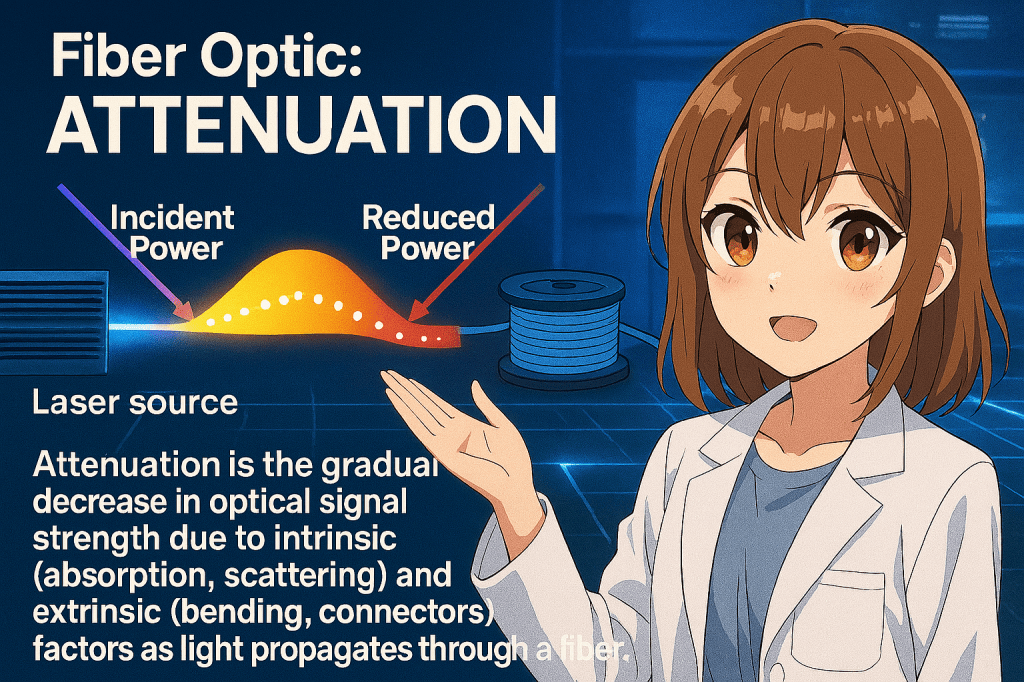
Attenuation in fiber optics refers to the gradual weakening of an optical signal as it travels through the fiber. This loss happens because some of the light energy is absorbed by the glass material or scattered due to microscopic irregularities. It’s measured in decibels per kilometer (dB/km), and the lower the number, the better the…
-

Amazon has announced Fastnet, its first independently owned transatlantic subsea cable project, designed to connect Maryland, USA, with County Cork, Ireland. Scheduled for completion in 2028, the system will deliver more than 320 terabits per second (Tbps) of capacity, enhancing Amazon Web Services (AWS) infrastructure and boosting global cloud computing and artificial intelligence (AI) network…
-
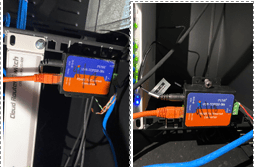
This guide outlines the essential components and step-by-step procedure for establishing an RS-485 serial connection using Ethernet and serial wiring. It is intended for technicians integrating RS-485 devices with a Mikrotik router and a metering system above a breaker panel. 1. Here are the tools you will need to set up a RS 485 Device:…
-
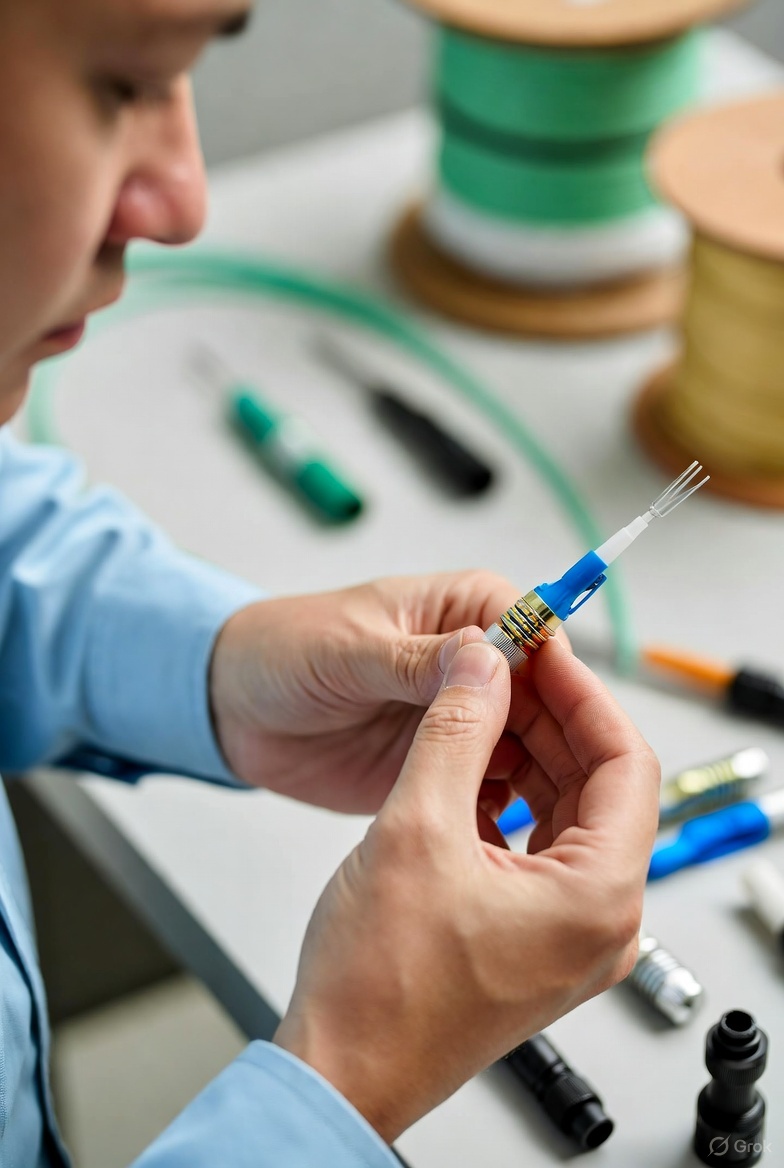
Fiber connectors are essential components that allow optical fibers to be joined or disconnected without permanent fusion. They ensure precise alignment of the fiber cores to maintain minimal signal loss and reflection. The SC (Subscriber Connector) is one of the most common types, known for its square shape, push-pull locking mechanism, and reliability in data…
-
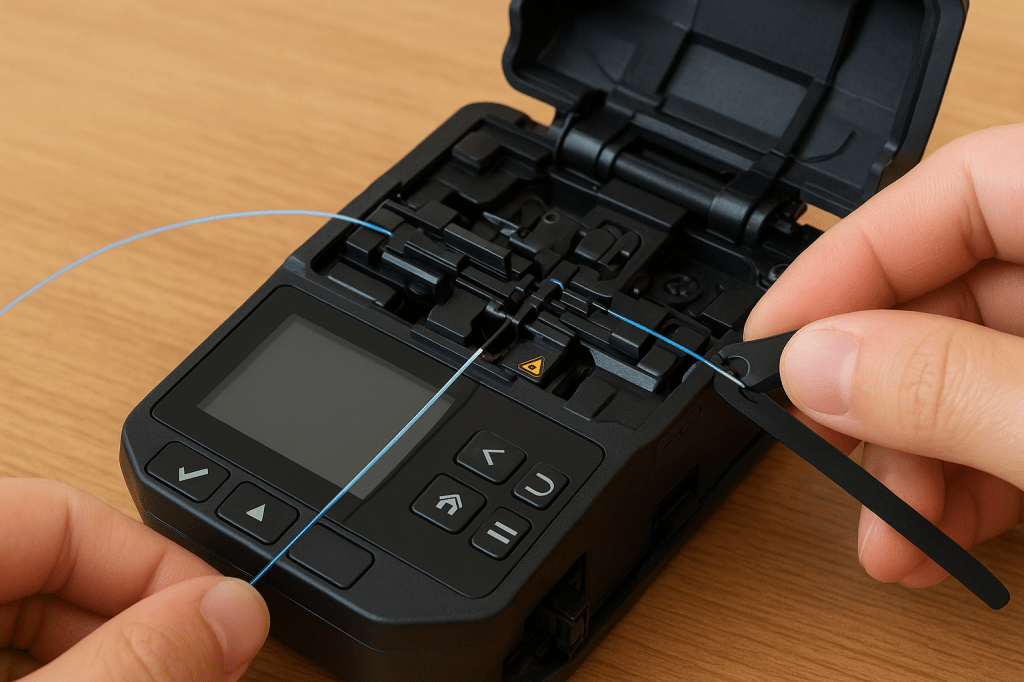
Fiber optic splicing is a precision technique used to connect two optical fibers end-to-end, allowing light signals to pass through with minimal loss and reflection. This process is fundamental in building, repairing, and extending fiber optic networks, especially in long-haul telecommunications, data centers, and FTTH installations. The most common method is fusion splicing, which uses…
-
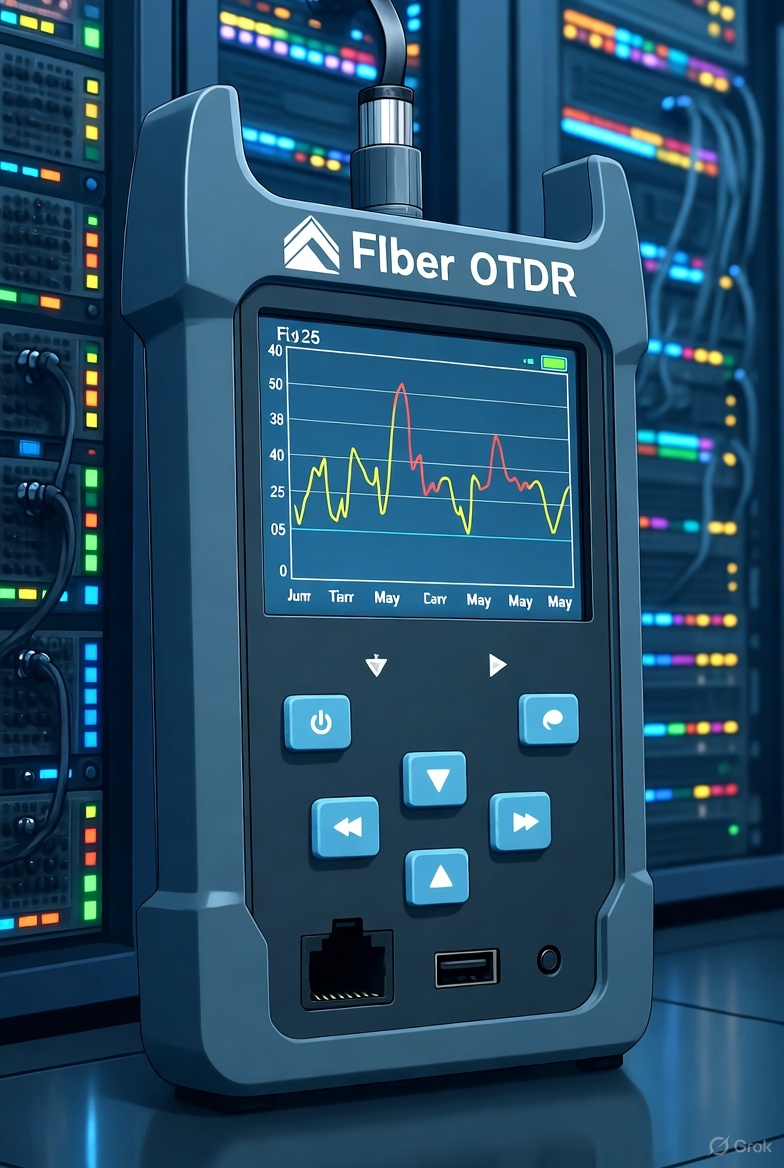
OTDR, or Optical Time Domain Reflectometer, operates by injecting a series of short laser pulses into one end of an optical fiber and measuring the light that is scattered or reflected back from points along the fiber. This backscattered light—primarily due to Rayleigh scattering and Fresnel reflections—is captured by a photodetector within the OTDR, and…
-

In a standout experiment, more than 1,000 autonomous AI agents were deployed in a Minecraft-based simulation by Altera. These agents established roles such as farmers, traders, and villagers, created a currency via gems and built a market system in-game. One agent, dubbed “Olivia,” chose to stay in her role supporting the community rather than chase…
-

Researchers at the CUNY Advanced Science Research Center (ASRC) have developed a novel material named “Diamene,” composed of exactly two atomic-thick sheets of Graphene, which remains flexible under normal conditions but dramatically hardens to diamond-like stiffness when subjected to sudden impact or pressure. The key breakthrough is the discovery that when two graphene layers are…
-

Omron Corporation has introduced FORPHEUS, a table tennis robot powered by artificial intelligence and advanced robotics designed to analyze an opponent’s movements, spin, and ball trajectory in real time. It returns shots with exceptional precision, learning and adapting as it plays. The system uses high speed cameras and sensors mounted above the table to track…
-

Figure AI announced on August 12, 2025 that its humanoid platform folded laundry fully autonomously. Company materials state that engineers reused the Helix end to end neural network with no architectural or hyperparameter changes and only added a new dataset, marking a first for humanoids with multi fingered hands performing laundry folding without teleoperation. According…
-

Trusted Platform Module (TPM) is a dedicated chip embedded on a computer’s motherboard, designed to secure hardware through integrated cryptographic keys. It stores sensitive information such as encryption keys, digital certificates, and passwords in a tamper-resistant environment. TPM is commonly used for: BitLocker drive encryption Secure Boot validation Windows Hello biometric authentication Digital Rights Management…

