C++
-
Before placing Bjarne Stroustrup into the category of the “greatest C++ coder,” it is necessary to refine the premise. Stroustrup is not primarily known for pushing implementations to their absolute performance limits. His contribution exists at a deeper layer. He is the architect of the language itself. According to his own work, C++ was designed…
-
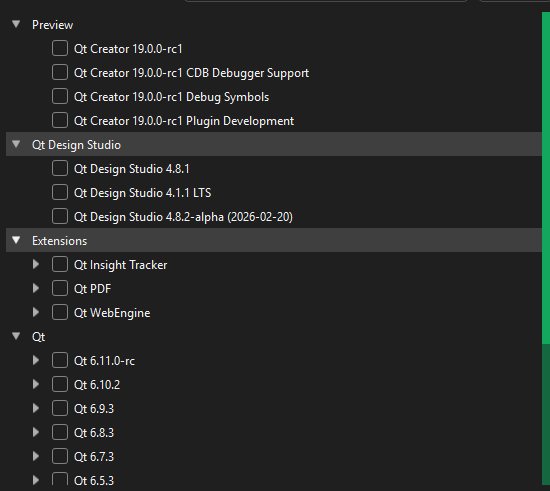
Qt is a professional software framework used to build graphical applications in C++ (and sometimes Python) that run on many operating systems such as Windows, Linux, and macOS. Instead of manually coding windows, buttons, charts, and graphics from scratch, Qt provides a large library of ready-made tools like QWidget, QPainter, buttons, text fields, and layouts…
-

My goal is to understand Bitcoin by learning C++ and Python, as well as HTML for website building. I aspire to one day contribute to Bitcoin’s source code and become a full stack developer.
-

Steam OS is recognized as one of the most advanced operating systems for gaming. It offers a robust platform designed to enhance the gaming experience through its compatibility and performance features. One of the standout games available on Steam OS is Space Engine, a game that reflects the physics of the universe with remarkable accuracy.…
-

“The study of reverse engineering in C++ of popular video games like GTA provides valuable insight into how industrial-scale C++ game engines are constructed, enhancing understanding of object-oriented design, memory management, and complex systems integration.”
-

In C++, large programs are typically divided into multiple files to keep code modular, maintainable, and reusable. One of the most important tools in that structure is the header file, usually marked with the .h or .hpp extension. Header files declare the interfaces of your program—such as function prototypes, class definitions, and constants—while leaving the…
-

Before writing C++ programs on a Linux system, it’s essential to make sure the compiler is properly installed. G++ is the GNU Compiler Collection’s tool specifically for compiling C++ code. The screenshot demonstrates the process of checking and confirming that G++ is installed and ready to use. The screenshot shows that the user successfully confirmed…
-

When you write a C++ program, you are not writing instructions a computer can understand directly. You are writing human-readable source code. The process that transforms your .cpp or .cc files into an executable program is called compilation, and it happens in multiple stages. These stages are carried out by a compiler toolchain, often referred…
-

C++ is not just a programming language. It is a system-building tool forged from necessity, optimized for control, and wielded by those who require deterministic performance across both time and space. Conceived in 1979 by Danish computer scientist Bjarne Stroustrup at Bell Labs, C++ was born out of a need to create simulations with both…
-
My goal is to understand Bitcoin by learning C++ and Python, as well as HTML for website building. I aspire to one day contribute to Bitcoin’s source code and become a full stack developer.
-
Steam OS is recognized as one of the most advanced operating systems for gaming. It offers a robust platform designed to enhance the gaming experience through its compatibility and performance features. One of the standout games available on Steam OS is Space Engine, a game that reflects the physics of the universe with remarkable accuracy.…

