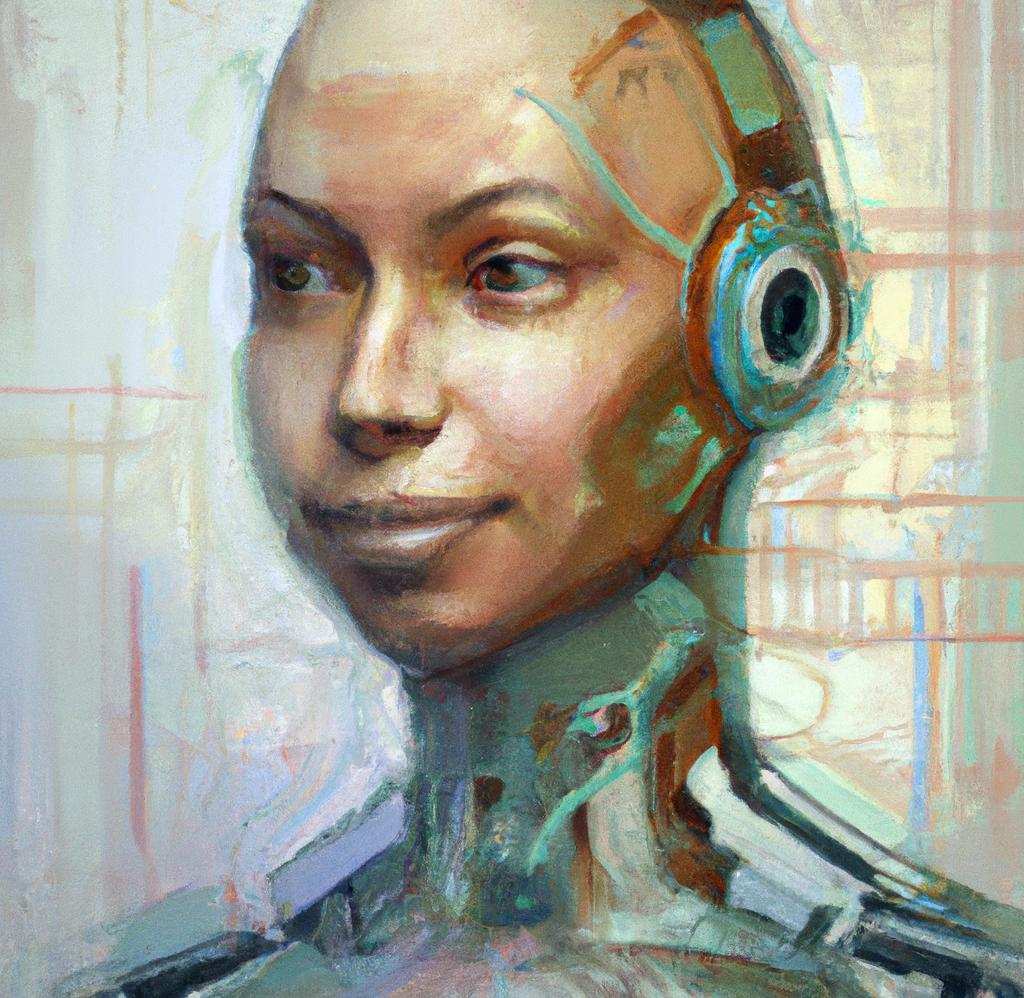
The popular saying about Bitcoin, “gradually, then suddenly,” encapsulates the disruptive journey of transformative technologies. The same concept can be applied to the imminent influence of artificial intelligence (AI) and autonomous robots on the job market. Just as Bitcoin reshaped the financial landscape subtly before surging into dominance, AI and robotics are poised to follow a similar trajectory in the employment sphere.
The seemingly slow yet steady progression of AI is more than mere technological advancement; it’s a socioeconomic shift. Much like the gradual acceptance and sudden ubiquity of Bitcoin, the influence of AI on the job market may seem incremental today. However, when the shift reaches its tipping point, the change could be swift and widespread, transforming the workforce landscape in ways that are as profound as they are sudden
At the onset of the next economic recession, whenever that might be, artificial intelligence (AI) and autonomous robots will play an intriguing role. The economic viability of essentially replacing humans with automated labor will become significantly evident, given their cost-effective nature. These intelligent machines do not require health benefits, paid time off, 401k or retirement accounts, or pensions. In contrast, these are elements commonly associated with human labor, increasing overall operational costs for companies, especially large corporations.
Dr. Katrina Wallace, in her interview with 60 Minutes Australia, detailed the unpredictability of generative AI. This form of AI, already considered superior to humans in some respects, operates without any significant regulations or laws. Despite its Wild West status, it’s mainly the tech giants that are at the helm. Their objectives? Profit-maximization. The advancement of AI could replace approximately 300 million full-time jobs, according to a Goldman Sachs report.
The same report suggests that while AI could automate up to a quarter of work tasks in the US and Europe, it could also catalyze the creation of new jobs and a potential productivity boom. Indeed, it could boost the total annual value of global goods and services by an impressive 7%.
The UK government is pushing for increased investment in AI, with the intention of driving productivity across the economy. Technology Secretary Michelle Donelan emphasizes that AI should complement UK jobs rather than disrupt them.
However, this impact is expected to vary across different sectors, with potential automation rates of 46% in administrative and 44% in legal professions, but just 6% in construction and 4% in maintenance. Although AI could boost productivity for many workers, some Americans are likely to lose their jobs in the process.
Sam Altman, CEO of OpenAI, the company behind ChatGPT, a generative AI technology, acknowledges the imminent threat of job loss. Altman highlights that despite the positive impacts AI could have on workers, it’s not solely a boon. “Jobs are definitely going to go away,” he says.
While Altman predicts that better, potentially higher-paying jobs may replace the disrupted ones, the key challenge lies in whether displaced workers will be able to adapt to these new roles. In this regard, the late-19th-century automation of telephone operators serves as a cautionary tale of workers struggling to adapt to technological change.
Carl Benedikt Frey, Future of Work Director at the Oxford Martin School, Oxford University, points to the advent of GPS technology and platforms like Uber as an illustration of AI’s impact on wages rather than jobs. As generative AI continues to impact creative tasks, lower wages might be more prevalent than fewer jobs.
Nevertheless, the long-term effects of AI remain uncertain, cautions Torsten Bell, Chief Executive of the Resolution Foundation think tank. While we cannot predict how technology will evolve or how firms will integrate it into their operations, we should also consider the potential gains in living standards from higher productivity work and cost-efficient services.
A report by Oxford Economics in June 2019 suggested that industrial robots could displace 20 million manufacturing jobs by 2030, approximately 8.5% of the global manufacturing workforce. As robotic capabilities continue to expand, industries are increasingly turning to these intelligent machines. Over the next five years, the accelerated adoption of robots in the service sector is expected.
The rapid adoption of robotics presents policymakers with a dilemma. While robots enable growth, they exacerbate income inequality. Economists predict that robots could take over 20 million manufacturing jobs worldwide by 2030, with 14 million robots being employed in China alone1. This could result in a 5.3% boost in global GDP that year if robot installations are amplified by 30% more than the baseline forecast by 2030, adding an extra $4.9 trillion per year to the global economy1. However, it could also lead to the loss of jobs, particularly in lower-skilled, poorer economies, leading to increased income inequality.
As AI and autonomous robots are poised to redefine virtually every facet of our work-life, particularly in times of recession, the emphasis should be on preparing the workforce for this transformation. While the concerns of job losses and wage reductions are valid, the advantages of higher productivity and reduced operational costs for businesses provide a silver lining. To ensure a smoother transition into this new era of AI and robotics, significant efforts towards upskilling and reskilling workers and enhancing labor market adaptability are crucial.

 Bitcoin Versus
Leave a reply to ‘He’s Saying Things That Don’t Make Sense to Me’: Boston Dynamics CEO Robert Playter Critiques Elon Musk’s Robot Strategy – Bitcoin Versus Cancel reply