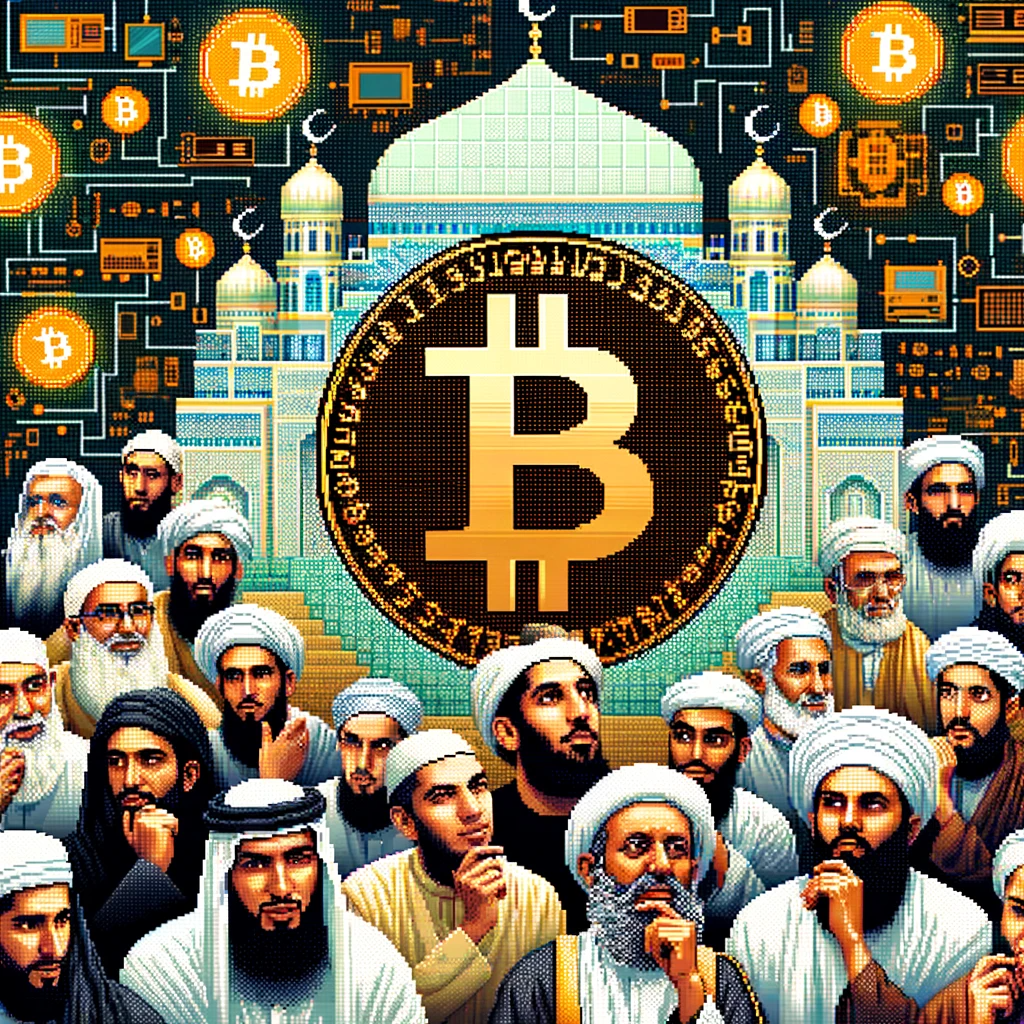
The Islamic perspective on Bitcoin remains a topic of significant debate among scholars, reflecting the complex intersection of finance and faith. This discussion is essential in a world where Bitcoin continues to reshape financial landscapes.
The Halal-Haram Dichotomy
Sheikh Abdullah Al-Manea, a senior Islamic scholar from Saudi Arabia, has expressed a firm stance against Bitcoin. In an interview with Rotana Khalijia TV, he labeled Bitcoin as “utterly haram” (forbidden), likening its use to gambling and deception. Al-Manea, a member of the Saudi Council of Senior Scholars, emphasizes the lack of intrinsic value in Bitcoin, raising concerns about its traceability and reliability. This perspective aligns with a cautious approach towards digital currencies, underscoring the need for a stable, traceable backing to ensure compliance with Islamic principles.
On the other hand, Sheikh Abdullah bin Sulaiman al-Manea, another influential Saudi cleric, has offered a contrasting view in his fatwa. He deems Bitcoin acceptable under Islamic law, arguing for its real asset value and utility. Drawing parallels with gold and silver, Sheikh al-Manea sees Bitcoin as a mined, exchangeable, and storable commodity. His perspective diverges significantly from the traditional view, suggesting a more progressive interpretation of cryptocurrencies within Islamic jurisprudence. This stance highlights Bitcoin’s potential as a transparent, consensus-based system that could empower the economically disadvantaged, aligning with Islamic ethical principles.
A Spectrum of Interpretations
Beyond these specific examples, Muslim scholars worldwide continue to debate the issue, with no unanimous consensus. Some argue that the speculative nature of cryptocurrencies like Bitcoin clashes with Islamic principles prohibiting gambling and uncertainty in financial transactions. Others focus on the potential for Bitcoin to provide financial inclusivity and empowerment, which could align with Islamic values of economic justice.
The Islamic world’s engagement with Bitcoin illustrates the dynamic nature of religious interpretation in the face of emerging technologies. The varying viewpoints among scholars like Sheikh Abdullah Al-Manea and Sheikh Abdullah bin Sulaiman al-Manea represent a broader conversation within Islam about the compatibility of modern financial instruments with traditional ethical principles. As Bitcoin continues to evolve, this debate will likely remain a vital component of Islamic financial Policy.
Bitcoin Versus is not a financial advisor. This media platform reports on financial subjects purely for educational and entertainment purposes only. The information provided on this platform is not intended as investment, tax, legal, or other professional advice. You should not rely on this information as a substitute for individual advice from a licensed professional. Do your own due diligence and contact a professional financial advisor for any advice on how to invest your money.

 Bitcoin Versus
Leave a reply to Dubai Officially Approves Bitcoin, Cryptocurrency for Salary Payments – Bitcoin Versus Cancel reply