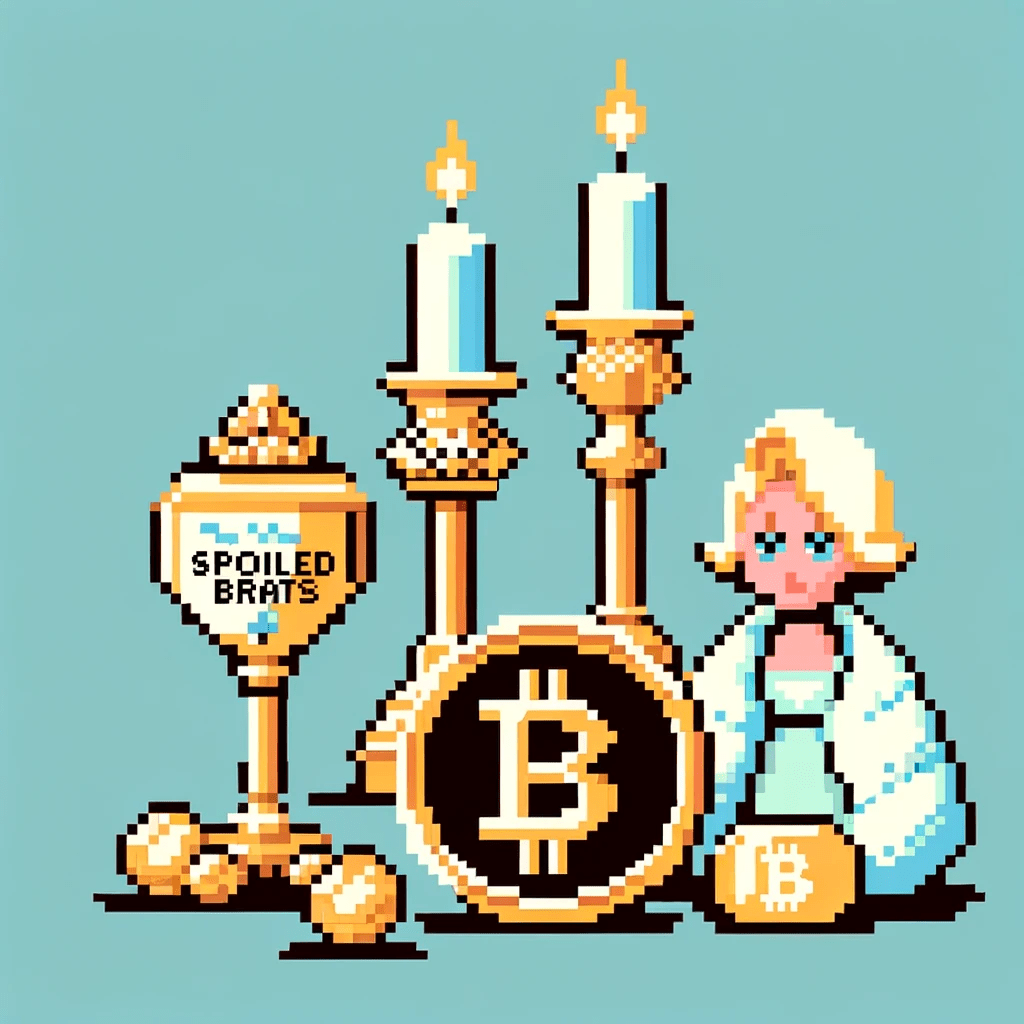
Millenials Have been Priced Out of Parenthood. Can Bitcoin Save the American Family?
The phenomenon of hyperconsumerism has become deeply rooted in the landscape of American society, where affluence is more prevalent than in many parts of the world. Fueled primarily by social media, this trend has led to unrealistic expectations in lifestyle and relationships. For instance, the display of wealth by celebrities and the ultra-rich on platforms like Instagram and X.com has distorted the perception of needs and wants amongst the lower middle class. They often find themselves striving to emulate a lifestyle that is far beyond their means, leading to a cycle of perpetual hyperconsumerism.
The financial burden of raising a child is a complex issue influenced by various factors including hyperconsumerism and inflation. Hyperconsumerism, characterized by excessive consumption and materialism, has contributed to this financial strain by raising the standards of what is considered necessary for child-rearing.
Inflation, on the other hand, directly impacts the cost of living, making everyday expenses more expensive over time. This inflationary trend has been particularly noticeable in recent years. Significant increases have been observed in specific areas like education and healthcare, with parents spending 1175% more on education and 155% more on healthcare in 2015 than in 1960. A report from CNBC reveals that 50% of Americans earning over $100,000 annually are living paycheck to paycheck, highlighting the pervasive nature of this issue.
Additionally, the changing social dynamics, such as the increase in single-parent households and the trend of millennials having fewer children and at a later age, further highlight the financial decision around raising a child (or having a child at all).
The financial cost of raising a child has become a top factor for millennials in deciding whether to have children. The estimated expense of raising a child in today’s economic climate can be daunting, with figures suggesting it could be as high as $300,000 per child. This financial burden, coupled with the societal shift towards hyperconsumerism, where personal fulfillment and material possessions are often prioritized, has led many millennials to delay or even forgo parenthood.

Bitcoin And the Death of Hyperconsumerism
Hyperconsumerism is characterized by the relentless acquisition of goods, often driven by advertising, social media, and the availability of credit, leading to debt, mental health issues, and environmental harm. Understanding the difference between needs and wants is crucial in this context. Needs encompass essential living expenses and job-related costs, such as rent, utilities, healthcare, food, and commuting expenses. In contrast, wants are discretionary purchases like entertainment, dining out, travel, and luxury items. Distinguishing between these two categories is vital for financial stability and combating the adverse effects of hyperconsumerism.
Jeff Booth’s insights into the role of decentralization in the economy provide a profound understanding of how our financial system could evolve, especially in the context of hyperconsumerism. He asserts, “Decentralization and taking that money out of control of human nature, means we’re forced to cooperate.” By removing monetary control from centralized entities, individuals are propelled towards a more cooperative and perhaps equitable, anti-consumer economic landscape.
Booth highlights a critical contradiction in our economic behavior, as he goes on to say, “The buyer and seller are actually the same person. So all of our labor shows up as somebody buying our labor. We want our house prices to go up forever, yet all the things we choose in our life, we want more value in.” This dichotomy reflects the inherent conflict in consumer behavior, where we seek to increase our wealth through asset appreciation, such as rising house prices, while simultaneously desiring lower prices for everyday goods and services. It’s a cycle that fuels hyperconsumerism – an endless pursuit of more for what one might perceive is less.
Addressing the real estate market, Booth notes, “Prices in housing would fall to their utility value. They wouldn’t be used as a storage of value in a market that didn’t require leverage.” In a Bitcoin-centric economy, real estate might be valued more for its utility rather than as an investment, contrasting sharply with the current system where housing is often seen as a way to store and grow wealth.
Booth also contrasts the perspectives provided by different currencies, stating, “If you’re managing your world in bitcoin, what you’re seeing is prices against bitcoin fall forever. But if you’re measuring your world in fiat currency, you’re thinking prices are gonna rise forever.”
In a Bitcoin-driven economy, the constant appreciation of currency could encourage saving and mindful spending, potentially mitigating the impulsive and excessive lifestyle of hyperconsumerism.
Disclaimer: Bitcoin Versus is not a financial advisor. This media platform reports on financial subjects purely for educational and entertainment purposes only. The information provided on this platform is not intended as investment, tax, legal, or other professional advice. You should not rely on this information as a substitute for individual advice from a licensed professional. Do your own due diligence and contact a professional financial advisor for any advice on how to invest your money.

 Bitcoin Versus
Leave a reply to Bank of America Survey Reveals 62% of Millennials Favor Cryptocurrency Amid $84 Trillion Wealth Transfer – Bitcoin Versus Cancel reply