
Network topology plays a crucial role in the design and operation of networks, offering a structured way of connecting computers and other devices to facilitate efficient data transfer and communication. It refers to the physical or logical arrangement of network devices and the paths for data transfer between these devices. The choice of a network topology affects network performance, scalability, and maintenance costs significantly.
Physical vs. Logical Network Topologies
The Physical topology outlines the physical connections between network devices, including cables and hardware placement, while logical topology describes how data flows across the network, irrespective of the physical connections. Both aspects are vital for network design, impacting the overall efficiency and performance of a network. Logical topologies might differ from physical ones to optimize data paths and network operations.
Key Types oF Network Topologies
- Star Topology: In this widely used topology, each node connects to a central hub or switch, facilitating easy addition or removal of nodes. It offers robustness against node failures but has a single point of failure at the central device.

- Bus Topology: Nodes are connected in sequence along a single cable, making it simple to set up. However, it’s susceptible to cable failures, which can bring down the entire network.

- Ring Topology: Nodes are connected in a circular fashion, with data passing sequentially between nodes. It’s less common due to its vulnerability to node or line failures, which can disrupt the entire network.

- Mesh Topology: Every node connects directly to every other node, offering high reliability and data transfer speeds but at a higher cost and complexity.

- Tree Topology: Combining aspects of bus and star topologies, it offers hierarchical organization and ease of expansion, though it relies heavily on the health of the root node.

- Hybrid Topology: A combination of two or more different topologies to meet specific needs, offering flexibility and scalability at the cost of increased complexity.
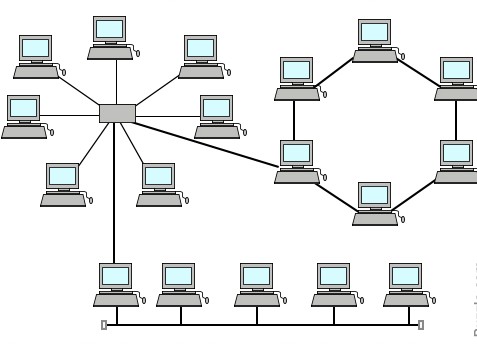
(Source: Networkstraining.com)
Importance of Network Topologies
The choice of topology is crucial for network efficiency, affecting data transmission speeds, energy consumption, and the ease of fault detection. It influences the operational costs, including cabling and maintenance expenses, and plays a significant role in risk management by affecting the network’s vulnerability to failures and attacks.
Understanding network topologies is essential for network administrators to design and manage networks effectively. The selection of a topology impacts not only the network’s current performance but also its scalability and resilience to failures.

 Bitcoin Versus
Leave a reply to BitAxe Ultra Achieves 1.2 TH/s with Immersion Cooling Technology – Bitcoin Versus Cancel reply