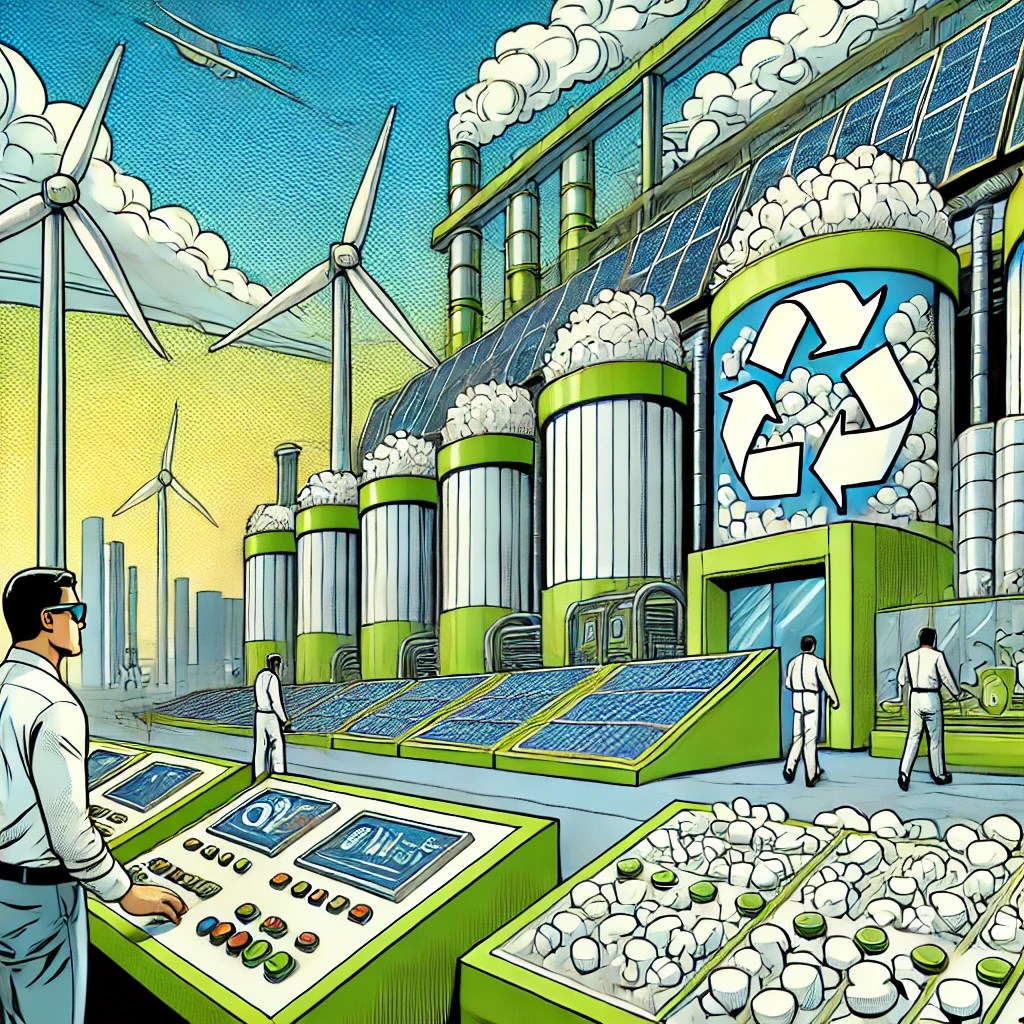
Researchers from the Royal Melbourne Institute of Technology (RMIT) and Riga Technical University (RTU) have introduced an innovative method to generate electricity from polystyrene, a widely used but environmentally persistent material.
This plastic-based foam, known for its resilience, often takes up to 500 years to decompose and accumulates significantly in landfills, with global production at around 26 million tons annually.
Efforts to repurpose such waste led to the development of a thin patch made from polystyrene layers. When exposed to airflow, the patch harnesses static electricity, producing up to 230 volts, which surpasses the output of standard household outlets in the U.S.
Triboelectric technology forms the core of this innovation. Triboelectric generators function by accumulating charges when two materials come into contact and then separate, allowing for the conversion of static into usable electricity. Such advancements aim to enhance sustainability by converting polystyrene waste into an energy resource, potentially supporting various applications.

 Bitcoin Versus
Leave a comment