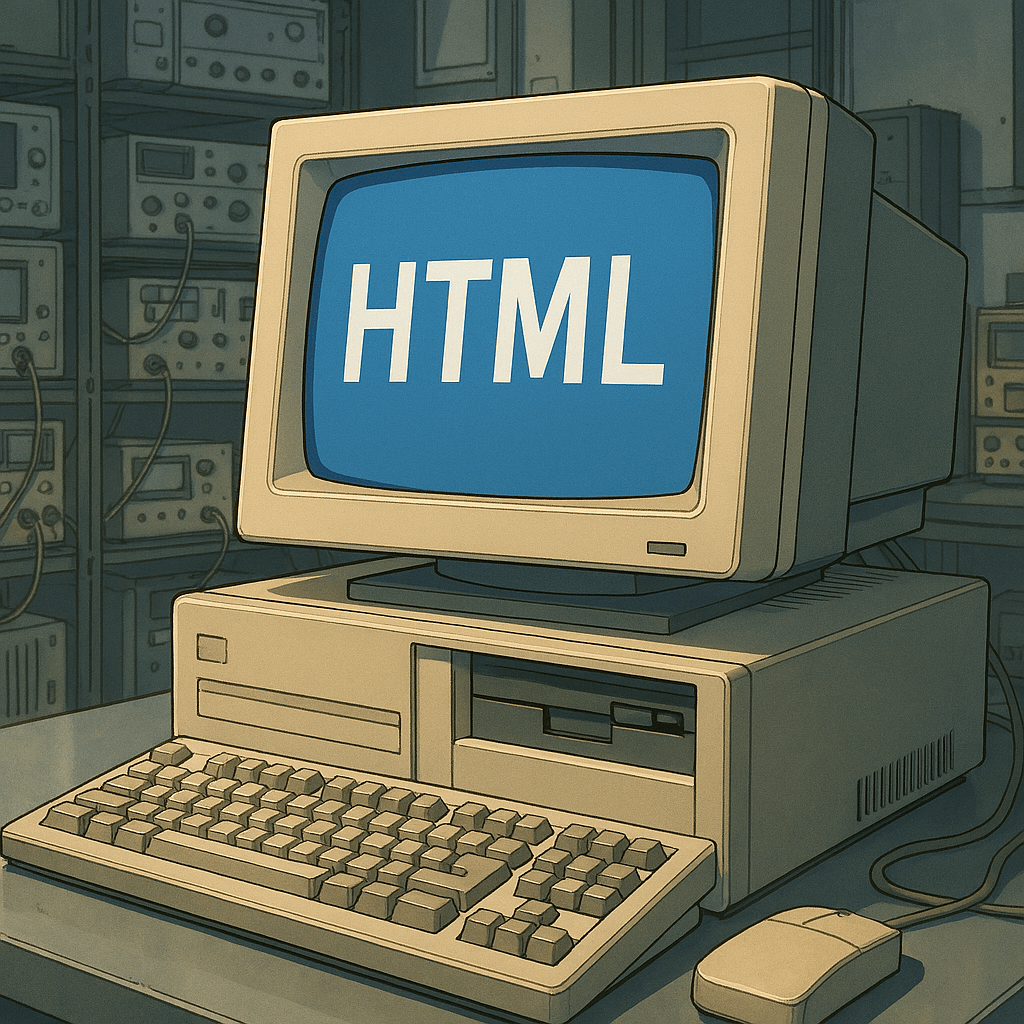
HTML has a surprisingly rich history for something we now take for granted, and understanding where it came from makes its modern role much clearer.
It began in the early 1990s when Tim Berners‑Lee created the first version as a simple markup system to share scientific documents across the emerging World Wide Web.
Early HTML was extremely small—barely a handful of tags—and focused entirely on structure, not design. As the web exploded, HTML evolved through versions that added images, forms, tables, scripting hooks, and eventually the separation of structure (HTML), presentation (CSS), and behavior (JavaScript).
Today’s HTML5 is a mature, standardized language that supports multimedia, accessibility, semantic meaning, and application‑level features, making it the backbone of modern web development.
In summary, HTML is the structural language of the web: a system of nested elements that gives content meaning, organizes information into a coherent document, and provides the foundation upon which styling and interactivity are layered to create the rich, dynamic experiences users expect from the modern internet.
BitcoinVersus.Tech Editor’s Note:
We volunteer daily to ensure the credibility of the information on this platform is Verifiably True. I
If you would like to support to help further secure the integrity of our research initiatives, please donate here: 3C9o19EH5HSiwEPyCTmEKzxhNCbo2X6TTb


Leave a Reply