Soldering is a metal-joining process used to create reliable electrical and mechanical connections without melting the primary components themselves. Its roots extend back to early metalworking, but soldering became especially important with the development of electrical systems, radios, printed circuit boards, and modern electronics.
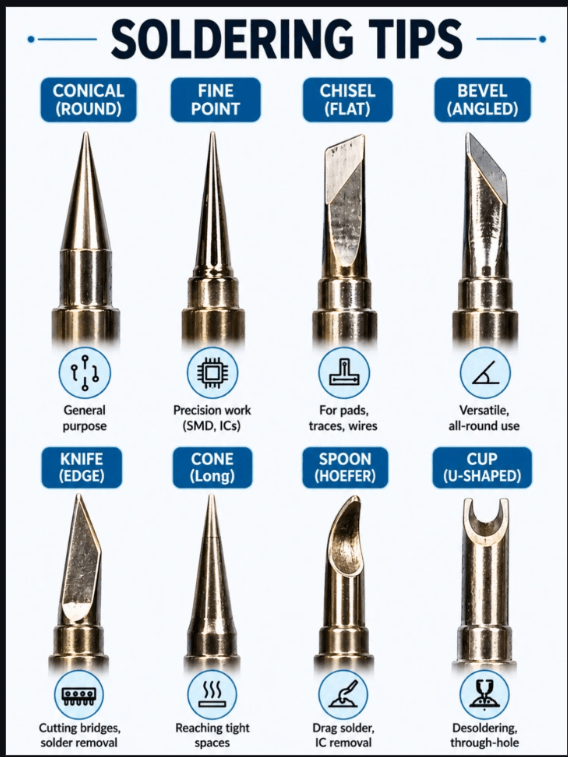
Image Source: @wirethinkers
Today, it remains essential for electronics manufacturing, component installation, wiring, circuit-board repair, prototyping, and equipment maintenance because it allows technicians to form conductive connections with precision and relatively low heat.
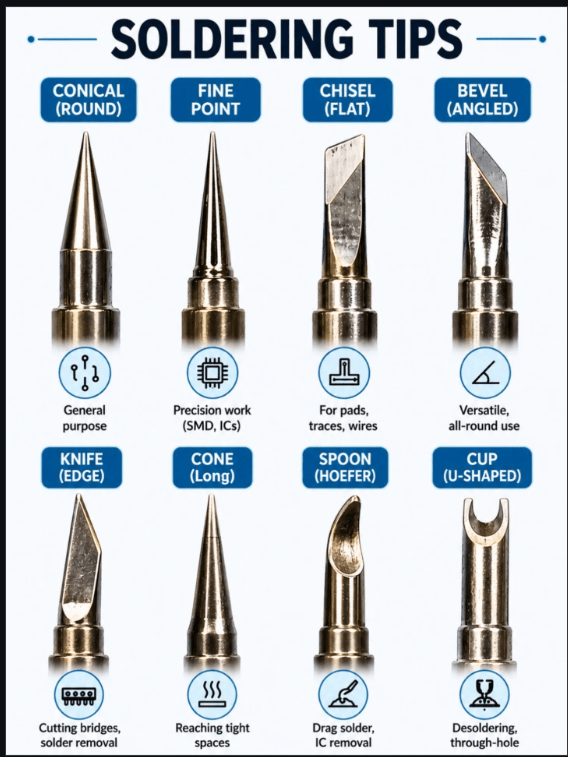
Different soldering iron tips are designed for specific types of work. Conical and fine-point tips are commonly used for precision soldering on surface-mount devices (SMDs), integrated circuits (ICs), and tightly spaced components.
Chisel and bevel tips provide greater surface contact and heat transfer, making them suitable for pads, circuit-board traces, wires, and general-purpose soldering. Knife-edge tips can help remove solder bridges, while long cone tips reach confined areas.
Spoon tips are useful for drag soldering and IC removal, and cup-shaped tips may assist with desoldering and through-hole components.
Tip terminology and intended uses can vary by manufacturer.
BitcoinVersus.Tech Editor’s Note:
We volunteer daily to ensure the credibility of the information on this platform is Verifiably True. If you would like to support to help further secure the integrity of our research initiatives, please donate here: 3C9o19EH5HSiwEPyCTmEKzxhNCbo2X6TTb
BitcoinVersus.tech is not a financial advisor. This media platform reports on financial subjects purely for informational purposes.


Leave a Reply