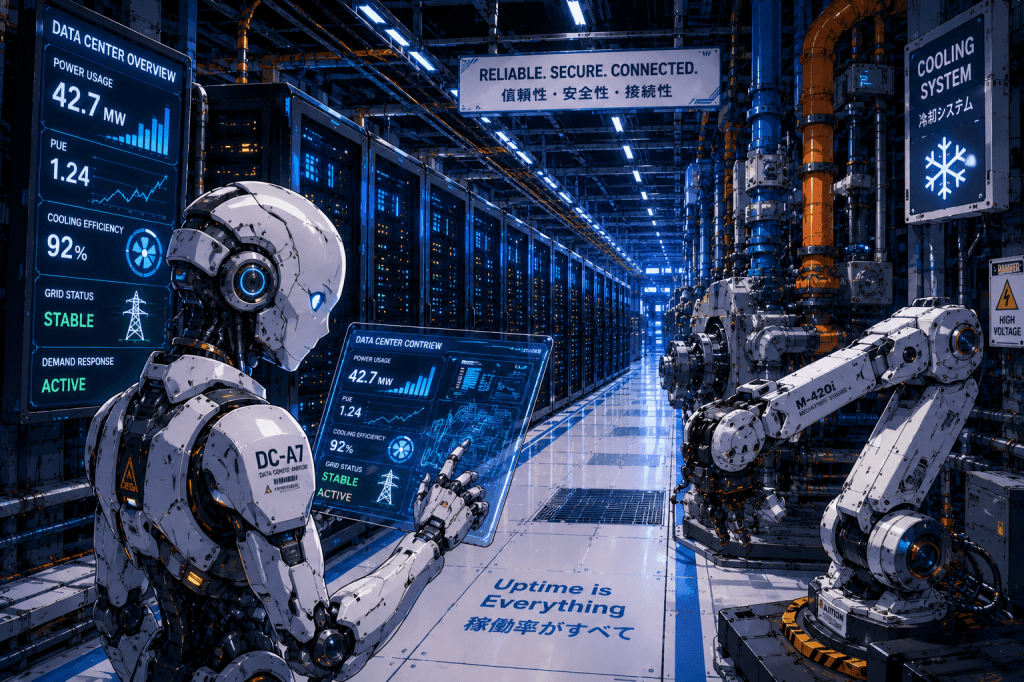
Data centers have become one of the easiest targets in today’s debate over electricity, artificial intelligence, and infrastructure.
They consume significant amounts of power, require major investment, and often face opposition from nearby communities. Some of those concerns are reasonable.
Large facilities should be built responsibly, follow environmental regulations, and minimize impacts on surrounding neighborhoods.
But the conversation often overlooks a much bigger reality: modern society already depends on data centers for nearly everything we do online.
Every photo uploaded to social media, every streaming movie, every online purchase, every cloud document, every AI prompt, every video call, and nearly every website visit ultimately relies on servers housed inside data centers.
The internet is not “floating in the cloud,” it exists in physical buildings filled with servers, networking equipment, storage systems, power infrastructure, and cooling equipment.
As demand for AI, Cloud Computing, and digital services continues to grow, so does the need for new computing infrastructure.
Critics frequently point to electricity consumption, and that concern deserves serious discussion.
However, data centers are also driving billions of dollars in investments in substations, transmission lines, generation capacity, and grid modernization.
Increasingly, utilities and data center operators are exploring demand-response strategies that allow large facilities to temporarily reduce power consumption during periods of grid stress, helping improve grid flexibility and reliability.
BitcoinVersus.Tech Editor’s Note:
We volunteer daily to ensure the credibility of the information on this platform is Verifiably True. If you would like to support to help further secure the integrity of our research initiatives, please donate here: 3C9o19EH5HSiwEPyCTmEKzxhNCbo2X6TTb
BitcoinVersus.tech is not a financial advisor. This media platform reports on financial subjects purely for informational purposes.


Leave a Reply