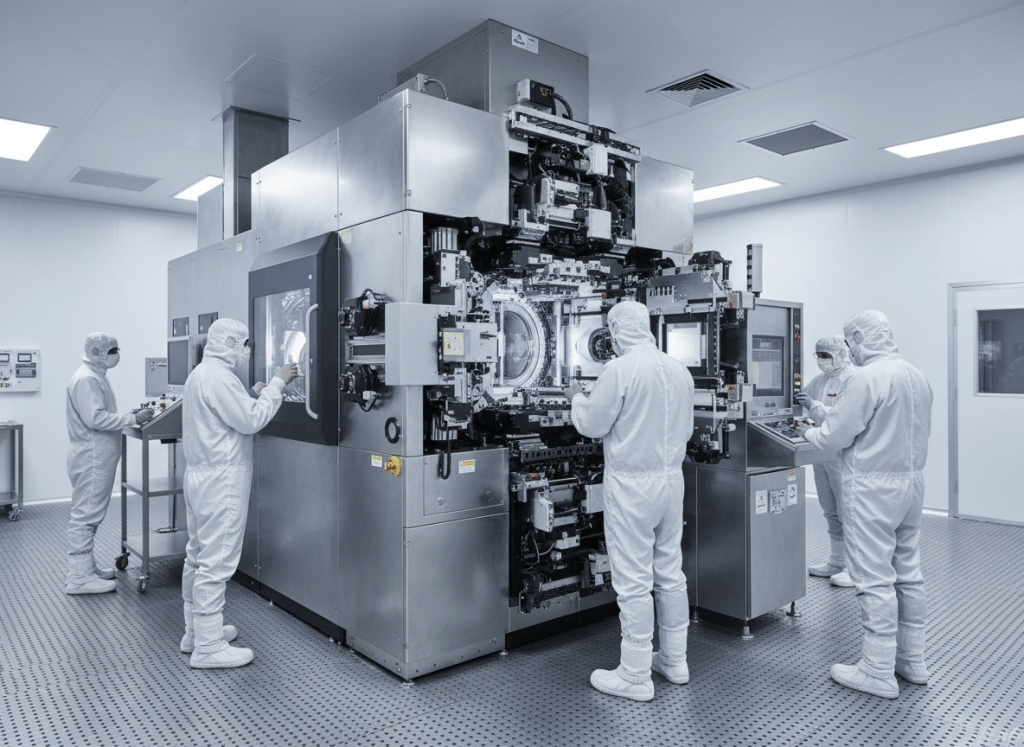
NVIDIA has become one of the most desirable employers in technology.
The company sits at the center of artificial intelligence, GPU computing, accelerated data centers, robotics, autonomous vehicles and high-performance computing.
That position has created something unusual in the labor market: competition for NVIDIA jobs may now be operating on a level normally associated with the most selective universities in America.
But how difficult is it actually to get hired?
The NVIDIA 0.3%–0.4% Hiring Estimate
NVIDIA does not publicly report an official company-wide applicant-to-hire acceptance rate, so any precise percentage should be treated as an estimate rather than a verified corporate statistic.
One working estimate places NVIDIA’s overall hiring rate at approximately:
0.3% to 0.4%
Using the midpoint:
0.35%
That would mean that for every 100,000 applicants, approximately:
350 get hired
99,650 do not
Put another way:
Roughly 1 out of every 286 applicants would receive a job.
The exact real-world number could be higher or lower depending on the year, department, position, duplicate applications and how “applicant” is counted.
But NVIDIA’s known hiring volume shows why the comparison is interesting. Workday has reported that NVIDIA receives roughly 2,500 applications per day and at one point maintained nearly 150,000 candidates in the review process.
That is an enormous talent funnel.
Now Compare That With America’s Most Selective Universities

Admission to schools such as Caltech, Stanford and Harvard is famously difficult.
Yet their recent undergraduate acceptance rates are still several percentage points higher than the estimated NVIDIA hiring rate.
| Institution | Approx. Acceptance Rate | Accepted per 100,000 |
|---|---|---|
| NVIDIA employment | 0.3%–0.4% estimated | 300–400 |
| Caltech | 3.78% | 3,780 |
| Stanford | 3.80% | 3,800 |
| Harvard | 4.18% | 4,180 |
Using NVIDIA’s estimated 0.35% midpoint, the difference becomes striking.
NVIDIA vs. Caltech
Caltech’s recent acceptance rate:
3.78%
NVIDIA estimate:
0.35%
3.78 ÷ 0.35 ≈ 10.8
By raw acceptance-rate comparison, getting through the NVIDIA hiring funnel would therefore appear roughly:
10.8× more selective than Caltech admission.
That does not mean the processes are directly equivalent. A college application and an employment application measure completely different things.
But as a probability comparison, the gap is enormous.
NVIDIA vs. Stanford
Stanford’s recent acceptance rate:
3.80%
NVIDIA estimate:
0.35%
3.80 ÷ 0.35 ≈ 10.9
That produces a similar result:
NVIDIA would be approximately 10.9× more selective by raw acceptance rate.
Stanford might admit roughly 3,800 applicants out of 100,000 at that rate.
The NVIDIA estimate would produce only around 350 hires.
NVIDIA vs. Harvard
Harvard’s Class of 2029 included:
47,893 applicants
2,003 admitted students
That works out to approximately:
4.18%
Compared with an estimated NVIDIA hiring rate of 0.35%:
4.18 ÷ 0.35 ≈ 11.9
By this crude statistical comparison, NVIDIA would be nearly 12× more selective than Harvard.
Again, that statement requires an important qualifier:
The NVIDIA number is an estimate. Harvard’s number is an actual reported admissions statistic.
Still, it illustrates the level of competition surrounding some of today’s highest-profile technology companies.
Why Tech Hiring Can Be Even More Competitive Than College Admissions
There is an important structural difference.
A university applicant typically submits one application to one institution for one incoming class.
Corporate candidates behave differently.
One individual might apply to:
- Software Engineer
- Systems Engineer
- Data Center Technician
- Hardware Engineer
- Infrastructure Engineer
- Networking Engineer
at the same company.
NVIDIA itself recommends that applicants concentrate on the three to five positions that most closely fit their background rather than applying indiscriminately.
That means “applications” and “individual applicants” are not necessarily the same thing.
It also means a corporate acceptance rate calculated from raw applications can appear lower because one candidate may generate several applications.
Not Every NVIDIA Department Has the Same Odds
The hiring funnel is also unlikely to be uniform.
A highly specialized GPU architecture or AI research position could attract a completely different applicant pool than:
- Data center operations
- Hardware testing
- Manufacturing
- Supply chain
- Facilities
- Technical support
- Finance
- Marketing
The same principle exists within universities.
Getting into an institution is one thing.
Competing for a particular laboratory, graduate program, fellowship or research position is another.
So estimates such as:
AI Research: 0.2%
GPU Architecture: 0.3%
Software Engineering: 0.5%
should not be presented as factual departmental NVIDIA acceptance rates unless NVIDIA publishes data supporting them.
They are better described as illustrative estimates.
The 100,000 Applicant Thought Experiment
Imagine NVIDIA, Harvard, Stanford and Caltech each received exactly 100,000 applications while maintaining these rates.
NVIDIA
Estimated hires:
300–400
Caltech
Approximate admits:
3,780
Stanford
Approximate admits:
3,800
Harvard
Approximate admits:
4,180
Visually, that produces an extraordinary difference.
For every person hired at NVIDIA under the midpoint estimate, roughly:
11 people might get into Caltech
11 people might get into Stanford
and
12 people might get into Harvard
under equivalent 100,000-applicant scenarios.
The Bigger Story: The Superstar Employer Effect
NVIDIA’s situation is part of a broader labor-market phenomenon.
The strongest technology brands attract enormous quantities of candidates because applicants are not only chasing a paycheck.
They are chasing:
- Brand recognition
- AI experience
- Equity compensation
- Career acceleration
- Cutting-edge hardware
- Research opportunities
- Resume prestige
- Access to emerging technologies
NVIDIA’s massive rise during the AI infrastructure boom effectively transformed the company into what might be called a superstar employer.
The same way thousands of academically exceptional students compete for limited seats at Stanford or Harvard, thousands of highly qualified engineers now compete for a comparatively small number of positions at companies operating at the frontier of AI.
Getting Rejected Does Not Necessarily Mean You Were Unqualified
This is perhaps the most important implication of the numbers.
When acceptance rates fall below even a few percent, rejection increasingly becomes a function of:
competition + timing + specialization + headcount + recruiter filtering + team fit
rather than simply:
qualified vs. unqualified.
A candidate can meet nearly every listed requirement and still be competing against hundreds of people with comparable backgrounds.
At the extreme end of technology hiring, being qualified may simply earn you entry into the competition.
It does not guarantee the job.
NVIDIA May Be Building the Corporate Equivalent of an Elite Admissions Funnel
Universities such as Harvard, Stanford and Caltech became symbols of selectivity because there are dramatically more qualified students than available seats.
Something similar may now be happening at the world’s most desirable AI companies.
If NVIDIA’s true company-wide hiring rate is anywhere close to the commonly cited 0.3%–0.4% estimate, its employment funnel would statistically be an order of magnitude narrower than admission to some of America’s most selective universities.
That does not make getting an NVIDIA job literally “harder than getting into Harvard.”
The populations, qualifications and selection processes are fundamentally different.
But it does show just how concentrated competition for elite technology jobs has become.
In the AI economy, some corporate career portals are beginning to look a lot like university admissions offices.
Except there may be even fewer acceptance letters.
BitcoinVersus.Tech Editor’s Note:
We volunteer daily to ensure the credibility of the information on this platform is Verifiably True. If you would like to support to help further secure the integrity of our research initiatives, please donate here: 3C9o19EH5HSiwEPyCTmEKzxhNCbo2X6TTb
BitcoinVersus.tech is not a financial advisor. This media platform reports on financial subjects purely for informational purposes.


Leave a Reply