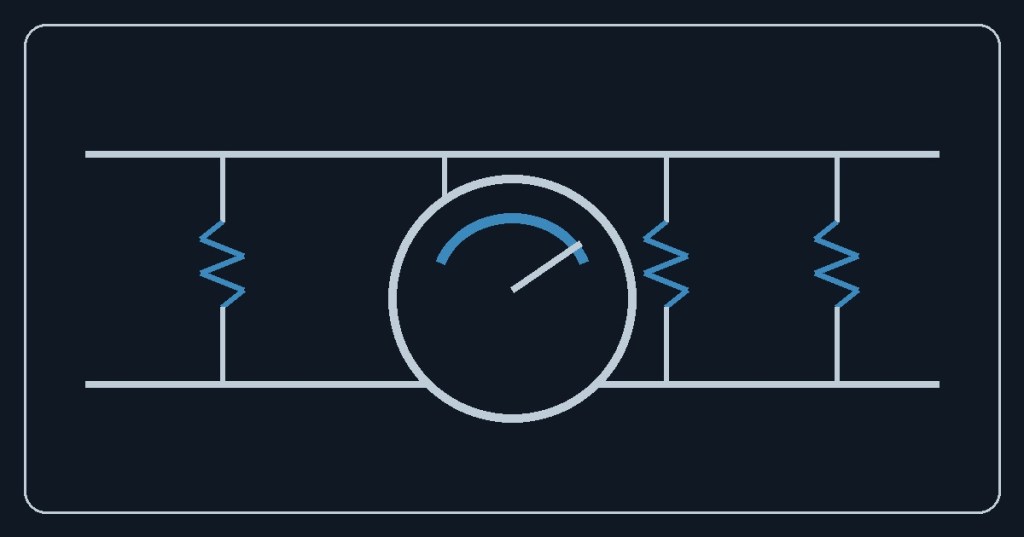
OSET.006 keeps electrical power simple. Power tells us how fast electrical energy is being used. We measure power in watts  .
.
The one formula
For a basic DC or resistive example, use P = V × I. Power equals voltage multiplied by current. Fluke lists watts as the unit of electrical power and gives the same basic relationship. See Fluke’s electrical-measurement reference.
Easy example
A load operates at 120 V and draws 10 A.
120 × 10 = 1,200 W
That load is using 1,200 watts of power.
Watts to kilowatts
1 kilowatt (kW) = 1,000 watts. Divide watts by 1,000 to convert to kilowatts.
Our 1,200 W example is therefore 1.2 kW.
Why technicians care
Power helps technicians understand how much electrical load equipment represents. In the field, compare calculations with equipment nameplates, specifications, and appropriate measurements. AC systems with reactive loads require additional concepts such as power factor, which are covered separately.
Quick practice
- 12 V × 5 A = 60 W.
- 24 V × 10 A = 240 W.
- 240 V × 10 A = 2,400 W, or 2.4 kW.
OSET takeaway
Remember one idea: power = voltage × current for the basic examples in this lesson. Watts tell you the power. One thousand watts equals one kilowatt.


Leave a Reply